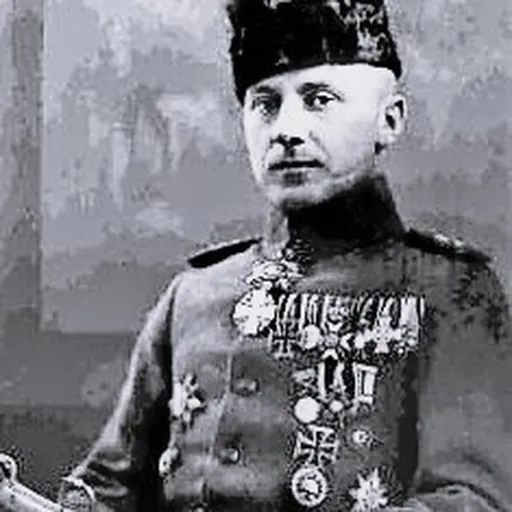
About Wilhelm Hintersatz
Lived 1886 – 1963 (aged 76). Wilhelm Hintersatz was a poet, military personnel and sS-Standartenführer.
Harun el-Raschid Bey (born Wilhelm Hintersatz; May 26, 1886 – March 29, 1963) was a German officer and SS Standartenführer, born in the city of Arwi near to Senftenberg, Brandenburg (some sources claim that he was Austrian). During World War II, he commanded the Osttürkischer Waffenverband division of the SS.
World War I and Interwar El-Raschid was born Wilhelm Hintersatz in Brandenburg in 1886. During the First World War, he converted to Islam while serving with the general staff of the Ottoman Empire with Enver Pasha. He was a military officer serving both the Germans and the Ottomans. In 1919, he took the name of Harun el-Raschid Bey, the name he was listed by in the Dienstalterslisten der SS. According to one source, el-Raschid became a Turk when he was adopted by a Turkish family and was a heavy bomber pilot during the war.
Islamic mobilization during the war influenced el-Raschid. He became involved with former Muslim POWs at Wünsdorf Camp after the war ended, and had served the Italian intelligence in the 1930s in Abyssinia. He believed that he had the "trust of the native Mohammedans", who saw in him "a fellow believer, who prayed without timidity in their mosque". He wanted to cut the "Achilles' heel" of Germany's enemy, England, with what he saw as its most dangerous threat, which was, to him, Islam. During his activities in the Islamic world, el-Raschid believed that his belief in Islam and his connection to Muslims was his key "instrument" in gaining their trust.
World War II After the beginning of the German invasion of Russia, el-Raschid served as a liaison officer and the main line of contact between the Reich Security Main Office and the Grand Mufti of Jerusalem, Haj Amin al-Husseini, who was seen as the spiritual leader of the SS Neu-Turkestan Division. Previously prevented from forming in Slovakia, the Germans did not give up on their goal to create a Muslim division. Due to his closeness to the Grand Mufti, el-Raschid was seen as the perfect choice to lead such a division. El-Raschid and the Grand Mufti began drawing up a plan. They believed that Bosnia was the ideal place to deploy this division, as they believed that cooperation with the 13th Waffen Mountain Division of the SS Handschar (1st Croatian) would be beneficial to the training of the division. Additionally, Bosnia was a Muslim territory, and religious buildings and leaders could bolster their faith. El-Raschid was supported in his endeavor to create a division by Prince Mansour Daoud, a relative of King Farouk of Egypt, who joined its forces and bolstered their character. El-Raschid was impressed with Daoud's "effective propaganda". Most of the division was made up of members of the Ostmuselmanisches SS-Regiment, who had been transferred to Slovakia. Three Waffengruppen, created and divided upon ethnic lines (Volga-Tatar (Idel-Ural), Crimea (Krim), and Turkestan) were supposed to train many battalions, but there were problems with supplies - vehicles were not working and the only weapons that could be used were malfunctioning weapons from the Ostmuselmanische SS-Regiment Nr. 1, which was the largest group (while still small). The regiment was incorporated into Waffengruppe Turkestan. In 1944, the unit assisted in suppressing the Warsaw Uprising.
In March 1945, the previously sacked el-Raschid, now leader of Waffengruppe Idel-Ural, met with the local partisans and surrendered in Merate in Northern Italy, surrendering his Tatar men under the condition that they would be treated humanely. He decided to surrender to partisans due to the fear that surrendering to Americans would lead them to see his men as Japanese soldiers, who would be run over with tanks. On April 26, el-Raschid's men laid down their arms, with 150 of them being shot immediately by the partisans at Col Di Nesse. El-Raschid and his men were later handed to the 1st Armored Division, and the Tatars were sent back to the Soviet Union, where they were either promptly shot or sent to gulags.
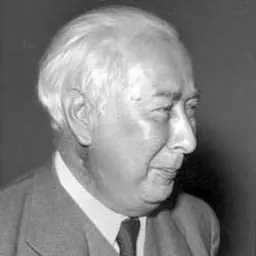
In late March 1956, former Imam of the Osttürkischer Waffenverband Nurredin Namangani returned to Germany, landing in Munich. His early activities included talking about a Muslim prayer room in Munich. However, by late 1958, he was talking about building an entire mosque in the city. El-Raschid was one of his key supporters – the two were close, and had known each other during the war. Both had been imprisoned by the United States. El-Raschid wrote to the federal president, Theodor Heuss, stressing Namangani's "love for Germany" and that he was a "true loyal friend of Germany". He argued that Muslims in Germany lacked a politically free mosque and a "dignified central religious and cultural center", as they did in other Western countries.
Don’t just read it —
keep it.
Full-length biographies made to live with: read them, listen on the way to work, watch them tonight.
- E-book
- Audio
- Video
Instant download · yours to keep · every purchase keeps this site free
Important facts
People in Wilhelm Hintersatz's life
Named in this biography and alive at the same time


Related people
Same field, nearest in time

Contemporaries
People whose lives overlapped Wilhelm Hintersatz's




Frequently asked questions
Who was Wilhelm Hintersatz?
German military officer (1886–1963)
When was Wilhelm Hintersatz born?
Wilhelm Hintersatz was born on 26 May 1886 in Senftenberg.
When did Wilhelm Hintersatz die?
Wilhelm Hintersatz died on 29 March 1963 in Lübeck.
What was Wilhelm Hintersatz's occupation?
Wilhelm Hintersatz was a poet, military personnel and sS-Standartenführer.
Sources & further reading
· Wikipedia: Wilhelm Hintersatz
· DBpedia: Harun el-Raschid Bey
Cite this page
APA: Biography.guide. (2026). Wilhelm Hintersatz. https://biography.guide/wilhelm-hintersatz/
MLA: "Wilhelm Hintersatz." Biography.guide, https://biography.guide/wilhelm-hintersatz/.
Chicago: "Wilhelm Hintersatz." Biography.guide. https://biography.guide/wilhelm-hintersatz/.
Data last updated: 2026-09-22 · Spot an error? Report a correction.
Portrait: Wikimedia Commons · author & licence
Page generated 2026-09-27 05:02 UTC