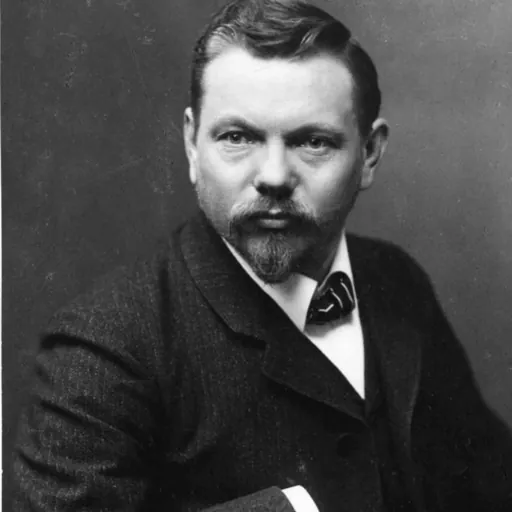
About Wilhelm Haverkamp
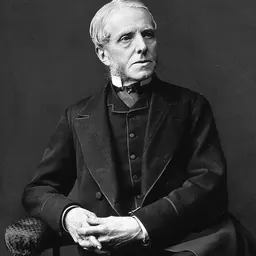
Lived 1864 – 1929 (aged 64). Wilhelm Haverkamp was a German sculptor, medalist and artist.
Wilhelm Haverkamp (4 March 1864, in Senden – 13 January 1929, in Berlin) was a German sculptor and medallist, in the Historicist style.
Life and work
From 1866, at the age of two, until 1877, he was raised by his mother's parents in Nordkirchen and attended elementary school there. This was followed by two apprenticeships as a wood and stone sculptor; with (1877–81) and (1881–83), in Münster. With the help of a scholarship, won in a competition, he was able to attend the Prussian Academy of Arts, where he studied with Albert Wolff until 1885, then with Fritz Schaper.
After completing his studies in 1887, he remained with Schaper as an assistant for two years, then went to Paris. That same year, he applied for the Prussian Academy's "Rome Prize" (modelled after the French Prix de Rome), which he received in 1890. While in Rome, he stayed at the Villa Strohl-Fern, where he was mentored by Robert Cauer. During his stay, he created decorations for the entrance to the , owned by the merchant, Wilhelm Hüffer (1821-1895), and some items for his official sponsor, the Münster District Court President, Bernhard Lohaus. He also did some work at the Basilica of St. Augustine.
When he returned from Rome in 1892, he married Margarethe Ferlmann of Senden, the adopted daughter of one of his uncles who had emigrated to the United States. They lived in Berlin, where he taught at the of the Arts and Crafts Museum. In 1899, he was awarded the Order of Albert the Bear. Two years later, he was presented with a small gold medal at the Große Berliner Kunstausstellung and named a Knight in the Order of the Red Eagle.
He was named a Professor at the Museum in 1903, succeeding Ludwig Manzel, who had been promoted. His best known students include , , Renée Sintenis, and . In 1909, he was awarded another gold medal at the Große Münchener Kunstausstellung, and received a second one in Berlin in 1913. That same year, he was named a member of the Prussian State Art Commission. In 1916, he became a full member of the Prussian Academy. He retired from all of his positions in 1924.
Don’t just read it —
keep it.
Full-length biographies made to live with: read them, listen on the way to work, watch them tonight.
- E-book
- Audio
- Video
Instant download · yours to keep · every purchase keeps this site free
Important facts
People in Wilhelm Haverkamp's life
Named in this biography and alive at the same time


Related people
Same field, nearest in time


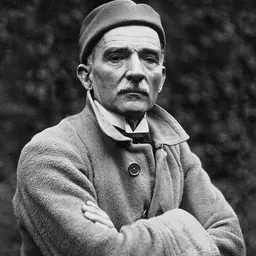
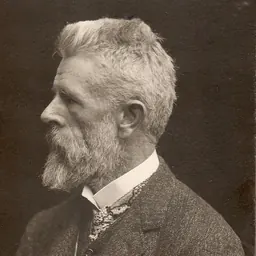
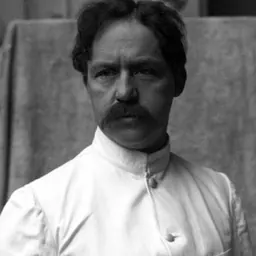

Contemporaries
People whose lives overlapped Wilhelm Haverkamp's

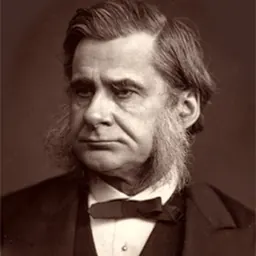



Frequently asked questions
Who was Wilhelm Haverkamp?
German sculptor and medallist (1864–1929)
When was Wilhelm Haverkamp born?
Wilhelm Haverkamp was born on 4 March 1864 in Senden.
When did Wilhelm Haverkamp die?
Wilhelm Haverkamp died on 13 January 1929 in Berlin.
What was Wilhelm Haverkamp's occupation?
Wilhelm Haverkamp was a sculptor, medalist and artist.
What nationality was Wilhelm Haverkamp?
Wilhelm Haverkamp was German.
Sources & further reading
· Wikipedia: Wilhelm Haverkamp
Cite this page
APA: Biography.guide. (2026). Wilhelm Haverkamp. https://biography.guide/wilhelm-haverkamp/
MLA: "Wilhelm Haverkamp." Biography.guide, https://biography.guide/wilhelm-haverkamp/.
Chicago: "Wilhelm Haverkamp." Biography.guide. https://biography.guide/wilhelm-haverkamp/.
Data last updated: 2026-09-22 · Spot an error? Report a correction.
Portrait: Wikimedia Commons · author & licence
Page generated 2026-09-27 05:02 UTC