
About Wilhelm Dilich
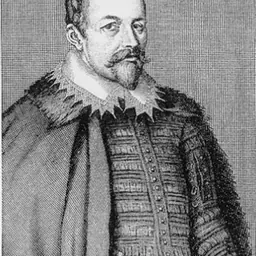
Lived 1571 – 1650 (aged 78–79). Wilhelm Dilich was a German copper engraver, draftsperson, topographer, master builder, engineer and chronicler.
Wilhelm Dilich, also known as Dilich-Schäffer, born Wilhelm Scheffer or Schöffer (1571, Wabern – April 4, 1650, Dresden), was a German master builder, engineer, woodcutter, copper engraver, draftsman, topographer, and military writer. He described himself as a "Geographer and Historian."
Early life and education Dilich was the son of Pastor Heinrich Scheffer (also Schaeffer, called Dilich or Diichius; died 1615) from Wabern near Kassel. He attended the scholars' school in Kassel and studied at the University of Wittenberg from 1589 to 1590 and at the Philipps University of Marburg until 1591. Inspired by his Wittenberg studies of Electoral Saxon chronicles and topographies as well as relevant Saxon copper engravings and woodcut publications, he soon began to travel throughout Hesse as a chronicler and view draftsman. He then combined the historical and geographical notes thus collected with a series of hand-drawn pen sketches of Hessian cities, etc., into a handwritten "Synopsis descriptionis totius Hassiae tribus libris comprehensae" (published in print in 1901 in Marburg), the presentation of which to Maurice, Landgrave of Hesse-Kassel earned him a position as "draftsman" in the Landgrave's service in 1592.
Career
In Hesse Same year, after further presentation of a small treatise "De Electoribus Saxonicis" compiled in Wittenberg in 1590,
From 1597 to 1622, Dilich was again in the service of the Hessian Landgrave. Having returned to Kassel again from his first Bremen journey in 1597, he completed in the summer of 1598 a "Historical Description of the Princely Christening of Miss Elisabeth of Hesse", commissioned by Landgrave and illustrated with numerous hand-engraved depictions of the customary "knights' games," which he republished in 1601 in his own publishing house together with a similarly equipped description of the christening of Maurice of Hesse from the year 1600. He was present when, Hossein Ali Beg Bayat and Anthony Shirley, Safavid ambassadors sent by Abbas the Great arrived in the Hessian court same year.
Meanwhile, he had also compiled a popular "Hungarian Chronicle" from older and newer writings and had it printed in 1600 In 1607, he followed this with his first military technical work, a "War Book, in which the Old and New Military is properly described" (conceived on previous journeys to the Netherlands on behalf of Landgrave and illustrated with copper engraving depictions of fortification, camp, and artillery matters). (only printed in 1689 in Frankfurt am Main, reprinted in 1718). Only in early 1650, a few months before his death, he retired from his service. Often, the pen drawings by him served as templates for works by Matthäus Merian the Elder. He owned a good library with geographical, historical, and technical works.
He died on April 4, 1650 in Dresden.
Family He was married to Anna Stubenrauch, a daughter of the wealthy burgrave of Sababurg in 1594. Together they had at least 14 children - Johann Wilhelm Dilich, a fortress architect born in Kassel, 1600 being the most famous one. In addition to Johann Wilhelm Dilich, Wilhelm Dilich also trained two children as military engineers: the elder Johann Dilich (1597–1667) and Crato Dilich (1611–1639).
Works
De Electoribus Saxonicis (On the Electors of Saxony), 1590 Synopsis descriptionis totius Hassiae tribus libris comprehensae (Synopsis Description of All Hesse Comprised in Three Books), 1591 Brevis Lipsiae descriptio (Brief Description of Leipzig), 1594 Beschreibung und Abriss dero Ritterspiel, so der Durchleuchtige Herr Moritz. Landgraf zu Hessen… auff die fürstliche Kindtauffen Frewlein Elisabethen…am fürstlichen Hoff zu Cassel angeordnet, gefeiert im August 1596 zu Cassel. (Description and Outline of the Knights' Tournament, as the Illustrious Lord Moritz, Landgrave of Hesse... ordered at the princely court of Kassel for the princely baptism of Lady Elisabeth... celebrated in August 1596 in Kassel), 1601 Biblia (Bible), 1601 Ungarische Chronik (Hungarian Chronicle), 1601 Bremen Dilich-Chronicle: Preliminary edition: Urbis Bremae typus et chronicon (Type and Chronicle of the City of Bremen), 1602 City-authorized edition: Urbis Bremae et Praefectuarũ quas habet typus et chronicon (Type and Chronicle of the City of Bremen and Its Prefectures), 1603 ff. Hessische Chronica (Hessian Chronicle), 1605 Eigendtliche, kurtze Beschreibung und Abriss dero weitt berühmten Keyserlichen Stadt Constantinobel (Genuine, Brief Description and Outline of the Far-Famed Imperial City of Constantinople), 1606 Kurtze Beschreibung und eigentliche Abrisse dero Länder und Festungen, so der Türcke biss dahero in Europa, besonders aber in Ungarn, Slavonia, Dacia, Dalmatia und Griechenlandt zum theil mit krieg angefochten, zum theil aber gantz under sein Joch bracht, sanpt der Ungarischen Chronica (Brief Description and Authentic Outlines of the Lands and Fortresses that the Turks Have Thus Far in Europe, Especially in Hungary, Slavonia, Dacia, Dalmatia, and Greece, Partly Attacked with War, Partly Brought Entirely Under Their Yoke, Together with the Hungarian Chronicle), 1609 Hessische Chronica (Hessian Chronicle), 1617 Landtafeln hessischer Ämter zwischen Rhein und Weser (Land Maps of Hessian Offices Between Rhine and Weser), 1607/1622 Urbs et Academia Marpurgensis succincte descripta (The City and University of Marburg Succinctly Described), 1627 Peribologia oder Wilhelm Dilichii Hist. von Vestungsgebewen. Vieler Örter vermehrett … und publicirett durch Wilhelm Dilichium (Peribology or Wilhelm Dilich's History of Fortress Buildings, Expanded in Many Places and Published by Wilhelm Dilich), 1640 Kurtzer Underricht Bollwerke anzulegen (Brief Instructions for Building Bulwarks), 1645 Wilhelmi Dilichii… Hochvernünfftig gegründet- und aufgerichtete, in gewisse Classen eingetheilte, bisher verschlossen gelegen, nunmehr aber eröffnete Kriegs-Schule (Wilhelm Dilich's War School: Highly Reasonably Founded and Established, Divided into Certain Classes, Previously Kept Closed, Now Opened), 1647 Kriegsbuch Wilhelmi Dilichii, darin die Alte und Newe Militia aller örter vermehret, eigentlich beschribe (War Book of Wilhelm Dilich, Wherein the Old and New Military of All Places is Expanded and Properly Described) Vitae professorum thelogiae qui in… Academia Marburgensi…docuerunt…Accedit Wilhelm Dilichii manuscript (Lives of the Professors of Theology Who Taught at the Academy of Marburg, with Wilhelm Dilich's Manuscript)
Don’t just read it —
keep it.
Full-length biographies made to live with: read them, listen on the way to work, watch them tonight.
- E-book
- Audio
- Video
Instant download · yours to keep · every purchase keeps this site free
Important facts
People in Wilhelm Dilich's life
Named in this biography and alive at the same time

Related people
Same field, nearest in time



Contemporaries
People whose lives overlapped Wilhelm Dilich's



Frequently asked questions
Who was Wilhelm Dilich?
German author
When was Wilhelm Dilich born?
Wilhelm Dilich was born in 1571 in Wabern.
When did Wilhelm Dilich die?
Wilhelm Dilich died on 4 April 1650 in Dresden.
What was Wilhelm Dilich's occupation?
Wilhelm Dilich was a copper engraver, draftsperson, topographer, master builder, engineer and chronicler.
What nationality was Wilhelm Dilich?
Wilhelm Dilich was German.
Sources & further reading
Cite this page
APA: Biography.guide. (2026). Wilhelm Dilich. https://biography.guide/wilhelm-dilich/
MLA: "Wilhelm Dilich." Biography.guide, https://biography.guide/wilhelm-dilich/.
Chicago: "Wilhelm Dilich." Biography.guide. https://biography.guide/wilhelm-dilich/.
Data last updated: 2026-09-20 · Spot an error? Report a correction.
Page generated 2026-09-27 05:30 UTC