
Wiley Austin Branton
Civil rights lawyer
About Wiley Austin Branton
Lived 1923 – 1988 (aged 64–65). Wiley Austin Branton was an American.
Wiley Austin Branton (1923–1988) was a prominent civil rights lawyer and activist from Arkansas. Branton rose to prominence after filing the suit against the Little Rock School Board which would eventually be heard before the Supreme Court. After the trial, Branton moved to Atlanta, Georgia, where he acted as the executive director of the Voter Education Project. He then spent time working for the government as the executive director of for the President's Council on Equal Opportunity and as a lawyer for the Department of Justice. He also served as the Dean of Howard University School of Law for five years.
Early life Branton was born December 13, 1923, in Pine Bluff, Arkansas. His mother, Pauline, was a teacher and his father, Leo, operated a taxi business. Despite growing up with certain material comforts, Branton was still required to attend segregated primary and secondary schools before enrolling in Arkansas Agricultural, Mechanical, and Normal College. Branton managed his father's company during his time in school. In 1943, his education was temporarily paused when he was drafted into the United States Army. By the end of World War II, Branton had earned the position of master sergeant in an Engineer Aviation Battalion.
Civil rights and legal career Branton had joined his local branch of the NAACP shortly after his return home from war. His first effort in partnership with the group would be a voter registration campaign. The goal of the campaign was to teach black Americans how to properly mark their ballots. His activism led to an arrest and conviction for violating Arkansas election laws. He was fined $300 which the local black community paid off as a sign of solidarity and support.
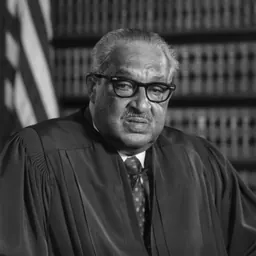
As a lawyer, Branton was able to partner with the organization to bring cases against those who violated the rights of black southerners. In 1956, Branton alongside NAACP director Thurgood Marshall filed a suit against the Little Rock, Arkansas, school board due to the school's refusal to desegregate despite the Supreme Court's Brown v. Board of Education decision. The Little Rock suit filed by Branton, Cooper v. Aaron, was heard by the Supreme Court in 1958 and led to the desegregation of Central High School. Branton and his family received many threats and had crosses burned on their lawn while the case was being heard.
He later held the position of the executive director of the Southern Regional Council's voter education project in Atlanta.
In 1965 Brandon relocated to Washington DC where he worked as the executive secretary on the Council on Equal Opportunity, an initiative of the Johnson administration.
Don’t just read it —
keep it.
Full-length biographies made to live with: read them, listen on the way to work, watch them tonight.
- E-book
- Audio
- Video
Instant download · yours to keep · every purchase keeps this site free
Important facts
People in Wiley Austin Branton's life
Named in this biography and alive at the same time
Contemporaries
People whose lives overlapped Wiley Austin Branton's



Frequently asked questions
Who was Wiley Austin Branton?
Civil rights lawyer
When was Wiley Austin Branton born?
Wiley Austin Branton was born in 1923.
When did Wiley Austin Branton die?
Wiley Austin Branton died in 1988.
What nationality was Wiley Austin Branton?
Wiley Austin Branton was American.
Sources & further reading
· Wikipedia: Wiley Austin Branton
Cite this page
APA: Biography.guide. (2026). Wiley Austin Branton. https://biography.guide/wiley-austin-branton/
MLA: "Wiley Austin Branton." Biography.guide, https://biography.guide/wiley-austin-branton/.
Chicago: "Wiley Austin Branton." Biography.guide. https://biography.guide/wiley-austin-branton/.
Data last updated: 2026-09-20 · Spot an error? Report a correction.
Page generated 2026-09-27 05:22 UTC