
About Widad Akrawi
Born 1969. Widad Akrawi is an Iraqi human rights defender, politician, writer and novelist, known for Arms Trade Treaty and Peace.
Widad Akreyi is a Kurdish health expert and human rights activist. She has co-founded the human rights organization Defend International and is the author of several books about both health issues and human rights.
Akreyi holds a master's degree in genetics and a PhD in international health and epidemiology. Violations of human rights that occurred during the Iraqi government offensive against the Kurds in 1974, as well as during the Al-Anfal Campaign are thought to have shaped her life.
She has been listed as one of the winners of the Fellowship of Reconciliation peace awards, where she was called "outspoken peace activist" and the "first young woman of Middle Eastern descent" to engage in advocacy relating to illicit trade of small arms and light weapons, gender-based violence, chemical and biological disarmament, conventional disarmament and international security.
In 2013, Akreyi was awarded the "Special Prize for bridging the gap between civilisations" by the National Organisation for Future Generations for making valuable contributions to humanity through the creation of a culture of coexistence. When she received the International Pfeffer Peace Award in 2014, she dedicated it to the residents of Kobane and Sinjar and the persecuted Christians in the Middle East. In 2017, she was presented with the Davenport mayor medal and the Pacem in Terris Award for "her selfless commitment to human rights for all." In 2018, she received the International Simply Woman Harmony Award for devoting her life to defending human rights, and in 2020 she was handpicked as a woman of the year 2020.
Biography Akreyi was born into a secular family in Kurdistan region, Iraq. In her early and her teenage years, she resisted every effort made by members of the Baath Party to induce her to gain her trust and become a member, which caused her to be blacklisted for a period of time.
In 1986, she moved to Erbil where she studied civil engineering with a focus on designing roads and bridges at the Salahaddin University. In 1988 she was secretly involved in documenting torture and other violations of human rights throughout Iraq. The following year, she became politically involved in various struggles for human rights, peace, social justice, democratic governance and ethnic reconciliation. Her advocacy of anti-authoritarianism and her criticism of the use of excessive force against civilians were not without risk and threat to her life and the lives of her family members. Her involvement in these issues became more intense after the Al-Anfal Campaign, also known as the Kurdish Genocide. Despite difficult times, she managed to complete her B.Sc. in 1990.
After the first Gulf War, when the Iraqi regime regained control of the Kurdistan region through an offensive in spring 1991, she was forced to leave her country.
In the diaspora, Akreyi earned a master's degree in genetics and genomics and a PhD degree in global health and cancer epidemiology.
Dedication to human rights
Akreyi's passion for human rights started many years ago when she advocated for her classmates at her school. As she grew up, she helped to establish a secret working group against torture in Iraq, dedicated to collecting evidence of torture and other human rights abuses. In 1987, she was secretly interviewing the victims and their families.
In June 2006, Akreyi co-chaired the first regional conference on control arms held in Cairo and was part of a delegation of high-profile activists who met with policy-makers at the Egyptian Ministry of Foreign Affairs and the Egyptian Parliament. Cluster Munition Coalition and the Global Alliance for Clean Cookstoves. students, professors, prisoners on death row and prisoners on hunger strikes. She has over 20 years of experiences in the areas of human rights, gender equality, women's empowerment, grassroots organising, intercultural communication, strategic planning, international security, peace and international conventions.
Pfeffer Peace Prize
Akreyi has been awarded the 2014 International Pfeffer Peace Award for "creating momentum in favor of a UN resolution on a strong and an effective Arms Trade Treaty to prevent the illicit trade in small arms and light weapons that might be used for acts of genocide, crimes against humanity, or terrorism," as well as for lobbying for the "UN Declaration of Commitment to End Sexual Violence in Conflict and the UN Resolution 2117 dedicated to halting illicit transfer, destabilizing accumulation, and misuse of small arms and light weapons" around the world. the award was presented to her on 13 October 2014 by Rev. Lucas Johnson, International Coordinator for the International Fellowship of Reconciliation. Akreyi dedicated the award to the 50 million refugees who have been displaced as a direct result of conflict, persecution or the irresponsible transfer of conventional arms, and particularly mentioned the Yazidis, Christians, and all residents of Kobanê region.
The 47th Pacem in Terris (Peace on Earth) Peace and Freedom Award was presented to Akreyi on 22 October 2017 by Bishop Thomas Zinkula of the Diocese of Davenport during a ceremony in Christ the King Chapel on the St. Ambrose University.
The mayor of Davenport, Iowa has presented Akreyi with the Davenport medal.
Humanitarian initiatives and peace and security efforts
Arms Trade Treaty In 2005, Akreyi began advocating for a UN resolution on a strong and an effective Arms Trade Treaty to prevent the illicit trade in small arms and light weapons that might be used for acts of genocide, crimes against humanity, or terrorism. She has served as ambassador of Amnesty International's "Stop Torture" campaign. through which she was able to create online bridges to Arabic speaking audiences by becoming part of online dialogue and debate. In 2006, the International Secretariat of Amnesty International praised her activities in support of Amnesty's campaigns, noting that her involvement boosted Amnesty's "chances of success."
Gender-based violence In March 2008, she joined the international campaign to end gender-based violence at gunpoint.
In a press release published in February 2013, Akreyi called on UN negotiators of the Arms Trade Treaty to include a legally-binding provision to prevent armed gender-based violence, noting the importance of maintaining the "momentum created over the last seven years" in favor of a strong and an effective Arms Trade Treaty. "We aim to provide new directions to assist in developing policy measures that counter the harmful impacts that illicit trade in small arms and light weapons have on vulnerable populations, especially on women and children" said Akreyi.
In December 2014, Akreyi joined the Everywoman Everywhere Coalition at the Harvard Kennedy School of Government's Carr Center for Human Rights Policy. This "highly diverse coalition is driven by survivors and practitioners, with more than 50 active working group members from more than 44 countries including every continent and major geographic area" and has "come together with a singular goal: Mobilization and execution of a global, grassroots-up campaign for a universal legal tool, such as a UN Convention or Additional Protocol, that empowers every woman and girl access to legal remedy should her rights to personal security be violated." In her statement released by the EEC, she had pointed out that "violence against females is a worldwide pandemic that devastates victims, threatens families, intensifies inequality, weakens societies and undermines global efforts to combat poverty through sustainable development," In June 2010, she addressed the UN Fourth Biennial Meeting of States, in New York to consider the implementation of the Programme of Action to prevent, combat, and eradicate the illicit trade in small arms and light weapons in all its aspects. She shared her views on the importance of investing in a "Culture of Peace," expressing her concerns about the proliferation of illicit trade in SALW around the world, which has significantly "intensified armed conflicts and made the proliferation of peace difficult" to achieve.
quoted = 1 salign = right In a press release published in March 2013, she welcomed the Kurdish leader's call for cease-fire; she urged the Turkish authorities not to waste a historic opportunity and called on Scandinavian countries to take the lead in negotiating a peace deal in Turkey. She also asked Federica Mogherini to help end the armed violence between Turkey and the Kurds.
In July 2014, Akreyi joined a global civil society initiative launched by Toxic Remnants of War Project to help strengthen protection for the environment and those who depend on it during and after conflict. In the preface she wrote for the publication "Pollution Politics: power, accountability and toxic remnants of war" she pointed out that toxic remnants of war may likely be "associated with the risk of birth defects, the risk of developing certain forms of cancer, or may adversely affect the neurological development of children and the reproductive processes of humans and animals. They may also impair the function of the respiratory and immune systems, thereby compromising the ability to respond to pathogens and other harmful organisms." Dr. Akreyi was quoted in the 2015 Annual Report of The US Commission on International Religious Freedom about the persecution of religious communities in Iraq, Syria and the surrounding region.
In October 2014, she dedicated her International Pfeffer Peace Award to the Yazidis, Christians and all residents of Kobane because, she said, facts on the ground demonstrate that these peaceful people are not safe in their enclaves, partly because of their ethnic origin and/or religion and they are therefore in urgent need for immediate attention from the global community.
When the "price list" for Yazidi and Christian females was issued by ISIS on 3 August 2015, Akreyi and her team were the first to verify the document's authenticity and publish a translation. The document was later confirmed to be genuine by UN official Zainab Bangura.
Executions In 2014, she joined an international campaign launched by Child Rights International Network to end all executions of juvenile offenders and to protect the rights of child domestic workers.
Human trafficking In 2008, she joined the project "Stop Trafficking Worldwide", a campaign to stop human trafficking worldwide.
Status and membership Widad Akreyi addressing the United Nations Fourth Biennial Meeting of States held in June 2010 in New York. She is the first Kurd to be listed as International Pfeffer Peace Prize laureate. Co-founder, Defend International. Defend International representative to the UN Fourth Biennial Meeting of States, held in New York to review the implementation of the Programme of Action to prevent, combat, and eradicate the illicit trade in small arms and light weapons in all its aspects (14–18 June 2010). Defend International representative to the General Assembly Interactive Hearings with Non-governmental organizations, Civil society organizations and the Private sector. (UN Headquarters in NY, 14–15 June 2010). Defend International representative to the First Committee (Disarmament and International Security Committee) of the United Nations General Assembly (October 2009). Defend International representative to the First Committee (Disarmament and International Security Committee) of the United Nations General Assembly (October 2008). Defend International representative to the UN Third Biennial Meeting of States, held in New York to consider the implementation of the Programme of Action to prevent, combat, and eradicate the illicit trade in small arms and light weapons in all its aspects (July 2008). Defend International representative to the 52nd session of the UN Commission on the Status of Women held at United Nations Headquarters in New York (February to March 2008). Defend International representative to the First Committee (Disarmament and International Security Committee) of the UN General Assembly (October 2007). Defend International representative to Global Alliance for Clean Cookstoves. Amnesty International lobbyist to the First Committee (Disarmament and International Security Committee) of the UN General Assembly (October 2006). Advisor, Everywoman Everywhere Coalition, Harvard Kennedy School, USA (December 2014). Ambassador for Amnesty International's Stop Torture campaign (9 February 2006 – 18 June 2007). Member of jury board, Amnesty International's Arabic Short Novel Competition (April 2006-June 2007). Establishment of a special blog for Amnesty's Control Arms Campaign (June 2006)
Don’t just read it —
keep it.
Full-length biographies made to live with: read them, listen on the way to work, watch them tonight.
- E-book
- Audio
- Video
Instant download · yours to keep · every purchase keeps this site free
Important facts
People in Widad Akrawi's life
Named in this biography and alive at the same time
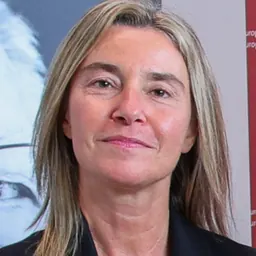


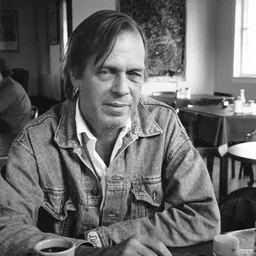
Related people
Same field, nearest in time
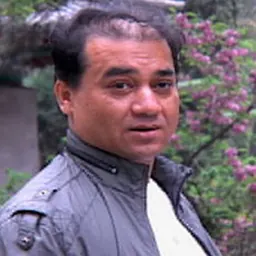


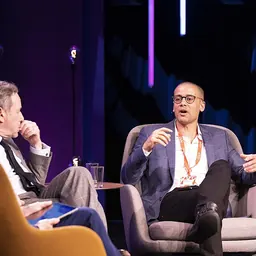
Contemporaries
People whose lives overlapped Widad Akrawi's





Frequently asked questions
Who is Widad Akrawi?
Author, lecturer, lobbyist
When was Widad Akrawi born?
Widad Akrawi was born in 1969.
What is Widad Akrawi's occupation?
Widad Akrawi is a human rights defender, politician, writer and novelist.
What is Widad Akrawi known for?
Widad Akrawi is known for Arms Trade Treaty and Peace.
What nationality is Widad Akrawi?
Widad Akrawi is Iraqi.
Sources & further reading
Cite this page
APA: Biography.guide. (2026). Widad Akrawi. https://biography.guide/widad-akrawi/
MLA: "Widad Akrawi." Biography.guide, https://biography.guide/widad-akrawi/.
Chicago: "Widad Akrawi." Biography.guide. https://biography.guide/widad-akrawi/.
Data last updated: 2026-09-20 · Spot an error? Report a correction.
Page generated 2026-09-27 05:21 UTC