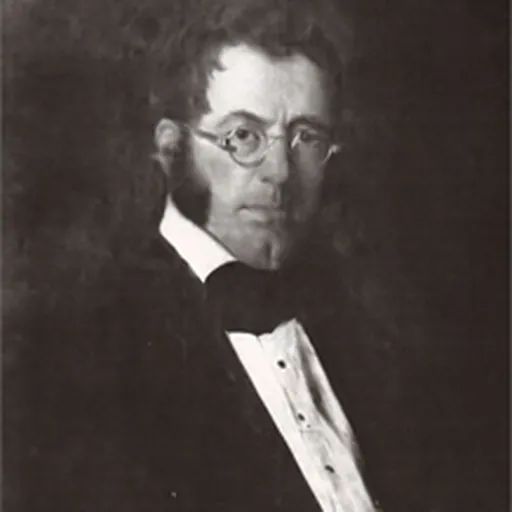
About Whitemarsh Benjamin Seabrook
Lived 1793 – 1855 (aged 61). Whitemarsh Benjamin Seabrook was an American lawyer, politician and governor.
Whitemarsh Benjamin Seabrook (June 30, 1793 – April 16, 1855) was the 63rd governor of South Carolina from 1848 to 1850.
Early life and career Seabrook was born on Edisto Island at his family's plantation in and he received his education at the College of New Jersey from which he graduated in 1812.
He owned Gun Bluff Plantation on Edisto Island and engaged in agriculture issues of the state. For several years, Seabrook was the president of the South Carolina Agricultural Society and he stressed the need upon the farmers of the state for diversification of crop. In addition, Seabrook wrote the History of the Cotton Plant and A concise view of the critical situation, and future prospects of the slave-holding states, in relation to their coloured population.
Seabrook wrote an essay in which he advocated keeping enslaved African Americans in stocks overnight "as a powerful auxiliary in the cause of good government."
Political career In 1814, at the age of 21, Seabrook gained election to the South Carolina House of Representatives and served until his election to the South Carolina Senate in 1829. Beginning in 1825, Seabrook was involved in campaigning to close Black schools in Charleston. In the early 1830s he led a campaign inspired by other Southern states to limit black literacy and religion by passing a law that would ban the teaching of slaves and free Black people to read. In 1834, this law was successfully passed. After five years in the Senate, the General Assembly elected him as the 36th Lieutenant Governor in 1834. The General Assembly elected Seabrook as Governor in 1848 and he pushed for reform of education in the state. He lamented that only the upper class of South Carolina was provided with education and that the middle and lower classes received almost little if any education. Local officials were even encouraged by Seabrook to pass additional taxes to fund education. Furthermore, Seabrook organized the teachers of the state into the Teachers' Association, but it collapsed after he left office.
Later life Upon the expiration of his term in 1850, Seabrook returned to his plantation on Edisto Island. He remained active in politics and participated in the Southern Rights Convention of 1852. On April 16, 1855, in Beaufort, Seabrook died and he was interred on his plantation.
Don’t just read it —
keep it.
Full-length biographies made to live with: read them, listen on the way to work, watch them tonight.
- E-book
- Audio
- Video
Instant download · yours to keep · every purchase keeps this site free
Important facts
Related people
Same field, nearest in time





Contemporaries
People whose lives overlapped Whitemarsh Benjamin Seabrook's





Frequently asked questions
Who was Whitemarsh Benjamin Seabrook?
American politician (1793–1855)
When was Whitemarsh Benjamin Seabrook born?
Whitemarsh Benjamin Seabrook was born on 30 June 1793 in Edisto Island.
When did Whitemarsh Benjamin Seabrook die?
Whitemarsh Benjamin Seabrook died on 16 April 1855 in Beaufort.
What was Whitemarsh Benjamin Seabrook's occupation?
Whitemarsh Benjamin Seabrook was a lawyer, politician and governor.
What nationality was Whitemarsh Benjamin Seabrook?
Whitemarsh Benjamin Seabrook was American.
Sources & further reading
· Wikipedia: Whitemarsh Benjamin Seabrook
· DBpedia: Whitemarsh Benjamin Seabrook
Cite this page
APA: Biography.guide. (2026). Whitemarsh Benjamin Seabrook. https://biography.guide/whitemarsh-benjamin-seabrook/
MLA: "Whitemarsh Benjamin Seabrook." Biography.guide, https://biography.guide/whitemarsh-benjamin-seabrook/.
Chicago: "Whitemarsh Benjamin Seabrook." Biography.guide. https://biography.guide/whitemarsh-benjamin-seabrook/.
Data last updated: 2026-09-24 · Spot an error? Report a correction.
Portrait: Wikimedia Commons · author & licence
Page generated 2026-09-27 05:08 UTC