
About Werner Voß
Lived 1897 – 1917 (aged 20). Werner Voß was a German aircraft pilot, military personnel and soldier.
Werner Voss (; 13 April 1897 – 23 September 1917) was a World War I German flying ace credited with 48 aerial victories. A dyer's son from Krefeld, he was a patriotic young man while still in school. He began his military career in November 1914 as a 17‑year‑old Hussar. After turning to aviation, he proved to be a natural pilot. After flight school and six months in a bomber unit, he joined a newly formed fighter squadron, Jagdstaffel 2 on 21 November 1916. There he befriended Manfred von Richthofen.
By 6 April 1917, Voss had scored 24 victories and awarded Germany's highest award, the Pour le Mérite. A month's leave removed Voss from the battlefield during Bloody April; in his absence, Richthofen scored 13 victories. Nevertheless, Richthofen regarded Voss as his only possible rival as top scoring ace of the war.
Soon after Voss returned from leave, he was at odds with his squadron commander. He was detailed from his squadron to evaluate new fighter aircraft and became enthusiastic about the Fokker Triplane. After transferring through three temporary squadron commands in two months, Voss was given command of Jagdstaffel 10 on 30 July 1917 at Richthofen's request. By now, his victory total was 34.
His last stand came on 23 September 1917, just hours after his 48th victory. Flying a silver-blue Fokker Dr.1, he singly fought James McCudden, Keith Muspratt, Harold A. Hamersley, Arthur Rhys-Davids, Robert L. Chidlaw-Roberts, Geoffrey Hilton Bowman, Reginald Hoidge, and Richard Maybery. After he fell in solo opposition to those eight British, Canadian and Australian aces after a dazzling display of aerobatics and gunnery that put bullets in his every opponent, he was described by his preeminent foe, Victoria Cross winner James McCudden, as "the bravest German airman". The pilot who actually killed Voss, Arthur Rhys-Davids, wished he had brought him down alive. The dogfight remains a subject of debate and controversy among aviation historians and interested parties.
Early life and entry into military service Werner Voss was born in Krefeld, Germany, on 13 April 1897. His mother, Johanna Mathilde Pastor Voss, was a pious homemaker who raised her children in the Evangelical Lutheran faith. His father Maxmilian owned a dye factory. Werner was soon followed by two brothers; Maxmilian Jr. was born in 1898, and Otto on 22 April 1901. An unusual feature of the Voss household was the presence of two first cousins, Margaret and Katherine. The elder Vosses longed for daughters, so they virtually (if not formally) adopted their nieces. The two nieces were commonly referred to within the family as "daughters" and "sisters".
The Voss family home at 75 Blumenthalstrasse was a comfortable two-story house with surrounding grounds. Young Werner was expected to carry on the family trade as he grew into his heritage. However, even before World War I burgeoned, he was already drawn towards patriotic service. When he finished his schooling at Krefeld's Moltke Gymnasium, His parents gave him a 300 cc (18.3 cid) Vee-twin Wanderer motorcycle for his 17th birthday. He received his "Certificate of Graduation" as a motorcyclist on 2 August 1914. After Germany entered World War I, he spent August and September 1914 as a civilian volunteer driver for the German military. The Militia Ersatz Eskadron 2 had been set up to feed recruits to Westphalia's 11th Hussar Regiment. On 16 November 1914, Werner Voss became one of those recruits despite still being only 17 years old. On 30 November, the hussar regiment was ordered to combat duty on the Eastern Front. He was the youngest flight instructor in German service.
Aerial combat See also World War I - Aerial Victory Standards
On 10 March 1916, Finally commissioned as an officer on 9 September 1916, he transferred to single-seater scout aircraft and was posted to Jagdstaffel 2 (Fighter Squadron 2) on 21 November 1916.
Here Voss began a lifelong friendship with another young pilot in the squadron, Manfred von Richthofen, who would soon gain fame as the Red Baron. They would later exchange family visits while on leave, and Richthofen would host the Voss family at his squadron's airfield.
Voss, an avid motorcyclist, had a love of machinery that led him to consort with his enlisted mechanics, Karl Timms and Christian Rueser; he was even on a first name basis with them. In time, they would transfer squadrons to accompany him. Voss contravened uniform regulations at times and could often be found in the hangar working on his machine beside the mechanics, dressed in a grubby jacket without insignia.
Voss scored his first aerial victory on the morning of 26 November 1916 and added a second during his afternoon flight. The two victories meant he was awarded the Iron Cross First Class on 19 December 1916. His first victory of 1917, over Captain Daly, inadvertently taught Voss the knack of deflection shooting. Voss later visited Daly while he was in hospital, twice. For his feats, he was awarded the Knight's Cross with Swords of the Order of Hohenzollern on 17 March.
Voss was awarded the Pour le Mérite on 8 April 1917.
The timing of the holiday allowed him to spend both Easter and his birthday at home. There was a large family reunion; to the family photos, he added a formal photo, in which he is seated wearing his Pour le Mérite. He also tinkered with, and roared about upon, his motorcycle. Richthofen, who had scored 11 victories before Voss began his own tally, achieved 13 additional victories during his absence. Referring to his "dear friend", Richthofen stated: "He was ... my most redoubtable competitor."
Upon his return from leave, Voss was dissatisfied with his commanding officer, Franz Walz, whom he considered insufficiently aggressive. Voss shared his sentiments with another Westphalian hussar, Leutnant Rolf Freiherr von Lersner. Walz had assumed command on 29 November 1916, just after Voss joined the Jasta. An older man of 31, he was a prewar pilot and professional soldier who had flown over 300 combat missions in reconnaissance two-seaters before being appointed to command this squadron of fighter pilots. Lacking a background in fighter tactics, he compensated by allowing his more experienced pilots to follow their own inclinations, including solo excursions into British territory. The fact that Walz followed two prior brilliant fighter tacticians in his command—Oswald Boelcke and Stefan Kirmaier—only exposed his weaknesses.
Voss disregarded military procedure and went outside the chain of command to petition higher headquarters for Walz's removal. Faced with such a case of insubordination, all three men were transferred out of the Jagdstaffel. Lersner was packed off to a bomber unit. Discovering the betrayal, Walz requested reassignment on the grounds that his honor had been impugned. On 20 May 1917, Flight Commander Voss was sent to Jagdstaffel 5 to assume temporary command.
Voss in command
Voss was bequeathed an Albatros D.III with the squadron's insignia. During his brief spell with Jasta 5, Voss scored a further half dozen victories. On 9 May 1917, he managed to shoot or force down three Allied aircraft, making it the first of two "hat trick" days he would have in his career. However, he was not always successful; being one of the three German fighter pilots who attacked and seriously damaged Captain Keith Caldwell of 60 Squadron on 28 May 1917, just after Voss's 31st victory, but the New Zealander escaped.
Voss was slightly wounded on 6 June 1917 by Flight Sub-Lieutenant Christopher Draper, but soon returned to duty. The Royal Naval Air Service credited Draper with an "out of control" victory; after returning to base, Voss had to trade in his damaged Albatros D.III for a fresh one. Meanwhile, Voss went on leave with Richthofen to Krefeld; surviving photographs portray them exhibiting their aircraft for Voss' relatives. Pater familias Maxmilian Voss Sr. issued an open invitation for Richthofen's use of the Voss family hunting lodge. After returning from his leave, on 28 June Voss took acting command of Jagdstaffel 29, a mere five days later he was given temporary command of Jagdstaffel 14, a posting which also didn't last long.
Voss was one of the test pilots for the F.I. triplane prototype which developed into the Fokker Dr.I. He was summoned to Schwerin, and on 5 July 1917 was one of the first pilots to test fly Fokker F.I. s/n 103/17. Although the Fokker had some drawbacks, such as its low speed and slowness in a dive, Voss loved the new craft. It was easy to fly with light controls, could out-maneuver any previous aircraft, was equipped with forward-firing mounted twin machine guns and had a rapid rate of climb. The same climbing ability which put it at within three minutes of takeoff lent itself well to the combat tactic of quickly rising upwards out of combat to gain the height advantage on opponents. Voss enthusiastically recommended the Fokker's adoption while never progressing to testing the Pfalz Dr.I. He left Schwerin with an assignment to command yet another fighter squadron.
On 30 July, Voss moved to his permanent command of Jagdstaffel 10 in Richthofen's Flying Circus, Jagdgeschwader I (JG I), relieving Ernst Freiherr von Althaus at Richthofen's request. With his mercurial "loner" personality, Voss was impatient with the paperwork and responsibilities of command. The arrival of the new fighter prompted visits from celebrities. On 31 August, Anthony Fokker escorted German Chancellor Georg Michaelis and Major General Ernst von Lossberg to see and film the new triplane. On 9 September, Crown Prince Wilhelm would also visit Jagdstaffel 10.
By 11 September 1917, Voss had raised his victory total to 47, second only to the Red Baron's 61. In the process, he had his closest call yet in combat. After shooting down six-victory ace Oscar McMaking, he had in turn been attacked by Captain Norman Macmillan of No. 45 Squadron 45 RFC. Macmillan dived his Sopwith Camel within of Voss, with machine gun rounds nearly hitting the German's head. The Scottish ace saw Voss turn his head twice to judge the Camel's position before evading. Then a Royal Aircraft Factory RE.8 blundered between them, nearly colliding with the Camel and breaking off the attack as Voss dived away. Macmillan claimed an "out of control" victory when he returned to base.
The following day, Voss signed himself out on leave on his authority as Staffelführer (squadron leader). His first stop was Berlin, where he was honored by receiving an autographed photograph of Kaiser Wilhelm II from the emperor's own hands. From the 15th to the 17th, he was at the Fokker factory in Schwerin; he was accompanied by his girlfriend Ilse. His leave authorization also cleared him for Düsseldorf and his hometown of Krefeld, but it is not known if he visited them. He returned to duty on 22 September 1917.
Final patrol Voss returned from leave on 23 September 1917 not yet fully rested; as fellow pilot Leutnant Alois Heldmann observed: "He had the nervous instability of a cat. I think it would be fair to say he was flying on his nerves." Nevertheless, Voss flew a morning mission and shot down an Airco DH.4 from No. 57 Squadron RFC at 09:30 hours. Upon his return to his air base with bullet holes in his Fokker, to celebrate with a victory loop before landing. In contrast to Voss's usual tidy flying garb, he was wearing striped gray trousers, a dirty gray sweater, and tall lace-up boots.
Just before Werner landed, brothers Max and Otto Voss arrived at Jagdstaffel 10 for a visit. Voss was fatigued and told his brothers he was looking forward to more time off. He ate lunch with his brothers—soup, black bread, coffee, and cake. His brothers noted his haggard appearance, apparent in his final photographs. After the meal, the three posed before Werner Voss's camera, which was equipped with a timed shutter release. Then Voss was scheduled for another patrol. was mustering for its own afternoon patrols. 'B' Flight was led by Captain James McCudden. In Royal Flying Corps fashion, his Royal Aircraft Factory SE5a serial number B4863 was marked with a large initial G painted upon the side of its fuselage. He would be followed by two other aces: Captain Keith Muspratt in SE5a A8944, designated H; Lieutenant Arthur Rhys-Davids in SE5a number B525, lettered I. Three other pilots were also attached to B Flight for this sortie—Lieutenants V. P. Cronyn in SE5a A4563, as well as R. W. Young, and Charles Jeffs.
Also mustering for patrol was the Squadron's 'C' Flight, led by Captain Geoffrey Hilton Bowman. His SE5a was followed by Lieutenant Reginald Hoidge in SE5a B506, lettered J. A third ace, Lieutenant Richard Maybery in SE5a B1 designated K, was also in 'C' Flight. Lieutenants E. A. Taylor and S. J. Gardiner filled out the flight's roster.
Both flights of 56 Squadron took off from their side of the trench lines at 1700 hours. They climbed into a sky overhung with a cloud ceiling At this time there were elements of at least eight different Royal Flying Corps squadrons waging its offensive campaign over this battlefield area. There was also considerable enemy air activity to the east, where German jagdstaffeln waited for "the customers to come into the shop".
On the German side of the lines, Voss had changed clothing. He wore a colourful civilian silk dress shirt beneath his unbuttoned knee-length brown leather coat. His polished brown boots shone from below the coat's hem. His Pour le Mérite was at his throat. He was to lead one of the two scheduled afternoon patrols. Leutnant Gustav Bellen was his righthand wingman; Leutnant Friedrich Rüdenberg had Voss's other side. Voss, with his new Fokker Triplane, advanced its throttle and soon outdistanced his two wingmen flying slower Pfalz D.IIIs. A few minutes later, Oberleutnant Ernst Weigand in Albatros D.V. number 1187/17 led a second flight skyward; three Pfalz D. IIIs followed him, piloted by Leutnants Erich Löwenhardt, Alois Heldmann, and Max Kuhn. None of these Jasta 10 aircraft would ever catch up with their Staffelführer. At about 18:25 hours, he turned to help what he believed to be a Nieuport threatened by a German Albatros, firing a short burst of machine-gun fire to distract the German. The "Nieuport", Voss's misidentified Fokker Triplane, rounded on Hamersley and raked him with Spandau fire. Hamersley flung his Royal Aircraft Factory SE.5a into a spin that went inverted, with Voss continuing to fire at him, holing his wings and engine cowling. Lieutenant Robert L. Chidlaw-Roberts, a squadronmate of Hamersley, rushed to his aid. Within seconds, Voss shredded Chidlaw-Roberts's rudder bar, also driving him out of the fray into a forced landing.
At this point 'C' Flight arrived. As it dipped down through the overcast toward the dogfight, Gardiner and Taylor went astray. Maybery was attacked by a green Pfalz D.III. Hoidge's counter-attack foiled the German. Bowman and Maybery remained to join the attack on Voss. Hoidge, having broken off his pursuit of the falling Pfalz, changed the drum magazine in his Lewis gun, and climbed to join battle.
Voss in his tri-plane zigzagged, yawed, and bobbed among his multiple attackers, never holding a straight course for more than seconds, evading British fire and spewing bullets at them all individually. The combat now became so frenetic that the surviving pilots later gave widely varying accounts. However, certain events were commonly related:
Muspratt's engine lost its coolant to a Spandau bullet early on; he glided away from the fight with the engine beginning to seize. At another point, Voss was caught in a crossfire by at least five of his attackers but appeared to be miraculously unaffected by the fire. At about this point, Maybery withdrew with his aircraft's upper right-hand longeron holed in several places.
Voss and the six remaining British aces swirled down to . At times Voss had altitude advantage over his attackers, but apparently did not attempt to escape the situation, despite the odds against him. Using the tri-plane's superior rate of climb and its ability to slip turn he managed to evade his opponents, and plunged down back into the melee. He continued to flick turn at high speeds and counter-attack any aircraft pursuing him. Bowman's machine was hit, left slowed and ineffectively trailing dark smoke and steam, though he stayed in the fight.
McCudden, watching from , recalled: "I saw him go into a fairly steep dive and so I continued to watch, and then saw the tri-plane hit the ground and disappear into a thousand fragments, for it seemed to me that it literally went into powder." There would be debate later whether Voss dropped out of the inverted triplane. eluding them and achieving hits on nearly every SE.5a. His stricken aircraft crashed near Plum Farm north of Frezenberg, Belgium at about 18:40 hours.
Aftermath
British reaction
Lieutenant Verschoyle Phillip Cronyn later described his harrowing return flight. Being the rare targeted pilot to escape Voss's gun fire, he now had to coax home a failing machine destined for the scrapheap. He lost control of it banking for the landing pattern, and finally performed a desperate high speed landing at 18:40 hours, approximately coincidental with the triplane's impact. His Squadron commander, Major Blomfield, led the shaky-kneed pilot from his machine to a bench and plied him with medicinal brandy. Cronyn's composure broke. After a fit of weeping, he pulled himself together as McCudden landed, followed by Rhys-Davids. The latter exited his machine hyperventilating and stammering. He got his tot of brandy, and uttered an account jumbled by his excitement. With the exception of Muspratt, who had landed at the 1 Squadron aerodrome with a seized engine, the rest of 56 Squadron landed back at Estrée-Blanche. Combat reports by the pilots were written and submitted; those from McCudden, Rhys-Davids, Bowman, Maybery, Hoidge, and Gardiner still exist. These fragmentary written documents would be supplemented by McCudden's autobiography, written before his death the following year; contradictory written accounts produced by Chidlaw-Roberts and Bowman in 1942; and Cronyn's war memoirs of 1976. When corresponding with aviation historian Evan Hadingham in 1967, Cronyn offered, "... movements were purely instinctive, and made on such split second action that no impression was recorded." He offered as example that he was unaware he had spent most of his fight with Voss flying inverted until Muspratt mentioned it in the mess the evening of the fight.
The 56 Squadron mess atmosphere that night was muted, with speculation about the identity of their fallen opponent. The names Richthofen, Voss, and Wolff were suggested. Rhys-Davids was besieged with congratulations, which he received modestly with a disclaimer of, "If I only could have brought him down alive." A standing toast was drunk to their gallant fallen foe.
The following day, 24 September 1917, a British patrol reached the crash site. Documents in Voss' pocket identified him. A military doctor cursorily examined the corpse. He noted three bullet wounds. One ranged slightly upward through the chest cavity from right to left, consistent with Hoidge's angle of fire; it would have killed Voss in less than a minute. The other two gunshot wounds pierced Voss's abdomen from rear to front, coinciding with Rhys-Davids's firing angle. Werner Voss was buried like any other dead soldier near Plum Farm, laid in a shell crater without coffin or honors. His grave's location was recorded as Map Sheet 28, coordinates 24.C.8.3. The field grave would subsequently be lost trace of, through the turmoil of ongoing ground fighting.
That same day, Aide de Camp Maurice Baring was sent by Major General Hugh Trenchard to gather such military intelligence as he could about the dogfight. Baring interviewed McCudden, Maybery, Hoidge, and Rhys-Davids. McCudden laconically reported his observation of the crash location being near Zonnebeke. Maybery insisted he saw two triplanes in the fight, a grey one and a green one, in addition to a green German scout and a rednosed German scout. Hoidge never saw the rednosed Albatros. Rhys-Davids said the dogfight began when a red-nosed Albatros, a green German scout, and a grey and brown Triplane attacked an SE.5. He also insisted that the triplane mounted four guns, and thought it had a stationary engine instead of a rotary engine. Subsequent accounts of Voss's last stand would partially depend on such "facts" drawn from Baring's inquiries.
Rhys-Davids, in a letter home written on 25 September mentioning his victory claim, did not know the name of his victim. However, another letter of the 28th mentioned Voss by name. Also, on 28 September, after five days as a nonflying orderly officer, V. P. Cronyn was shipped off to another noncombat post with combat fatigue, a belated casualty. By 5 October, Rhys-Davids's letter to his mother boasted of his souvenir rudder and compass salvaged from the triplane wreckage.
On 27 October, the same day Rhys-Davids died in action, a British intelligence officer finally gained access to the wreckage after it had lain a month in the open. He verified it was a triplane, and noted that its upper surfaces were camouflage green and its bottom surfaces were blue. Second Lieutenant Barfoot-Saunt removed some small pieces from the wreck to accompany his report, illustrating technical points. The technical information that was reported gave the British their first insight into the new craft, although Voss had swapped in a French Le Rhone engine.
German reaction Leutnants Rüdenberg and Bellen had returned to base, as had the rest of the Jasta 10 pilots. The only one with news was Heldmann, who reported Voss headed toward British lines while pursued by a British SE.5. Timm and Rueser waited anxiously for his return as the sun set. The fact that Voss was missing in action was communicated to wing headquarters; telephone queries were made of all friendly airfields within range. Late that night, a German frontline unit reported seeing six British machines shoot down a lone German aircraft that fell within the British trenches. Heldmann refused to believe Voss was killed in aerial combat; he claimed Voss had to have been shot after crawling from the wreckage.
On 24 September, Jasta 10 pilots dropped a note inquiring about Voss attached to a black, white, and red streamer over British lines. By 25 September, two days after the fight, the Niederrheinische Volkszeitung ran a notice of Voss's death.
On 7 October 1917, the Krefelder Zeitung ran a page of tributes to Werner Voss, including those from Crown Prince Wilhelm, aviator Anthony Fokker, and Generalleutnant Ernst von Hoeppner.
On 11 October 1917, Bellen was invalided from the ranks of Jasta 10. In November, Rüdenberg was released from active duty to pursue his studies at university. Aviation historians such as Douglas Whetton posited these reassignments were retribution for failure to aid Voss in his dogfight.
Legacy When the British aces of 56 Squadron learned their fallen foe's identity, they were quick to pay public tribute to him. The leading British pilot he fought that day, James McCudden VC, expressed sincere regret at Voss' death: "His flying was wonderful, his courage magnificent and in my opinion he was the bravest German airman whom it has been my privilege to see fight."
During the Nazi regime, Voss' old school in Krefeld was renamed in his honour, but this was later reversed following the German defeat in World War II. A major thoroughfare in Krefeld is still named for him. He is also commemorated by street names in Stuttgart and in Berlin.
Still enduring is the debate as to why Voss chose to fight on against clearly almost impossible odds rather than disengage from the action. However, it is possible that he wanted to close the gap in victories between himself and the Red Baron by shooting down some British aircraft, so he stayed on. Although Voss's apparent refusal to retreat is not mentioned in the contemporary English combat reports, nor in McCudden's autobiography written in June and July 1918, McCudden is credited with the observation that Voss seemingly rejected several opportunities to disengage and withdraw from the tactically grave situation in which he found himself.
In popular culture In the 2008 biopic The Red Baron, Werner Voss is portrayed by actor Til Schweiger.
Voss' victories
Confirmed victories are numbered and listed chronologically. Unconfirmed victories are denoted by "u/c".
When two casualties are listed in the Notes column, the first listed is the pilot, the other the aerial observer/gunner. Conflicting claims are denoted by *, although only one counts as a confirmed victory according to either source.
Doubled horizontal lines mark changes in squadron assignments. In his last fight Voss had nearly damaged all his opponents aircraft; they could not be credited to him as he did not survie to file any combat claims and likewise although damaged the enemy aircraft were not permanently put out action
No.Date/timeAircraftFoeResultLocationNotes 1 27 November 1916 @ 09:40 hours Albatros Nieuport 17 serial number A281 from 60 Squadron Shot down Miraumont, France Captain George Alec Parker missing in action 2 27 November 1916 @ 14:15 hours Albatros Royal Aircraft Factory FE.2b s/n 4915 from 18 Squadron Shot down in flames South of Bapaume, France Lieutenant F. A. George wounded in action; Air Mechanic 1st Class Oliver Frederick Watts killed in action 3 21 December 1916 @ 11:00 hours Albatros Royal Aircraft Factory B.E.2d s/n 5782 from 7 Squadron Shot down Miraumont, France Lieutenant D. W. Davis WIA; Second Lieutenant William Martin Vernon Cotton KIA 4 1 February 1917 @ 16:00 hours Albatros Airco D.H.2 s/n A2614 from 29 Squadron Shot down Achiet-le-Petit Captain Albert Peter Vincent Daly WIA, prisoner of war 5 4 February 1917 @ 14:40 hours Albatros Royal Aircraft Factory B.E.2d s/n 5927 from 16 Squadron Shot down Givenchy, France Second Lieutenant Herbert Martin-Massey WIA; Second Lieutenant Noel Mark Hodson Vernham KIA 6 10 February 1917 @ 11:15 hours Albatros Airco D.H.2 s/n A2548 from 32 Squadron Damaged Southwest of Serre Captain Leslie Peech Aizlewood returned to base unhurt 7 25 February 1917 @ 14:55 hours Albatros Airco D.H.2 s/n A2557 from 29 Squadron Shot down Arras-Saint Sauveur Lieutenant Reginald 9 26 February 1917 @ 16:50 hours Halberstadt Blairville, France Second Lieutenants Edwin Albert Pope and Hubert Alfred Johnson KIA 11 27 February 1917 @ 16:48 hours Albatros Royal Aircraft Factory B.E.2c s/n 7197 from 12 Squadron Shot down West of Arras Captain John McArthur and Private James Whiteford KIA 12 4 March 1917 @ 11:30 hours Albatros Royal Aircraft Factory B.E.2d s/n 6252 from 8 Squadron Shot down in flames South of Berneville, France Sergeant Reginald James Moody and Second Lieutenant Edmund Eric Horn KIA 13 6 March 1917 @ 16:35 hours Albatros Airco D.H.2 s/n 7941 from 32 Squadron Shot down Favreuil, France Captain Herbert Gordon Southon WIA, POW 14 11 March 1917 @ 10:00 hours Albatros Royal Aircraft Factory F.E.2b s/n 7685 from 22 Squadron Shot down Rancourt, France Second Lieutenant Leslie W. Cross and Lieutenant Christopher Neuville, France Second Lieutenant Charles R. Dougal WIA; Second Lieutenant Sydney Harryman POW/WIA/DOW 20 19 March 1917 @ 09:30 hours Albatros Royal Aircraft Factory R.E.8 s/n A4165 from 59 Squadron Shot down Saint-Léger, France Captain Eldred Wolferstan 22 24 March 1917 @ 16:45 hours Albatros Royal Aircraft Factory B.E.2d s/n 5769 from 8 Squadron Shot down Boileux-Boiry Lieutenant Hugh Norton and Second Lieutenant Reginald Alfred William Tillett KIA 23 1 April 1917 @ 11:45 hours Albatros Royal Aircraft Factory B.E.2c s/n 2561 from 15 Squadron Shot down; aircraft strafed on ground East of Saint-Léger, France Captain Arthur Meredith Wynne WIA; u/c 6 April 1917 @ 09:45 hours Albatros Sopwith Pup s/n A6165 from 54 Squadron Forced to land South of Lagnicourt-Marcel, France Second Lieutenant Robert M. Foster survived 25 7 May 1917 @ 19:25 hours Albatros Royal Aircraft Factory SE.5 s/n A4867 from 56 Squadron Shot down Between Étaing and Lecuse Second Lieutenant Roger Michael Chaworth-Musters KIA 26 9 May 1917 @ 14:00 hours Albatros Royal Aircraft Factory B.E.2c s/n 7209 from 52 Squadron Exploded Havrincourt, France Lieutenant Roland Humphrey Coles and Second Lieutenant John Charles Sigismund Day KIA 27 9 May 1917 @ 16:45 hours Albatros Sopwith Pup s/n A6174 from 54 Squadron Shot down Lesdain, France Lieutenant George Copland Temple Hadrill POW 28 9 May 1917 @ 16:50 hours Albatros Royal Aircraft Factory F.E.2b s/n 4991 from 22 Squadron Shot down Le Bosquet Second Lieutenants Charles McKenzie Furlonger and Charles William Lane POW 29 23 May 1917 @ 14:25 hours Albatros D.III Royal Aircraft Factory F.E.2b s/n A5502 from 18 Squadron Shot down North of Havrincourt Second Lieutenant Wilfred Ferguson MacDonald and Lieutenant Frank Charles Shackell KIA 30 26 May 1917 @ 15:45 hours Albatros D.III Sopwith Pup s/n A6168 From 54 Squadron Shot down Southwest of Gouzeaucourt, France Second Lieutenant Mortimer George Cole WIA 31 28 May 1917 @ 14:00 hours Albatros D.III Royal Aircraft Factory F.E.2d s/n A6378 from 25 Squadron Shot down Southeast of Douai, France Captain Aubrey de Selincourt and Lieutenant Henry Cotton POW 32 4 June 1917 @ 07:10 hours Albatros D.III Sopwith Pup s/n B2151 from 54 Squadron Shot down Aubencheul-aux-Bois, France Captain Reginald George Hewett Pixley KIA 33 5 June 1917 @ 09:30 hours Albatros D.III Royal Aircraft Factory F.E.2b s/n A857 from 22 Squadron Shot down North of Vaucelles Captain Francis Percival Don and Lieutenant Herbert Harris POW 34 6 June 1917 @ 13:10 hours Albatros D.III Nieuport 17 s/n N3204 from 6 Naval Squadron Shot down West of Graincourt-lès-Havrincourt, France Sub-Lieutenant Fabian Pember Reeves of the RNAS KIA 35 10 August 1917 @ 16:25 hours Albatros D.III Spad XIII from Escadrille 31 of the Aéronautique Militaire Shot down South of Diksmuide, Belgium Captain Henri Rousseau MIA 36 15 August 1917 @ 19:10 hours Albatros D.III Royal Aircraft Factory F.E.2b s/n A5152 from 20 Squadron Shot down Zillebeke Lake Second Lieutenant Charles H. Cameron St. Julien Captain Noel William Ward Webb MIA 38 23 August 1917 @ 10:10 hours Albatros D.III Spad VII s/n B3528 from 19 Squadron Crashlanded at 23 Squadron's airfield Southwest of Diksmuide, Belgium Captain Arthur Lionel Gordon-Kidd WIA/DOW 39 3 September 1917 @ 09:52 hours Fokker Triplane s/n 103/17 Sopwith Camel s/n 3917 from 45 Squadron Shot down North of Houthem Lieutenant Aubrey Talley Heywood KIA 40* 5 September 1917 @ 14:50 hours Fokker Triplane s/n 103/17 Sopwith Pup s/n B1842 from 46 Squadron Crashlanded trailing blue smoke St. Julien Second Lieutenant Charles Walter Odell unharmed 40* 5 September 1917 @ 15:50 hours Fokker Triplane s/n 103/17Airco DH.5 s/n A9374 from 32 Squadron Crashed into Ypres Canal St. Julien Lieutenant William Edwin Sandys KIA 41 5 September 1917 @ 16:30 hours Fokker Triplane s/n 103/17 Caudron two-seater s/n G.6 from Escadrille 53 Shot down Bixschoote Maréchal des logis Jacques Thabaud-Desthouilieres and Lieutenant Marcel Mulard KIA 42 6 September 1917 @ 16:35 hours Fokker Triplane s/n 103/17 Royal Aircraft Factory F.E.2d s/n B1895 from 20 Squadron Shot down in flames Saint Julien/Boesinghe Lieutenant John Oscar Pilkington and Air Mechanic 2nd Class Herbert Frederick Matthews KIA 43 10 September 1917 @ 17:50 hours Fokker Triplane s/n 103/17 Sopwith Camel s/n B3927 from 70 Squadron Shot down Between Passendale and Langemarck Second Lieutenant Arthur Jackson Smith Sisley KIA 44 10 September 1917 @ 17:55 hours Fokker Triplane s/n 103/17 Sopwith Camel s/n B3787 from 70 Squadron Shot down Between Passendale and Langemarck 2nd Lt Oliver Charles Pearson MIA 45 10 September 1917 @ 18:15 hours Fokker Triplane s/n 103/17 Spad VII from Escadrille 31 Shot down Paschendaele-Westroosebeke Adjutant Jules Tiberghein KIA 46 11 September 1917 @ 10:30 hours Fokker Triplane s/n 103/17 Bristol F.2 Fighter s/n B1105 from 22 Squadron Shot down Langemarck Second Lieutenant R. de Lacey Stedman WIA; Second Lieutenant Harry Edward Jones KIA 47 11 September 1917 @ 16:25 hours Fokker Triplane s/n 103/17 Sopwith Camel B6236 from 45 Squadron Shot down East of Saint Julien Lieutenant Oscar Lennox McMaking KIA 48 23 September 1917 @ 09:30 hours Fokker Triplane s/n 103/17 Airco D.H.4 s/n A7643 from 57 Squadron Shot down in flames Ledegem, Belgium Second Lieutenants Samuel Leslie John Bramley and John Matthew Delacey KIA
Don’t just read it —
keep it.
Full-length biographies made to live with: read them, listen on the way to work, watch them tonight.
- E-book
- Audio
- Video
Instant download · yours to keep · every purchase keeps this site free
Important facts
People in Werner Voß's life
Named in this biography and alive at the same time


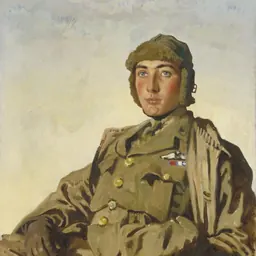



Related people
Same field, nearest in time
Contemporaries
People whose lives overlapped Werner Voß's



Frequently asked questions
Who was Werner Voß?
German flying ace (1897–1917)
When was Werner Voß born?
Werner Voß was born on 13 April 1897 in Krefeld.
When did Werner Voß die?
Werner Voß died on 23 September 1917 in Second Battle of Ypres.
What was Werner Voß's occupation?
Werner Voß was an aircraft pilot, military personnel and soldier.
What nationality was Werner Voß?
Werner Voß was German.
Sources & further reading
Cite this page
APA: Biography.guide. (2026). Werner Voß. https://biography.guide/werner-voss/
MLA: "Werner Voß." Biography.guide, https://biography.guide/werner-voss/.
Chicago: "Werner Voß." Biography.guide. https://biography.guide/werner-voss/.
Data last updated: 2026-09-20 · Spot an error? Report a correction.
Page generated 2026-09-27 05:20 UTC