
About Wenceslau de Moraes
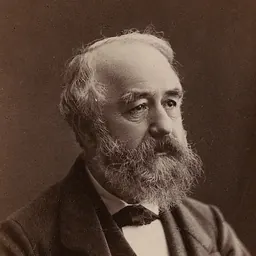
Lived 1854 – 1929 (aged 75). Wenceslau de Moraes was a Portuguese poet, writer, journalist and diplomat, known for Portuguese language.
Wenceslau José de Souza de Moraes (30 May 1854 – 1 July 1929), in modern orthography Venceslau José de Sousa de Morais, was a Portuguese writer whose works were steeped in orientalism and exoticism, particularly the culture of Japan. He has been compared to Lafcadio Hearn, a contemporary who settled in Japan but wrote in English. A translator of Haiku, his verse was also influenced by Symbolism.
Biography
Born into a bourgeois family of modest wealth in Lisbon, Moraes wrote his first poems in 1872 at the age of 18. After studying at the Naval College, he was commissioned a lieutenant in 1875 and served aboard warships based in Portuguese Mozambique. In 1889, he was promoted to commander and assigned to assist the Captain of the Port of Portuguese Macau. While there he first began writing his Traços do Extremo Oriente, married an Anglo-Chinese woman named Atchan (from whom he separated in 1893), and visited Siam, Portuguese Timor, and Japan (the last nearly every year).
In 1899, he abandoned his naval career and became consul of Portugal's first consulate for Kobe and Osaka, Japan. Increasingly fascinated by Japan, he converted to Buddhism and married a former geisha named Fukumoto Yone in a Shinto ceremony. Grief-stricken after her death in 1912, he resigned his position as consul, severed all relations with the Portuguese Navy and foreign ministry, and moved to Yone's home city of Tokushima, where he lived with her niece Koharu and visited her grave every day. After Koharu died in 1916, he made daily visits to the graves of both women, whom he memorialized in 1923, by which time he had become a hermit, increasingly Japanese in lifestyle, but increasingly resented by his Japanese neighbors. He died alone in 1929, at the age of 75.
Moraes and his works remained largely unknown in Japan until the seventh-year Buddhist memorial service for him on 1 July 1935, when Jiroh Yumoto, the local superintendent of schools (from Nagano Prefecture), encouraged the Ministry of Foreign Affairs and Ministry of Education to publicize his work. He is now remembered in a small museum atop Mount Bizan in Tokushima City.
Films Paulo Rocha's film A Ilha dos Amores (1982) is about the life and loves of Moraes in Macau and Japan.
Don’t just read it —
keep it.
Full-length biographies made to live with: read them, listen on the way to work, watch them tonight.
- E-book
- Audio
- Video
Instant download · yours to keep · every purchase keeps this site free
Important facts
People in Wenceslau de Moraes's life
Named in this biography and alive at the same time
Related people
Same field, nearest in time

Contemporaries
People whose lives overlapped Wenceslau de Moraes's





Frequently asked questions
Who was Wenceslau de Moraes?
Portuguese writer (1854-1929)
When was Wenceslau de Moraes born?
Wenceslau de Moraes was born on 30 May 1854 in Lisbon.
When did Wenceslau de Moraes die?
Wenceslau de Moraes died on 1 July 1929 in Tokushima.
What was Wenceslau de Moraes's occupation?
Wenceslau de Moraes was a poet, writer, journalist and diplomat.
What was Wenceslau de Moraes known for?
Wenceslau de Moraes was known for Portuguese language.
What nationality was Wenceslau de Moraes?
Wenceslau de Moraes was Portuguese.
Sources & further reading
· Wikipedia: Wenceslau de Moraes
· DBpedia: Wenceslau de Moraes
Cite this page
APA: Biography.guide. (2026). Wenceslau de Moraes. https://biography.guide/wenceslau-de-moraes/
MLA: "Wenceslau de Moraes." Biography.guide, https://biography.guide/wenceslau-de-moraes/.
Chicago: "Wenceslau de Moraes." Biography.guide. https://biography.guide/wenceslau-de-moraes/.
Data last updated: 2026-09-22 · Spot an error? Report a correction.
Page generated 2026-09-27 05:17 UTC