
Warwick Brookes
English businessman and Conservative Member of Parliament
About Warwick Brookes
Lived 1875 – 1935 (aged 59–60). Warwick Brookes was a British sailor, politician and businessperson.
Warwick Brookes (1875 – August 1935) was an English businessman, yachtsman and Conservative Party politician. As his retail and other businesses prospered, he was elected to the House of Commons in 1916, but after an electoral defeat in 1918 he returned to commerce and prospered in amusements catering. However, excessive spending and a series of business difficulties and led to him being made bankrupt in 1931.
Early life Brookes was born in Chorlton, Manchester, the son of Warwick Brookes.
His youngest brother Gordon was an actor who served in World War I as a captain in the Duke of Cornwall's Light Infantry. Gordon was killed in action on 16 September 1916. Brookes and his father were both directors of the Piccadilly-based company, Sandow (Limited), which was wound up in 1916.
At the start of the war he became managing director (MD) of the Junior Army & Navy Stores; later he set up a factory which manufactured equipment for the British Army, such as canvas buckets and groundsheets. His various ventures made him a wealthy man, and by 1918 he was registered as the joint owner of No. 145 Oxford Street, and lived in Park Lane, Brookes was offered £250,000 for his stake in the former, but declined the offer. He became MD of the Army & Navy, on a salary of £7,500 a year, and a few years later in the slump after the end of the Great War, he sold his stake for £25,000. with liabilities of £50,000. He campaigned for the Conservative candidate at the by-election in Chelmsford in November that year but at the general election in January 1910 he lost in Newington West to the sitting Liberal Party MP Captain Cecil Norton, by a margin of 412 votes (5.0%) At the December 1910 election, Norton, by now Assistant Postmaster-General, saw off Brookes again, this time with a majority of 540 votes (7.2%). triggering a by-election in Newington West. Norton had already indicated his intention to stand down from the Commons at the next general election, and the City of London merchant J. D. Gilbert had already been selected as the Liberal prospective parliamentary candidate. In ordinary circumstances this would have led to a by-election contested both by Gilbert and by Brookes, who had been adopted as the prospective Conservative candidate, but the war had brought a different logic. The parties in the coalition government led by H. H. Asquith had agreed an electoral pact for the duration of the war: when a vacancy arose in a seat held by the Conservatives, the Liberals would not contest the resulting by-election, and vice versa.
It soon became clear that some sort of contest was likely. The Unionist Labour Party invited Lambeth Borough Councillor W. A. Perkins to contest the seat on its behalf, and the London Trades Union Protest Committee selected Joe Terrett to stand on a platform of opposition to the recently introduced drink orders introduced on liquor traffic by the Central Control Board.
Mile End Brookes waited less than a week for another chance to enter Parliament.
On 9 January, two days after the close of nominations in Newington West, a vacancy arose in the East London, in the Mile End division of Tower Hamlets. Mile End's Conservative MP Colonel Harry Lawson succeed to the peerage as Baron Burnham, and B.S. Straus, who had been the prospective Liberal candidate in Mile End, offered to sign Brookes's nomination papers. He also supported the development of air defences, and advocated an air force given the same pre-dominance then held by the Royal Navy. Many of Mile End's 6,000 electors were unable to vote, since they were away serving in the war. and both candidates advocated similar policies for strengthening air defences. and the First Lord of the Admiralty, Arthur Balfour, intervened to denounce the "criminality" of an implication by Billings that the air defence of the East End had been neglected because the people there were poor.
Polling took place on 25 January, and Brookes was declared the winner with a majority of 376 votes (10.4%) over Billings.
Later that week, as a new Member of Parliament (MP), Brookes joined a delegation of London MPs who visited Lord Kitchener at the War Office to discuss the protection of London from raids by aircraft.
Preston At the post-war general election in December 1918 Brookes did not stand again in Mile End, which was held with a huge majority by the Coalition Conservative candidate Walter Preston. Instead he stood as a Coalition Conservative for the borough of Preston, where he won neither of the two seats. The Times observed that the "transference of an old London member to Preston did not suit local tastes".
Yachting For two decades, Brookes was a regular competitor at yachting events in England. His 6 Metre-class yacht The Alien competed regularly in events at the Eastern of England Yacht Club in Burnham-on-Crouch in 1908, 1909 although he does not appear to have won any major races. By 1920 he was sailing Susanne, a 154-Thames Ton schooner built in 1904 to the designs of William Fife, and competing against the King's yacht Britannia at Deal and in Cowes Week. In 1922 Brookes raced in a 15-metre class yacht Tuiga and in 1925 he competed at Cowes Week in a 51-ton cutter Hispania. In 1928 he bought the steam yacht Sea Fay.
Don’t just read it —
keep it.
Full-length biographies made to live with: read them, listen on the way to work, watch them tonight.
- E-book
- Audio
- Video
Instant download · yours to keep · every purchase keeps this site free
Important facts
People in Warwick Brookes's life
Named in this biography and alive at the same time



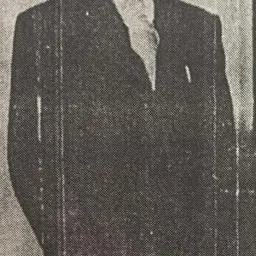
Related people
Same field, nearest in time


Contemporaries
People whose lives overlapped Warwick Brookes's

Frequently asked questions
Who was Warwick Brookes?
English businessman and Conservative Member of Parliament (1875-1935)
When was Warwick Brookes born?
Warwick Brookes was born in 1875.
When did Warwick Brookes die?
Warwick Brookes died on 1 August 1935.
What was Warwick Brookes's occupation?
Warwick Brookes was a sailor, politician and businessperson.
What nationality was Warwick Brookes?
Warwick Brookes was British.
Sources & further reading
Cite this page
APA: Biography.guide. (2026). Warwick Brookes. https://biography.guide/warwick-brookes/
MLA: "Warwick Brookes." Biography.guide, https://biography.guide/warwick-brookes/.
Chicago: "Warwick Brookes." Biography.guide. https://biography.guide/warwick-brookes/.
Data last updated: 2026-09-20 · Spot an error? Report a correction.
Page generated 2026-09-27 05:24 UTC