
About Warren Clay Coleman
Lived 1849 – 1904 (aged 55). Warren Clay Coleman was an American businessperson, known for Coleman Manufacturing Company.
Warren Clay Coleman (May 25, 1849 – May 24, 1904) was an African-American businessman in south-central North Carolina known as a founder of the Coleman Manufacturing Company, which built one of the first black-owned and operated textile mills in the United States. The Coleman-Franklin-Cannon Mill still stands in Concord, North Carolina, and was listed on the National Register of Historic Places in 2015.
Born into slavery, Coleman learned shoemaking and barbering before he came of age as a freedman. He had a white attorney father who took an interest in him, and Coleman made use of his contacts and became known as a highly successful entrepreneur in and around Concord, North Carolina. He developed a substantial general store and other retail outlets, bought land, and developed and rented residential real estate, owned farms in several areas, and had other businesses in addition to the mill. In 1900 Coleman was the wealthiest man of color in the state.
Early life Coleman was born into slavery in 1849 in Cabarrus County, North Carolina. His mother, Roxanna Coleman, was of mixed race and owned by planter Daniel Coleman, Sr. and his wife Mary (Mahan) Coleman; she took their surname. His white father was Rufus Clay Barringer (1821–1895), then a young, unmarried attorney whose family lived near the Colemans. (White men who had mixed-race sons sometimes tried to prepare them through apprenticeships for such trades, by which they could support themselves as free men.)
Career After the war, Warren Coleman was freed but bound in a two-year apprenticeship indenture to William M. Coleman until he came of age in 1867. (Coleman was a planter-lawyer in Cabarrus County, who later became the state attorney general, and he served as a patron of the younger man.) After that, Coleman moved to Alabama, seeking economic opportunities.
He returned to Cabarrus County the next year, and established his first business; collecting rags, bones, and junk for resale and disposal. In 1873–1874, he went to Washington, DC, where he attended the Model School at Howard University to learn more about business, a period of study supported by William Coleman.
After his return to Concord, Coleman was likely aided by his father Barringer, who had a law practice in Concord and Charlotte until 1871, and likely also by William Coleman. For instance, the younger Coleman bought land from the Barringer family. Over the next 25 years, Warren Clay Coleman became one of the richest merchants of color in the state. three-story brick building. It had assets worth $100,000. Because of an increase in cotton prices and other factors, the mill struggled financially and was closed after Coleman's death in 1904. It was sold to other parties.
Although the mill passed out of black ownership after Coleman's death, its operation with black workers opened doors for others. Superior Court Judge Clarence Horton of Cabarrus County has noted that when a hosiery factory opened in 1913, it employed black seamstresses and other workers, unlike many white-owned mills in the South. He also donated money to other black churches: Rock Hill and Zion Hill AME Zion churches in Concord.
To encourage education among African Americans, Coleman subsidized tuition for students at Howard University, Livingstone College, and Shaw University, all historically black colleges. He also helped support the African-American orphanage in Oxford, North Carolina.
Legacy Today the mill is owned by Bill Bryant, who ran a large printing operation here for a time. He leases much of the mill to smaller businesses: several specialty auto body and auto parts shops, a pool company, and a distillery for "moonshine". In 2001, the section of Highway 601 South near the mill was named "Warren C. Coleman Boulevard" in his honor. In 2015, the Coleman-Franklin-Cannon Mill was listed on the National Register of Historic Places. In 2018, Price Memorial AME Zion Church held its first annual W.C. Coleman Day Street Festival, to honor the businessman and help continue this church.
Don’t just read it —
keep it.
Full-length biographies made to live with: read them, listen on the way to work, watch them tonight.
- E-book
- Audio
- Video
Instant download · yours to keep · every purchase keeps this site free
Important facts
People in Warren Clay Coleman's life
Named in this biography and alive at the same time


Related people
Same field, nearest in time
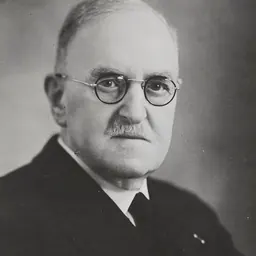
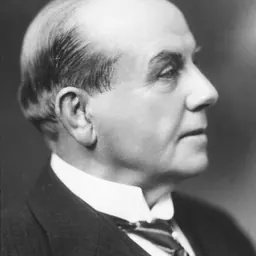


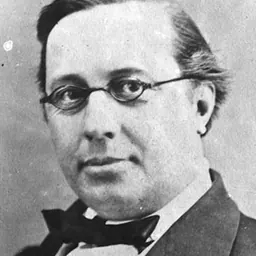
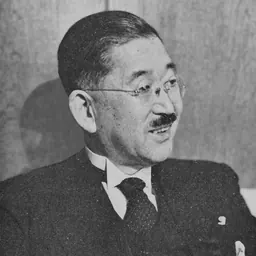
Contemporaries
People whose lives overlapped Warren Clay Coleman's




Frequently asked questions
Who was Warren Clay Coleman?
American clergyman (1849-1904)
When was Warren Clay Coleman born?
Warren Clay Coleman was born on 25 March 1849 in Cabarrus County.
When did Warren Clay Coleman die?
Warren Clay Coleman died on 31 March 1904 in Concord.
What was Warren Clay Coleman's occupation?
Warren Clay Coleman was a businessperson.
What was Warren Clay Coleman known for?
Warren Clay Coleman was known for Coleman Manufacturing Company.
What nationality was Warren Clay Coleman?
Warren Clay Coleman was American.
Sources & further reading
· Wikipedia: Warren Clay Coleman
· DBpedia: Warren Clay Coleman
Cite this page
APA: Biography.guide. (2026). Warren Clay Coleman. https://biography.guide/warren-clay-coleman/
MLA: "Warren Clay Coleman." Biography.guide, https://biography.guide/warren-clay-coleman/.
Chicago: "Warren Clay Coleman." Biography.guide. https://biography.guide/warren-clay-coleman/.
Data last updated: 2026-09-26 · Spot an error? Report a correction.
Page generated 2026-09-27 05:14 UTC