
About Wang Zhene
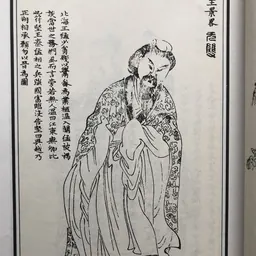
Lived 373 – 418 (aged 44–45). Wang Zhene was a Chinese military leader.
Early life Wang Zhen'e was born on 11 June 373 and was the grandson of the Former Qin prime minister, Wang Meng through his father Wang Xiu (王休). His birth date, which was the fifth day of the fifth month in the Chinese calendar, was seen as ominous according to the customs of his time, so his parents considered giving him off to a distant relative. However, Wang Meng intervened and stated, "This is no ordinary child. In the past, Lord Mengchang was born on an inauspicious date, and he became the Prime Minister of Qi. This child will bring prosperity to our family." Thus, the family kept him and gave him the name "Zhen'e", which means "to ward off evil".
In 386, when Wang Zhen'e was thirteen years old, the Former Qin was in collapse, and his homeland in the Guanzhong region was in a state of war. He was displaced for some time, wandering around the Xiao Mountains and Mianchi region before following his uncle, Wang Yao (王曜) to surrender to the Eastern Jin and live in Jing province. The young Wang enjoyed reading military treatises as well as discussing military and national affairs. Though he was not adept at horse riding and archery, he was described as decisive and possessing a mind for strategy.
Service under Liu Yu
Joining Liu Yu In 409, the Eastern Jin commander, Liu Yu was carrying out his first northern expedition against the Southern Yan. As his forces laid siege to the Yan capital at Guanggu (廣固, in modern Qingzhou, Shandong), Liu Yu was recommended by someone to Wang Zhen'e, who was serving as the Magistrate of Linli at the time. Liu Yu summoned Wang, and after talking to him, Liu was so impressed that he allowed Wang to stay overnight at his camp. The next morning, Liu Yu told his subordinates, "Wang Zhen'e is the grandson of Wang Meng. A family of generals have produced another general." He immediately appointed Wang as his Chief Clerk. When the army returned south, Wang fought and won several battles against the rebel, Lu Xun at Chapu (查浦; in present-day Jiangning, Jiangsu). For his contributions, he was enfeoffed as a fifth-class Viscount of Bolu County.
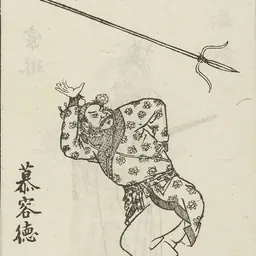
When Liu Yu's army finally reached Tong Pass, Wang Zhen'e asked for permission to lead the navy from the Yellow River into the Wei River for an assault on the Qin capital, Chang'an, which Liu Yu permitted. At the time, the Qin general, Yao Nan (姚難) was returning to Chang'an from Xiangcheng. Wang Zhen'e pursued him, enticing the Qin emperor, Yao Hong to lead his troops to Shiqiao (石橋; northeast of present-day Xi'an, Shaanxi) as reinforcements. Another Qin general, Yao Qiang (姚彊), also led his forces to reinforce Yao Nan, and together they fought at Jingshang (涇上; northeast of present-day Xianyang, Shaanxi). Wang Zhen'e dispatched Mao Dezu to fight them, and his forces killed Yao Qiang while forcing Yao Nan to flee back to Chang'an.
Wang's fleet then entered the Wei River and sailed upstream. His fleet consisted of paddle-wheel ships; the crewmates propelled through the water by treading on the wheels built onto the ships, all while safely concealed inside their cabins. The Qin people were shocked when they saw these ships seemingly moving without a crew, which made them believe that divine intervention was at work. On 19 September 417, the fleet reached Weiqiao (渭橋; in present-day Weiyang, Shaanxi), where Wang ordered his troops to eat before disembarking fully armed, threatening to execute the last person to land.
At the time, Yao Hong still had tens of thousands of men under him. After a rallying speech, Wang led his men to charge against the Qin forces guarding the Weiqiao. Yao Hong attempted to reinforce the commanding general, Yao Pi (姚丕), but by the time he arrived, Wang had already won, and Yao Pi's men trampled on the relief force in their retreat. As the Qin army collapsed, Yao Hong fled back to his palace on horseback, and Wang soon entered Chang'an.
The following day, Yao Hong, along with his empress and officials, all went out to Wang Zhen'e's camp to surrender. Wang apprehended them and handed them over to his superiors. He then comforted the Han Chinese and non-Han tribes in Chang'an and allowed them to carry on with their daily lives. When Liu Yu arrived in Chang'an, Wang Zhen'e greeted him at the dam. Liu was very pleased by Wang's accomplishments, comparing him to the Eastern Han general, Feng Yi.
However, Wang once again showed his greed when he secretly opened and looted the Later Qin treasury. Liu Yu initially turned a blind eye to Wang's crimes and did not pursue the matter further, but he became concerned when he heard an accusation that Wang had taken Yao Hong's imperial carriage and was plotting a rebellion. Liu Yu sent his men to investigate, and though Wang had indeed stolen the carriage, he had simply stripped the carriage of its gold, silver and jewels before abandoning it over a wall. Relieved, Liu Yu left Wang unpunished and promoted him to General Who Attacks Barbarians for his merits.
Death and posthumous honours Later that year, Liu Yu received news that Liu Muzhi had died back at Jiankang. Fearing that the court will rebel in his absence, Liu Yu withdrew his troops from the Guanzhong, placing his 11-year-old son, Liu Yizhen in charge of guarding the region with Wang Zhen'e serving as his military aide. Many of Wang's southern peers were jealous and suspicious of him; in addition to recapturing Chang'an, the people of the Guanzhong region all respected Wang due to his grandfather, Wang Meng. The general and a younger brother of Shen Yuanzi, Shen Tianzi, was also competing with Wang for credit, as he considered his victory against the Qin forces at Yaoliu (堯柳; in present-day Baoji, Shaanxi) to be just as decisive. Shen and Fu Hongzhi warned Liu Yu, "Wang Zhen'e's family are natives of the Guanzhong; they cannot be trusted." Liu Yu replied, "I leave you, the military and civil officials with ten thousand of my elite troops. If he were to cause trouble, then he would be courting his own destruction, and that is that." Liu Yu also privately said to Shen Tianzi, "Zhong Hui was not much trouble because of Wei Guan. As the saying goes, "One fierce beast is no match to a pack of foxes." How can you, a dozen or so men, be afraid of Wang Zhen'e?" Liu Yu eventually left the Guanzhong at the end of the year.
In 418, the Guanzhong came under attack from the Helian Xia forces in the north. Shen Tianzi led his army to resist, but then stalled and retreated to Fort Liuhui (劉迴堡; around present-day Xingping, Shaanxi) as he feared the strength of the Xia army. He sent an envoy to Chang'an to report on the situation, during which Wang Zhen'e turned to his colleague, Wang Xiu and angrily criticized Shen's inaction. The envoy reported Wang's words to Shen, who despised Wang even more now. Wang Zhen'e led his reinforcements to aid Shen, but rumours began to circulate that Wang was plotting to kill the southern officers and soldiers in preparation for his rebellion. Finally, on 7 March, Shen invited Wang to Fu Hongzhi's camp for a secret meeting. After successfully persuading him to dismiss his attendants, Shen Tianzi and his kinsman, Shen Jingren (沈敬仁) assassinated Wang. Shen later claimed that he was acting under a secret order from Liu Yu, but he was soon killed by Wang Xiu as well. The Jin camp was thrown into disorder, allowing the Xia to quickly occupy the Guanzhong.
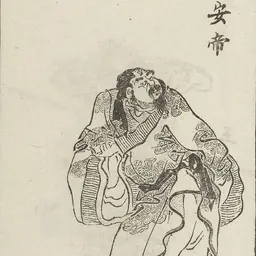
When he received news of Wang Zhen'e execution, Liu Yu submitted a memorial to Emperor An of Jin, stating that Shen Tianzi had "went mad" and had killed a "loyal servant". Wang was posthumously appointed General of the Left and Inspector of Qing province. After Liu Yu took the throne and established the Liu Song dynasty in 420, he posthumously conferred Wang Zhen'e the title of Marquis of Longyang and the name "Zhuang" (壯), and inscribed him along with others in the Ancestral Temple to be worshipped.
Don’t just read it —
keep it.
Full-length biographies made to live with: read them, listen on the way to work, watch them tonight.
- E-book
- Audio
- Video
Instant download · yours to keep · every purchase keeps this site free
Important facts
People in Wang Zhene's life
Named in this biography and alive at the same time


Related people
Same field, nearest in time






Contemporaries
People whose lives overlapped Wang Zhene's


Frequently asked questions
Who was Wang Zhene?
Eastern Jin general (373-418)
When was Wang Zhene born?
Wang Zhene was born in 373 in Former Qin.
When did Wang Zhene die?
Wang Zhene died in 418.
What was Wang Zhene's occupation?
Wang Zhene was a military leader.
What nationality was Wang Zhene?
Wang Zhene was Chinese.
Sources & further reading
Cite this page
APA: Biography.guide. (2026). Wang Zhene. https://biography.guide/wang-zhene/
MLA: "Wang Zhene." Biography.guide, https://biography.guide/wang-zhene/.
Chicago: "Wang Zhene." Biography.guide. https://biography.guide/wang-zhene/.
Data last updated: 2026-09-20 · Spot an error? Report a correction.
Page generated 2026-09-27 05:29 UTC