
About Wanda Dynowska
Lived 1888 – 1971 (aged 82). Wanda Dynowska was a Polish and Russian translator, writer, theologian, university teacher and theosophist.
Wanda Dynowska (30 June 1888 – 20 March 1971) is a Polish-Indian theosophist, writer, translator, publisher, social activist, promoter of intercultural exchanges between India and Poland, jogini, foundress of the Indo-Polish Library.
Biography Born in Sankt-Petersburg (then in Russian Empire) to Eustachy Dynowski and Helena Dynowska into a family of Polish nobility. Studied in Kraków and Lausanne. From 1919 she became an active promoter of theosophy in Poland. She was general secretary for Poland in Theosophical Society.
In 1935, Dynowska came to India and got involved in new Hindu religious movements (with Ramana Maharishi, and philosopher Jiddu Krishnamurti, among others). She also became a close collaborator of Mahatma Gandhi supporting Indian movements for independence, and also received the name "Umadevi" from him.
In 1944, together with another Polish Hindu Maurice Frydman, she founded the Indo-Polish Library in Madras, which became for more than thirty years a major editorial body for Polish translations of main Hindu religious texts (e.g. Bhagavat Gita, Mahabharata, Ramayana) as well as for contemporary Indian poetry and literature.
Dynowska translated from Polish to English, Tamil, and Hindi most important works of Polish poets, and published these works in India. She was an exceptionally active promoter of Polish culture and history in India. Post Indian independence, she took Indian citizenship.
From 1960, she started helping Tibetan refugees in India. Living in their main centre in Dharmasala, Dynowska organized schools, education, and social infrastructure there. Additionally, she published Polish translations of Buddhist texts. She was also referred to as "Tenzin Chodon" by the Tibetans as she helped them settle down after they fled from China in 1959.
She died in Mysore, and according to her will, her burial had an inter-religious (Catholic-Buddhist-Hindu) character.
Don’t just read it —
keep it.
Full-length biographies made to live with: read them, listen on the way to work, watch them tonight.
- E-book
- Audio
- Video
Instant download · yours to keep · every purchase keeps this site free
Important facts
People in Wanda Dynowska's life
Named in this biography and alive at the same time

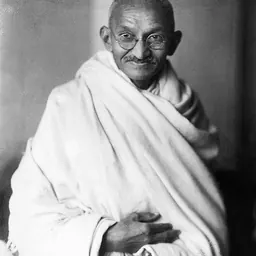

Related people
Same field, nearest in time



Contemporaries
People whose lives overlapped Wanda Dynowska's



Frequently asked questions
Who was Wanda Dynowska?
Polish writer and social activist (1888–1971)
When was Wanda Dynowska born?
Wanda Dynowska was born on 30 June 1888 in Saint Petersburg.
When did Wanda Dynowska die?
Wanda Dynowska died on 20 March 1971 in Mysore.
What was Wanda Dynowska's occupation?
Wanda Dynowska was a translator, writer, theologian, university teacher and theosophist.
What nationality was Wanda Dynowska?
Wanda Dynowska was Polish and Russian.
Sources & further reading
Cite this page
APA: Biography.guide. (2026). Wanda Dynowska. https://biography.guide/wanda-dynowska/
MLA: "Wanda Dynowska." Biography.guide, https://biography.guide/wanda-dynowska/.
Chicago: "Wanda Dynowska." Biography.guide. https://biography.guide/wanda-dynowska/.
Data last updated: 2026-09-20 · Spot an error? Report a correction.
Page generated 2026-09-27 05:15 UTC