
Walther Vetter
German musicologist and music historian
About Walther Vetter
Lived 1891 – 1967 (aged 75). Walther Vetter was a German musicologist, music historian, university teacher, journalist, editor and military musician.
Walther Hermann Vetter (10 May 1891 – 1 April 1967) was a German musicologist. From 1946 to 1958, he was professor at the Humboldt University of Berlin.
Life Born in Berlin, Vetter, Lutheran, was the son of the Kapellmeister In mid-1934, Vetter was offered a non-permanent extraordinary professorship at the University of Breslau, where Arnold Schmitz held the chair at the time. In 1936, Vetter succeeded Hans Engel as head of the musicology department and in 1939 he was appointed as a regular director at the Ernst-Moritz-Arndt-Universität Greifswald. In the course of the appointment process in Berlin, in which he was named third after Friedrich Blume and Rudolf Gerber, the local Gaudozentenbundsführer Willi Willing described him as a "musicologist of medium format". In April 1941 he went to the newly founded occupied Poland and National Socialist-oriented , where he received a civil servant extraordinary ordinariate and became director of the Musicological Institute. He probably owed this position to Herman-Walther Frey, speaker on university matters in the Reich Ministry of Science, Education and Culture. For Frey's denazification proceedings in 1947, Vetter then issued his acquaintance with a Persil Certificate. Only at the end of the Second World War, in January 1945, Vetter became the Volkssturm (banns I) have been called up. Most recently he served as clerk of a supply regiment in the Wehrmacht. Vetter was a member of the National Socialist Teachers League (1 May 1936 to 15 October 1937), in National Socialist Motor Corps. (1939 to 1941) Furthermore, until 1941 he was the municipal music commissioner for Greifswald.
After the end of the war in May 1945, Vetter took up residence in the Soviet Occupation Zone, later the GDR, and in March 1946, after a year-long appointment procedure, was offered the full chair of musicology at the Humboldt University of Berlin, which had been vacant since the death of Arnold Schering in 1941. Vetter's research focused on various genres and epochs of historical musicology. He wrote studies and systematic manuals on ancient music, on Johann Sebastian Bach, Franz Schubert and Christoph Willibald Gluck. He also published encyclopedia articles for the Pauly-Wissowa (from 1927), the Die Musik in Geschichte und Gegenwart (from 1949) and the Neue Deutsche Biographie From 1948 to 1961, he was co-editor of Die Musikforschung, from 1956 to 1966, together with Rudolf Eller. Editor of the German Yearbook of Musicology. From 1948 to 1958, he was vice president and from 1961 honorary member of the Gesellschaft für Musikforschung, from 1950 to 1960, board member of the . He became a member of the German Bach Committee, which was constituted in 1949. In 1950, he took over the direction of the scientific Bach conference in Leipzig. From 1952, he was then a member of the editorial board of the New Bach Edition, remaining until his death. He was also an advisory board for musicology at the Ministry of Higher and Technical Education (East Germany). He retired emeritus in 1958. His academic students included among others Kurt Gudewill (PhD, Hamburg 1935) and Herbert Kelletat (Habilitation, Poznan 1944). From 1949 to 1951 Hans Heinrich Eggebrecht was . Assistant Vetters in Berlin.
Vetter, who was a member of the Liberal-Democratic Party of Germany, He thus received the National Prize of the GDR in 1957 III. class for science and technology
In 1950 he caused a controversy with his book Der Kapellmeister Bach. Contrary to the state of the art, he declared Bach's Köthen years to be central to his career. In keeping with the State ideology, he emphasized the secular work of the composer and Thomaskantor at the expense of his Protestant church music. While the party press gave the book a positive reception, Georg Knepler, himself a colleague of Vetter's in Berlin, was certainly critical. In 1952, the West German Bach researcher Friedrich Smend set his work Bach in Köthen against Vetter. Vetter's earlier contribution to the life and work of Johann Sebastian Bach in 1938 was already ideologically exaggerated. At that time, his writing supported those values that were supported by Blood and soil. Eduard Mutschelknauss attested him decidedly ethnic nationalism Elements. Like the monograph of 1950, his Forkel edition Über Johann Sebastian Bachs Leben, Kunst und Kunstwerke (1966ff. ), respectively the afterword, is considered tendentious, which is why research tends to fall back on the original edition of 1802 or the reprint of 2000 published by Claudia Maria Knispel.
Vetter was married and died in 1967 in Berlin-Niederschönhausen at the age of 75. His estate is located in the music department of the Berlin State Library.
Publications Die Arie bei Gluck. Leipzig 1920 (Dissertation; printed only in extracts). Das frühdeutsche Lied. Ausgewählte Kapitel aus der Entwicklungsgeschichte und Aesthetik des ein- und mehrstimmigen deutschen Kunstliedes im 17. Jahrhundert. 2 volumes. Helios-Verlag, Münster 1928. Der humanistische Bildungsgedanke in Musik und Musikwissenschaft. H. Beyer & Söhne, Langensalza 1928. Hermann Abert und die Musikwissenschaft an der Universität Halle. Helios-Verlag, Münster 1929 (Vortrag). Franz Schubert. Athenaion, Potsdam 1934. Antike Musik. Heimeran, Munich 1935. Johann Sebastian Bach: Leben und Werk. Breitkopf & Härtel, Leipzig 1938. Beethoven und die militärisch-politischen Ereignisse seiner Zeit. Kluge & Ströhm, Posen 1943 (Vortrag). Der Kapellmeister Bach. Versuch einer Deutung Bachs auf Grund seines Wirkens als Kapellmeister in Köthen. Athenaion, Potsdam 1950. Bericht über die wissenschaftliche Bachtagung der Gesellschaft für Musikforschung: Leipzig 23. bis 26. Juli 1950. Edition Peters, Leipzig 1951 (edited with Ernst Hermann Meyer). Der Klassiker Schubert. 2 volume. Peters, Leipzig 1953. Festschrift Max Schneider zum achzigsten Geburtstage. Deutscher Verlag für Musik, Leipzig 1955 (ed.). Richard Wagner: Pariser Novellen: Ein deutscher Musiker in Paris. 2nd edition, Koehler & Amelang, Leipzig 1961 (ed.). Mythos – Melos – Musica. Ausgewählte Aufsätze zur Musikgeschichte. 2 volumes. Leipzig 1957–1961. Christoph Willibald Gluck. Ein Essay. VEB Deutscher Verlag für Musik, Leipzig 1964. Johann Nikolaus Forkel: Über Johann Sebastian Bachs Leben, Kunst und Kunstwerke. Hoffmeister und Kühnel, Leipzig 1802. [Hg. des Faksmile-Neudrucks: 2nd edition, Henschel, Berlin 1970].
Literature Heinz Wegener: Im Dienst der Musikwissenschaft. Walter Vetter 70 Jahre alt. In Der Kirchenmusiker 12 (1961), S. 58f. Günter Hausswald: Walther Vetter 70 Jahre. In Musica 15 (1961). Eberhard Otto: Walther Vetter 75 Jahre. In Musica 20 (1966), (with pic.). Hansjürgen Schaefer: Walther Vetter 75 Jahre. In Musik und Gesellschaft 16 (1966), S. 330f. Heinz Becker: Walther Vetter in memoriam. In Die Musikforschung 20 (1967) 3. Wolfram Schwinger: Zum Tode von Walther Vetter. In Musica 21 (1967), pp. 129f. Friedrich Blume: Walther Vetter in Memoriam. In Acta Musicologica 40 (1968) 1. Ernst Hermann Meyer: Zum Gedenken Walther Vetters. In Beiträge zur Musikwissenschaft 10 (1968), pp. 209f. Institut für Musikwissenschaft der Humboldt-Universität zu Berlin (ed.): Musa, mens, musici: im Gedenken an Walther Vetter. Deutscher Verlag für Musik, VEB, Leipzig 1969 (with a glossed over typeface. ) Gabriele Baumgartner: Vetter, Walther. In Gabriele Baumgartner, Dieter Hebig (ed.): Biographisches Handbuch der SBZ / DDR 1945–1990. Volume 2: Maassen – Zylla. Saur, Munich among others 1997,. Carl Dahlhaus, Hans Heinrich Eggebrecht (ed.): Riemann Musiklexikon. In vier Bänden und einem Ergänzungsband (Serie Musik Atlantis, Schott. vol. 8397). Volume 4 R–Z. 3rd edition, Atlantis-Musikbuch-Verlag, Zürich among others 2001,. Burkhard Meischein: "Der erste musikwissenschaftliche Lehrstuhl Deutschlands". Vorgänge um die Nachfolge Arnold Scherings 1941–1946. In (ed.): Die Berliner Universität in der NS-Zeit. Volume 2: Fachbereiche und Fakultäten. Steiner, Stuttgart 2005,. Fred K. Prieberg: Handbuch Deutsche Musiker 1933–1945. 2nd edition, Kopf, Kiel 2009,. Ernst Klee: Das Kulturlexikon zum Dritten Reich. Wer war was vor und nach 1945 (Die Zeit des Nationalsozialismus. Vol. 17153). Vollständig überarbeitete Ausgabe. Fischer-Taschenbuch-Verlag, Frankfurt 2009,. Henrik Eberle: Ein wertvolles Instrument. Die Universität Greifswald im Nationalsozialismus. Böhlau Verlag, Köln among others 2015,. Markus Rathey: A Divided Country–A Divided Bach: The Cantor-Kapellmeister Controversy and The Cold War. In Bach 47 (2016) 2.
Don’t just read it —
keep it.
Full-length biographies made to live with: read them, listen on the way to work, watch them tonight.
- E-book
- Audio
- Video
Instant download · yours to keep · every purchase keeps this site free
Important facts
People in Walther Vetter's life
Named in this biography and alive at the same time
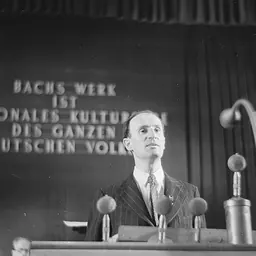
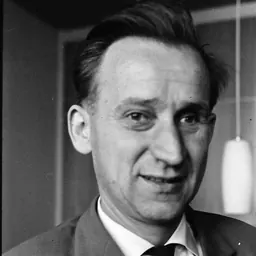


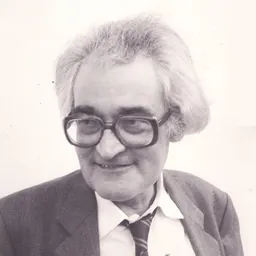


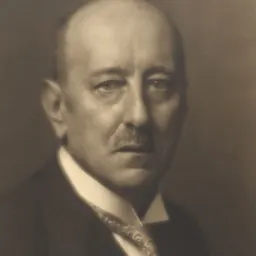
Related people
Same field, nearest in time

Contemporaries
People whose lives overlapped Walther Vetter's

Frequently asked questions
Who was Walther Vetter?
German musicologist and music historian (1891-1967)
When was Walther Vetter born?
Walther Vetter was born on 10 May 1891 in Berlin.
When did Walther Vetter die?
Walther Vetter died on 1 April 1967 in Berlin.
What was Walther Vetter's occupation?
Walther Vetter was a musicologist, music historian, university teacher, journalist, editor and military musician.
What nationality was Walther Vetter?
Walther Vetter was German.
Sources & further reading
Cite this page
APA: Biography.guide. (2026). Walther Vetter. https://biography.guide/walther-vetter/
MLA: "Walther Vetter." Biography.guide, https://biography.guide/walther-vetter/.
Chicago: "Walther Vetter." Biography.guide. https://biography.guide/walther-vetter/.
Data last updated: 2026-09-20 · Spot an error? Report a correction.
Page generated 2026-09-27 05:32 UTC