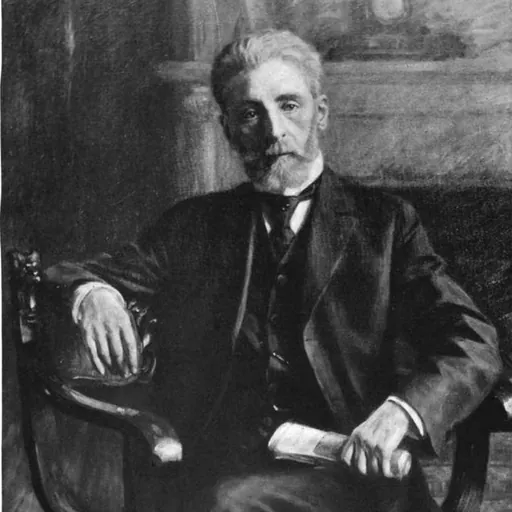
Walter Stanley Haines
American forensic scientist
About Walter Stanley Haines
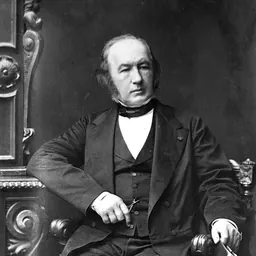
Lived 1850 – 1923 (aged 72). Walter Stanley Haines was an American forensic scientist.
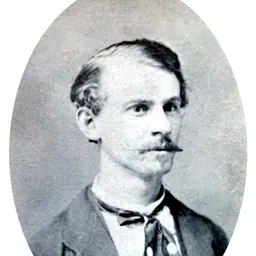
Walter Stanley Haines (September 27, 1850 – January 27, 1923) was an American professor of chemistry, materia medica, and toxicology. He taught at Rush Medical College in Chicago for almost 50 years, and was acclaimed for his teaching. With Frederick Peterson, he published a comprehensive guide to medicine and the law, A Textbook on Legal Medicine and Toxicology, which went through many editions.
An early forensic scientist, Haines testified in a number of sensational trials, including those relating to the Haymarket bombing of 1886, the disappearance of Adolph Luetgert's second wife Louisa in 1897, and the suspicious deaths in multimillionaire Thomas Hunton Swope's family in 1909.
Early life and education Walter Stanley Haines was born September 27, 1850, to John Charles Haines and Emma Adams (Fay) Haines of Chicago. His father was an ardent abolitionist and held the position of mayor of Chicago for two terms (1858–1860). Walter was one of four children. He graduated from Chicago High School in 1869, ranking first in his class.
Walter Haines attended Massachusetts Institute of Technology for two years, 1869–1871, He interned at Mercy Hospital in Chicago and also visited France to study at the Sorbonne in Paris.
With Frederick Peterson, Haines published A Textbook on Legal Medicine and Toxicology, a comprehensive guide to medicine and the law. Haine's contributions included a chapter on "General Principles of Toxicology", which described common poisons, their symptoms and treatment, and best practices for postmortem examinations. The textbook first appeared in two volumes in 1903–1904 and went through multiple editions.
Haines was recognized as an authority in chemistry. He was a member of the American Chemical Society, the American Medical Association, and the Chemical Society of London, among others. and the Illinois Commission on Industrial Diseases. August Spies, George Engel, Albert Parsons, and Adolph Fischer were hanged. The other defendants had their sentences commuted.
Disappearance of Louisa Luetgert Adolph Luetgert, nicknamed "the sausage king of Chicago", was accused in 1897 of the murder of his second wife Louisa Bicknese Luetgert. She had reportedly gone missing as of May 1, 1897. Police suspected Luetgert of killing Louisa at the A.L. Luetgert Sausage & Packing Company, dissolving her body in the plant and burning whatever remained in a furnace. Police searched the factory, finding bone fragments and a couple of rings, one marked "L.L."
The first person in the Swope household to die was James Moss Hunton, a cousin of Margaret Swope's late husband Logan; he had lived with the family before and after Logan's death. He was a banker, and he managed Logan's estate and was the executor for Thomas Hunton Swope's will. He and Swope had recently been discussing the possibility of changes to the will; Swope was considering giving more of his huge fortune to charity, which would leave less of it to divide among his surviving family. Hunton was taken suddenly and violently ill. He was apparently suffering from a cerebral hemorrhage, and a standard practice of the time was blood-letting to remove pressure on the brain. Bennett Clark Hyde carried out the blood-letting and insisted on bleeding him heavily, in spite of objections from nurse Pearl Kellar and Dr. George Twyman. Hunton died. Hyde was tried and convicted of the murder of Thomas Swope on May 16, 1910. Hyde's wife Frances supported him through extensive court proceedings, which included at least two mistrials, one possible bribery attempt, and additional litigation over who would pay the cost of the prosecution. The State of Missouri and Margaret Swope are estimated to have spent $250,000 pursuing Hyde's conviction, but the charges were dropped on April 9, 1917 and he was released. In 1920, Frances divorced Hyde on charges that he was threatening and abusive, but she continued to maintain that he was innocent of murder.
Don’t just read it —
keep it.
Full-length biographies made to live with: read them, listen on the way to work, watch them tonight.
- E-book
- Audio
- Video
Instant download · yours to keep · every purchase keeps this site free
Important facts
People in Walter Stanley Haines's life
Named in this biography and alive at the same time




Related people
Same field, nearest in time




Contemporaries
People whose lives overlapped Walter Stanley Haines's

Frequently asked questions
Who was Walter Stanley Haines?
American forensic scientist
When was Walter Stanley Haines born?
Walter Stanley Haines was born on 27 September 1850 in Chicago.
When did Walter Stanley Haines die?
Walter Stanley Haines died on 27 January 1923 in Chicago.
What was Walter Stanley Haines's occupation?
Walter Stanley Haines was a forensic scientist.
What nationality was Walter Stanley Haines?
Walter Stanley Haines was American.
Sources & further reading
· Wikipedia: Walter Stanley Haines
· DBpedia: Walter Stanley Haines
Cite this page
APA: Biography.guide. (2026). Walter Stanley Haines. https://biography.guide/walter-stanley-haines/
MLA: "Walter Stanley Haines." Biography.guide, https://biography.guide/walter-stanley-haines/.
Chicago: "Walter Stanley Haines." Biography.guide. https://biography.guide/walter-stanley-haines/.
Data last updated: 2026-09-23 · Spot an error? Report a correction.
Portrait: Wikimedia Commons · author & licence
Page generated 2026-09-27 05:06 UTC