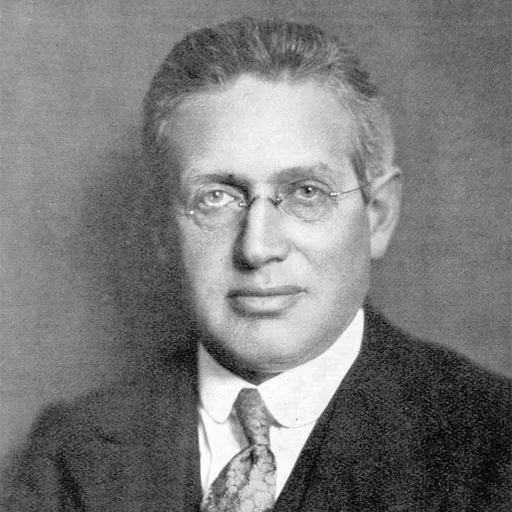
About Walter Rosenhain
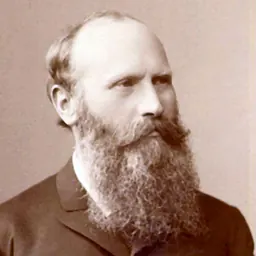
Lived 1875 – 1934 (aged 58). Walter Rosenhain was an Australian engineer and metallurgist.
Walter Rosenhain (24 August 1875 – 17 March 1934) was a German-born metallurgist who was raised and educated in Australia and spent most of his career in Britain. With James Alfred Ewing, he produced early experimental evidence that the plastic deformation of metals occurs through slip within their crystalline grains. Rosenhain helped establish physical metallurgy as a field concerned with the relationship between the microscopic structure and mechanical behaviour of metals.
From 1906 to 1931, Rosenhain directed the Department of Metallurgy and Metallurgical Chemistry at the National Physical Laboratory (NPL), where he led research on metal deformation, alloy constitution, heat treatment and metallographic methods.
Early life and education
Rosenhain was born in Berlin on 24 August 1875. He was the son of Moritz Rosenhain, a merchant, and Friederike Rosenhain, whose father was Rabbi Benjamin Yosman Fink. His family migrated to Melbourne when he was five, partly to prevent him from later becoming liable for Prussian military service. He attended Wesley College, Melbourne, and studied physics and engineering at Queen's College, University of Melbourne.
Career
Research at Cambridge and Chance Brothers At Cambridge, Ewing suggested that Rosenhain examine polished metal specimens under a microscope while mechanically deforming them. During these experiments, sharply defined lines appeared within individual crystalline grains. Their direction differed between grains, and additional systems of lines appeared as the deformation increased. Ewing and Rosenhain interpreted the lines as surface steps produced when parts of a crystal slipped along parallel planes.
Their results showed that metals consist of crystalline grains and that permanent deformation can occur through discrete slips without destroying the crystalline structure. Ewing and Rosenhain presented the research in the 1899 Bakerian Lecture, later published as "The Crystalline Structure of Metals". Rosenhain subsequently produced cross-sections of deformed surfaces that showed the steps in profile and measured whether the material between them had become distorted.
National Physical Laboratory
In 1906, Rosenhain became superintendent of NPL Department of Metallurgy and Metallurgical Chemistry. He held the post for 25 years. During this period, the department expanded from 4 employees to about 70 and acquired dedicated laboratories, a foundry, a rolling mill and workshops.
In 1915, Marie Laura Violet Gayler and Isabel Hadfield became the first women appointed to the scientific staff of Rosenhain’s department. Gayler later contributed to research on aluminium age hardening and dental amalgams.
Scientific work
Rosenhain’s research covered the deformation, fracture, recrystallisation and heat treatment of metals. His early work with Ewing established the significance of slip bands in plastic deformation. He later examined how deformation affected iron and steel, including the relationship between temperature, fracture and grain boundaries.
He served as president of the Institute of Metals from 1928 to 1930 and was active in the Optical Society. He represented Britain in the International Association for Testing Materials and became its president in 1931. He also served on committees concerned with aeronautics, industrial research, dental materials and technical standards.
Rosenhain retired from NPL in 1931 and became a consulting metallurgist in London.
Histories of metallurgy credit Rosenhain with helping to move the discipline from chemical classification towards the experimental study of metallic structure and mechanical behaviour. His organisation of team research at NPL also contributed to its development as an international centre for physical metallurgy.
The Institute of Materials, Minerals and Mining awards the Rosenhain Medal and Prize for achievement in materials science.
Personal life and death
On 4 December 1901, Rosenhain married Louise Monash, the sister of Australian engineer and military commander John Monash. The couple had three daughters. Although Rosenhain was not a practising Jew, he resigned from several German scientific societies during the early years of the Nazi government in protest against its treatment of Jewish people.
Rosenhain died from cancer at his home in Kingston, Surrey, on 17 March 1934. He was buried at Putney Vale Cemetery.
Selected works
Don’t just read it —
keep it.
Full-length biographies made to live with: read them, listen on the way to work, watch them tonight.
- E-book
- Audio
- Video
Instant download · yours to keep · every purchase keeps this site free
Important facts
People in Walter Rosenhain's life
Named in this biography and alive at the same time




Related people
Same field, nearest in time

Contemporaries
People whose lives overlapped Walter Rosenhain's

Frequently asked questions
Who was Walter Rosenhain?
Australian metallurgist
When was Walter Rosenhain born?
Walter Rosenhain was born on 24 August 1875 in Melbourne.
When did Walter Rosenhain die?
Walter Rosenhain died on 17 March 1934 in Surrey.
What was Walter Rosenhain's occupation?
Walter Rosenhain was an engineer and metallurgist.
What nationality was Walter Rosenhain?
Walter Rosenhain was Australian.
Sources & further reading
Cite this page
APA: Biography.guide. (2026). Walter Rosenhain. https://biography.guide/walter-rosenhain/
MLA: "Walter Rosenhain." Biography.guide, https://biography.guide/walter-rosenhain/.
Chicago: "Walter Rosenhain." Biography.guide. https://biography.guide/walter-rosenhain/.
Data last updated: 2026-09-22 · Spot an error? Report a correction.
Page generated 2026-09-27 05:10 UTC