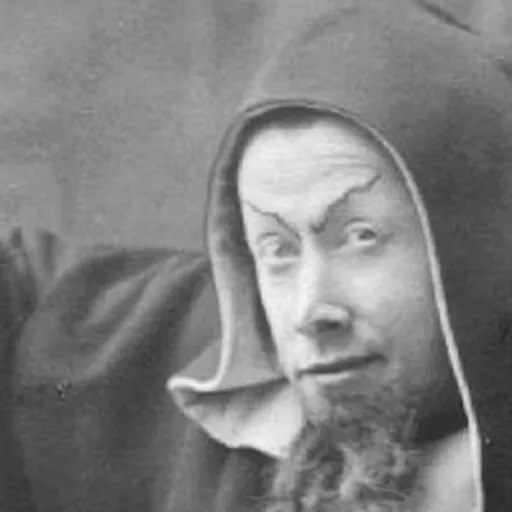
About Walter Passmore
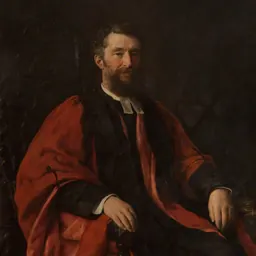
Lived 1867 – 1946 (aged 79). Walter Passmore was a British stage actor.
Walter Henry Passmore (10 May 1867 – 29 August 1946) was an English singer and actor best known as the first successor to George Grossmith in the comic baritone roles in Gilbert and Sullivan operas with the D'Oyly Carte Opera Company.
Passmore began performing professionally at the age of fourteen in the pantomime Cinderella. He was apprenticed to a piano maker and then worked as a pianist before returning to acting, making his London debut in 1890. In 1893 he joined the D'Oyly Carte Opera Company, soon becoming the company's principal comedian. He created roles in the original productions of the last two Gilbert and Sullivan operas and in many other Savoy Operas. He played the patter roles in several Gilbert and Sullivan revivals, and he toured for the company.
In 1903 Passmore left the company and began a career in musical comedies, plays and pantomimes in the West End and on tour that lasted for thirty years. His West End appearances included roles in such productions as The Earl and the Girl (1903), The Talk of the Town (1905). He often appeared on stage with his second wife, Agnes Fraser.
Life and career Early career Passmore was born in London, the son of Louisa Emma née Bullock (1829–1902) and Alfred Passmore (1825–1889), a coffee house keeper. He became a choirboy at All Saints Church in Notting Hill. On Christmas morning 1881 he sang in Messiah, and the following day he made his first professional stage appearance at the age of fourteen at Sunderland as a page in the pantomime Cinderella. He then served as an apprentice to the piano makers Cramer & Co, but at the end of the apprenticeship he took a job as a pianist with travelling concert parties and performed in farcical comedies.
In 1889 in Wigan, Lancashire, he married Kathleen Naomi P. Nanton (1869–1901) and with her had four children: Naomi Kathleen Eugenie Passmore (1889–1889); Josephine Doris Passmore (born 1892); Mirette Louisa Passmore (1894–1970) (named after the opera Mirette he was appearing in at the time of her birth); and Walter Frederick Passmore (1896–1974). The following year, Passmore made his London debut in a revival of Dion Boucicault's drama The Flying Scud at the Standard Theatre, Bishopsgate. He then created his first starring role, Bobinet in André Messager's Mirette (1894). He also performed in Utopia in the role of King Paramount on tour that year. He next created the role of Peter Adolphus Grigg in Sullivan and Burnand's The Chieftain (1894–1895). After this, he toured as Bobinet and Grigg. In between these revivals, he created the role of Grand Duke Rudolph in Gilbert and Sullivan's last opera, The Grand Duke (1896). In 1897, in His Majesty, he created the part of Boodel, earning good notices. He next played Jack Point in the first revival of The Yeomen of the Guard (1897). |group=n and the Grand Inquisitor, Don Alhambra, in revivals of The Gondoliers (1898). In 1898, he created the role of The Devil in the original production of The Beauty Stone. Passmore next played Sir Joseph in a revival of H.M.S. Pinafore (1899). While rehearsing the role, Passmore suggested to W. S. Gilbert that he might walk around with his nose in the air "as though raising it above an unpleasant smell". Gilbert quipped, "Unpleasant smell? Well, you're the best judge of that, Passmore."
Passmore then created the role of Hassan in The Rose of Persia (1899–1900) and played the Sergeant of Police in the second revival of The Pirates of Penzance (1900) and in the first revival of Patience (1900–01), he was Bunthorne. He created the role of Professor Bunn in The Emerald Isle (1901), was Ping-Pong in The Willow Pattern (1901), and played the Lord Chancellor in the first revival of Iolanthe (1901–02). He created the role of Walter Wilkins in Merrie England (1902, and on tour) and played Puck in A Princess of Kensington (1903, and on tour). He first appeared at the Adelphi Theatre, where he played Jim Cheese in the hit musical The Earl and the Girl (1903) and the Emperor in Little Hans Andersen (1903), (Sullivan's Ivanhoe was also staged by Beecham during this season, but Passmore was not in the cast.) During the First World War Passmore appeared in a variety of comedy parts in the West End and on tour,
In 1929 Passmore toured as Count Theodore Volny in "The Damask Rose" a Ruritanian romance with music adapted from Chopin. The production was brought into the West End in March 1930, when one reviewer wrote "Walter Passmore and Amy Augarde played into each others' hands with an easy competence that was a delight to watch". This was his last West End production, and he retired in 1933.
Following the death of his first wife in 1901 Passmore married another D'Oyly Carte artist, Agnes Fraser, in 1902 at Wandsworth, London, who frequently appeared with him on stage. They had four children: Henry Fraser Passmore (1905–1987, a general manager of Hammer films 1935–37); John Fraser Passmore (1908–1973); Nancie A. Passmore (1910–1990), who married the tenor Joseph Hislop; and Isobel Mary Fraser Passmore (1913–1992). In 1939 he was living with his wife and unmarried stockbroker son John in a modest retirement at Heath Mews at The Mount in Hampstead, London.
Passmore died at Golders Green, London, at the age of 79.
Don’t just read it —
keep it.
Full-length biographies made to live with: read them, listen on the way to work, watch them tonight.
- E-book
- Audio
- Video
Instant download · yours to keep · every purchase keeps this site free
Important facts
People in Walter Passmore's life
Named in this biography and alive at the same time

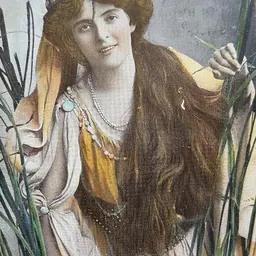



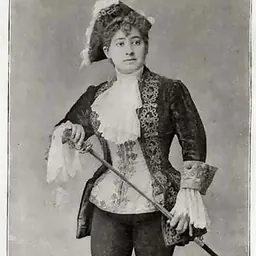


Related people
Same field, nearest in time

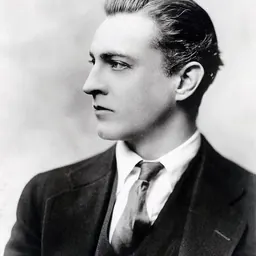

Contemporaries
People whose lives overlapped Walter Passmore's



Frequently asked questions
Who was Walter Passmore?
British actor and singer (1867-1946)
When was Walter Passmore born?
Walter Passmore was born on 10 May 1867.
When did Walter Passmore die?
Walter Passmore died on 29 August 1946.
What was Walter Passmore's occupation?
Walter Passmore was a stage actor.
What nationality was Walter Passmore?
Walter Passmore was British.
Sources & further reading
Cite this page
APA: Biography.guide. (2026). Walter Passmore. https://biography.guide/walter-passmore/
MLA: "Walter Passmore." Biography.guide, https://biography.guide/walter-passmore/.
Chicago: "Walter Passmore." Biography.guide. https://biography.guide/walter-passmore/.
Data last updated: 2026-09-21 · Spot an error? Report a correction.
Portrait: Wikimedia Commons · author & licence
Page generated 2026-09-27 04:59 UTC