
Walter M. Giffard
British diplomat and horticulturist
About Walter M. Giffard
Lived 1856 – 1929 (aged 73). Walter M. Giffard was a British horticulturist, diplomat and entomologist.
Walter Le Montais Giffard (May 27, 1856 – June 30, 1929) was a Hawaiian diplomat and a member of Liliʻuokalani's Privy Council of State. He was born in Jersey and moved to Hawaii at a young age, working his way up through the W. G. Irwin & Co., Ltd organization to partnership and trustee. Giffard was one of the consulting landscape architects for the grounds of the Royal Hawaiian Hotel in Waikiki. He was influential in the agricultural quarantine to protect Hawaii's sugar cane fields, and helped introduce the Yellow Caledonia cane to the growers.
Early life
He was born May 27, 1856, in Jersey and relocated to Hawaii in 1875 where he was employed as a clerk by Honolulu merchant John T. Waterhouse. About a year later, he began working for W. G. Irwin & Co., Ltd as a bookkeeper, and by 1890 was secretary and treasurer. Irwin was then president and manager, with Claus Spreckels as vice president. Over the next several years, Giffard worked his way up in Irwin's company to become vice-president. He was a director and co-trustee with W. G. Irwin for all affiliated corporations under the Irwin umbrella.
Government and civic service
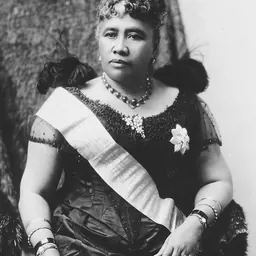
His diplomatic service included Acting Chancellor of the French Legation in Hawaii for three years, Acting French Commissioner and Consul General for one year; Acting Commissioner and Consul General for Portugal in Hawaii for three months. He was appointed to Liliʻuokalani's Privy Council of State on August 25, 1891, but did not attend the council meetings, so as to avoid the appearance of conflict of interest with his diplomatic obligations.
In 1896, the legislature of the Republic of Hawaii authorized an increase in postal rates for 1897, and ordered that all existing unused postage in the old denominations to be destroyed. Giffard was appointed to the Committee to Destroy Postage Stamps, Postcards and Stamped Envelopes, that oversaw the destruction.
Giffard was with the Honolulu Park Commission for eight years and three months, for the period January 12, 1904 through October 21, 1912. He served on the Board of Agriculture and Forestry in 1903, becoming its president for 1907. He continued as a member of the board up through 1923.
He was 1906–7 president of the Honolulu Chamber of Commerce, commissioner of Kapiolani Park, and secretary-treasurer of the Kapiolani Park Association.
Horticulture and forestry By 1903, the destructive cane leafhopper had invaded the sugarcane fields and threatened to eviscerate the industry. Giffard's interest in horticulture and forestry led to his being on the Board of Trustees of the Hawaiian Sugar Planters Association, as well twice chairman of Hawaiian Sugar Planters Experimental Station committee. Under his leadership, the Experimental Station was reorganized, and the destructive cane leafhopper was brought under control through the introduction of parasitoids. He was a founding member president of the Hawaiian Entomological Society.
While serving as secretary and executive officer of the Board of Agriculture and Forestry in 1904, he was appointed to act in place of president Lorrin A. Thurston who was temporarily out of the territory.
California landscape architect R. T. Stevens counseled with Giffard on the design of the grounds landscaping of the modern-day Royal Hawaiian Hotel. Built by Castle & Cooke in 1925–1926, it replaced a Waikiki hotel of the same name that had been transferred to the federal government for use as the Army and Navy YMCA in 1917. The original Royal Hawaiian Hotel had been built by Robert Lewers in 1872, used as a home by King Kalākaua, and later managed by George MacFarlane.
Personal life He married Martha Petre Brickwood of Honolulu, June 30, 1881, with whom he had a daughter Jane and son Harold. His son Duboit was from a former marriage.
Giffard was a member the Pacific and Oahu Country Clubs, and of Hawaiian Lodge, No. 21, F. & A. M. Shriners,
He died June 30, 1929.
Don’t just read it —
keep it.
Full-length biographies made to live with: read them, listen on the way to work, watch them tonight.
- E-book
- Audio
- Video
Instant download · yours to keep · every purchase keeps this site free
Important facts
People in Walter M. Giffard's life
Named in this biography and alive at the same time




Related people
Same field, nearest in time


Contemporaries
People whose lives overlapped Walter M. Giffard's




Frequently asked questions
Who was Walter M. Giffard?
British diplomat and horticulturist
When was Walter M. Giffard born?
Walter M. Giffard was born on 27 May 1856 in Jersey.
When did Walter M. Giffard die?
Walter M. Giffard died on 30 June 1929 in Honolulu.
What was Walter M. Giffard's occupation?
Walter M. Giffard was a horticulturist, diplomat and entomologist.
What nationality was Walter M. Giffard?
Walter M. Giffard was British.
Sources & further reading
· Wikipedia: Walter M. Giffard
Cite this page
APA: Biography.guide. (2026). Walter M. Giffard. https://biography.guide/walter-m-giffard/
MLA: "Walter M. Giffard." Biography.guide, https://biography.guide/walter-m-giffard/.
Chicago: "Walter M. Giffard." Biography.guide. https://biography.guide/walter-m-giffard/.
Data last updated: 2026-09-22 · Spot an error? Report a correction.
Page generated 2026-09-27 05:23 UTC