
Walter Jekyll
English clergyman, later secularist philosopher and planter in Jamaica
About Walter Jekyll
Lived 1849 – 1929 (aged 79). Walter Jekyll was a translator and folklorist.
Walter Jekyll ( ; 27 November 1849, Bramley, Surrey, England – 17 February 1929, Bower Hall, Riverside, Hanover, Jamaica) was an English clergyman who renounced his religion and became a planter in Jamaica, where he collected and published songs and stories from the local African-Caribbean community.
Early life Jekyll lived in his youth with his family at 2 Grafton Street, Mayfair, London, the youngest of the seven children of Captain Edward Joseph Hill Jekyll, an officer in the Grenadier Guards, and his wife Julia Hammersley. His sister was the gardener Gertrude Jekyll. Jekyll was a friend of Robert Louis Stevenson, who borrowed the family name for his 1886 novella Strange Case of Dr Jekyll and Mr Hyde.
Clerical career He was ordained as a Church of England deacon in 1874, and as a priest in 1875, becoming the rector of Holy Trinity church, Heydon, Cambridgeshire until 1877. He then became a minor canon of Worcester Cathedral until 1879 when he became a chaplain at Malta.
Life in Jamaica Jekyll set sail for Jamaica from Southampton on 24 October 1894. Aside from a brief visit to England in 1895, he spent the rest of his life there. Accompanying him was his long-time companion Lieutenant-Colonel Ernest Boyle.
Following a narrow escape in a landslide in the 1907 Kingston earthquake he moved to Bower Hill, Lucea. He soon gained a reputation for a broad range of knowledge and a generosity in sharing it. Local residents would go to him to resolve queries concerning questions of music, literature, religion, botany and science. The phrase "Ask Mr. Jekyll" became popular at this time.
Jekyll became a mentor to Jamaican-born poet and writer Claude McKay, whom he met when McKay was seventeen, and may have been a lover. Jekyll later had a mentoring relationship other young men: a singer Johnny Lyons, and a Jamaican peasant, whom McKay's brother described as "an ignorant fellow from Hanover Parish", and to whom he left his estate.
Jekyll was buried in the graveyard of the Hanover Parish Church, Lucea. On his tombstone this epitaph is inscribed: "Musician, gardener, philosopher, teacher, and writer, he lived 34 years in this Island of his adopting, where he gave himself to the service of others and was greatly beloved by all who knew him."
Jamaican Song and Story (1907) Jekyll published Jamaican Song and Story: Annancy Stories, Digging Sings, Ring Tunes, and Dancing Tunes, in (1907), with introduction by Alice Werner and appendices by Charles Samuel Myers and Lucy Broadwood. The book made a major contribution to recording and analysing Jamaican folk music.
The Wisdom of Schopenhauer (1911) The Wisdom of Schopenhauer: As Revealed in Some of His Principal Writings, London: Watts and Co. consists of texts selected and translated by Walter Jekyll MA formerly of Trinity College, Cambridge, and issued for the Rationalist Press Association. The publisher was primarily concerned with publishing cheap editions of popular science and secular texts for a largely working class readership. The edition consists of extracts from The Will in Nature, Essay on the Freedom of the Will, The Basis of Ethics, and the Parerga and Paralipomena. The Wisdom of Schopenhauer: As Revealed in Some of His Principal Writings Full text on pdf.
Other Jekyll was a regular contributor to The Garden, to which his brother Herbert had contributed in 1871, and of which his sister, Gertrude, had become an editor in 1900.
He also provided the introduction and footnotes to Claude McKay's Songs of Jamaica (1912).
In fiction In his novel Banana Bottom (1933), first published four years after Jekyll's death, Claude McKay states "This story belongs to the Jamaican period of the early nineteen hundreds, and all the characters, as in my previous novels are imaginary, excepting perhaps Squire Gensir". Rhonda Cobham has argued that the figure of Squire Gensir, the mentor of the lead character, Bita Plant, constitutes McKay's eulogy to his former mentor. McKay describes Squire Gensir thus: "For Squire Gensir was held in high esteem everywhere and enjoyed an honourable reputation among all classes, clerical as much as lay people, although he was openly atheistic. For he was not antagonistic to ecclesiastical folk as a social group and sometimes on his long lonely tramps in the country he had taken tea with some of them as well as the gentry. Indeed he was asked more often than he accepted, as he preferred to live his life almost entirely amongst the peasantry."
Don’t just read it —
keep it.
Full-length biographies made to live with: read them, listen on the way to work, watch them tonight.
- E-book
- Audio
- Video
Instant download · yours to keep · every purchase keeps this site free
Important facts
People in Walter Jekyll's life
Named in this biography and alive at the same time





Related people
Same field, nearest in time

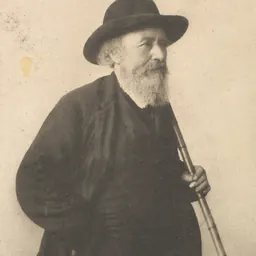
Contemporaries
People whose lives overlapped Walter Jekyll's



Frequently asked questions
Who was Walter Jekyll?
English clergyman, later secularist philosopher and planter in Jamaica
When was Walter Jekyll born?
Walter Jekyll was born on 27 November 1849.
When did Walter Jekyll die?
Walter Jekyll died on 17 February 1929.
What was Walter Jekyll's occupation?
Walter Jekyll was a translator and folklorist.
Sources & further reading
Cite this page
APA: Biography.guide. (2026). Walter Jekyll. https://biography.guide/walter-jekyll/
MLA: "Walter Jekyll." Biography.guide, https://biography.guide/walter-jekyll/.
Chicago: "Walter Jekyll." Biography.guide. https://biography.guide/walter-jekyll/.
Data last updated: 2026-09-20 · Spot an error? Report a correction.
Page generated 2026-09-27 04:59 UTC