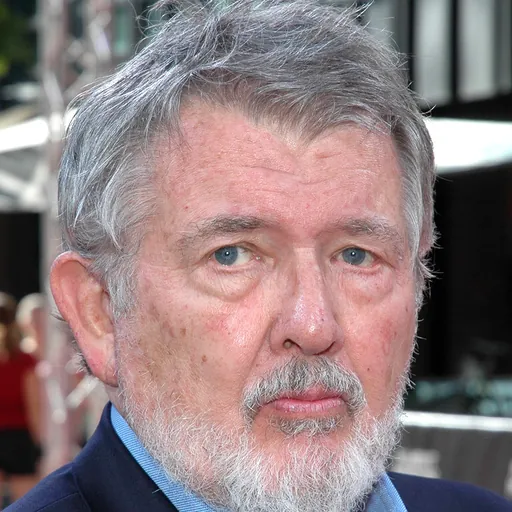
Walter Hill
American film director, producer and screenwriter
About Walter Hill
Born 1942. Walter Hill is an American film director, film producer, screenwriter, executive producer, manufacturer and director.
Walter Hill (born January 10, 1942) is an American filmmaker, known for his action films and revival of the Western genre. He has directed such films as The Driver, The Warriors, Southern Comfort, 48 Hrs. and its sequel Another 48 Hrs., Streets of Fire and Red Heat, and wrote the screenplay for the crime drama The Getaway. He has also directed several episodes of television series such as Tales from the Crypt and Deadwood and produced films in the Alien franchise. He founded Brandywine Productions with David Giler and Gordon Carroll.
Hill said in an interview that "every film I've done has been a Western", and elaborated in another that "the Western is ultimately a stripped down moral universe that is, whatever the dramatic problems are, beyond the normal avenues of social control and social alleviation of the problem, and I like to do that even within contemporary stories".
Early life
Hill was born in Long Beach, California, the younger of two sons. His paternal grandfather was a wildcat oil driller; his father worked at Douglas Aircraft as a supervisor on the assembly line. "I got along with both my parents very well," Hill said. "I admired them enormously."
Growing up in Southern California, Hill was asthmatic as a child and, as a result, missed several years of school.
Career
Assistant director
After this contract to make historical documentaries finished, Hill worked for a time in the mail room at Universal ("Somebody told me that was a good way to meet people" He then went on to work as the uncredited second assistant director on Bullitt — "It was my job to set background and also to set it up with the police. We had to organise every shot so people wouldn't wander out into the middle of the street and be hit... Every time we did a shot I was scared to death."
In 1969, he was the second assistant director on Woody Allen's mockumentary film, Take the Money and Run, but said he remembers doing very little except passing out the call sheets and filling out time cards.
Hill's first completed screenplay, a Western called Lloyd Williams and His Brother, was optioned by Joe Wizan. It was never made but the script was admired at Warner Bros who asked Hill to pitch some projects. He came up with a detective story, Hickey & Boggs and the studio agreed to finance a draft. "Detective films were very old hat, not the kind of thing a young screenwriter was going to pitch," recalls Hill. "I think they were intrigued, maybe fresh air could be blown into a venerable genre."
Warners liked the Hickey & Boggs script and hired Hill to rewrite the script for The Thief Who Came to Dinner, for which he ended up getting sole credit. Hickey & Boggs was later sold to United Artists and rewritten by director Robert Culp. Hill said he felt the film "had some nice moments, but it was cast much differently than it was written. I wasn't too excited about it."
Meanwhile, Peter Bogdanovich's ex-wife Polly Platt, a production designer , had read Hill's script for Hickey & Boggs and recommended him to co-write The Getaway, which Bogdanovich was going to make with Steve McQueen. Bogdanovich and Hill worked on the script together in San Francisco while Bogdanovich was directing What's Up, Doc? Hill says that Bogdanovich was interested in making the film a more Hitchcock-type film. They had completed 25 pages when they went back to L.A., whereupon McQueen fired Bogdanovich without reading any of their work. Sam Peckinpah came on to direct; Hill started from scratch and wrote his own script in six weeks.
John Hughes later recalled, "I had been writing scripts for quite a while, but I never really knew what screenwriting was about until I read the script Walter wrote for Alien."
Film director 1970s By the early 1970s, Hill wanted to direct. I think in casual conversation I would have told anybody I wanted to direct. At the same time I knew Hollywood was a closed off place... It was much harder to get in. To be an older director was a very positive thing. It meant you had survived, knew your way, could make things and make them meet your economic responsibilities. It was always paramount in studio minds, especially in those days... If I was going to direct I was going to write my way in. No TV, no play, I was simply somebody who said I have a sensibility, I think I can do this, based on nothing other than my scripts basically. Hill met producer Lawrence Gordon in 1973. He agreed to let Hill direct a film if he wrote a screenplay for him. Hill made a deal to write and direct for scale and in turn got a shot at directing. James Coburn played a fast-talking promoter of illegal street fights in 1930s New Orleans and Charles Bronson played the boxer protagonist.
The film was also a turning point for Hill as a screenwriter. He read Alexander Jacobs' screenplay for the John Boorman film Point Blank and considered it a "revelation" in terms of style and format. Hill wrote Hard Times, The Driver, The Warriors, and the uncredited rewrite of Alien in this style.
Following the movie Hill was approached to direct The Shootist with John Wayne but turned it down as he disliked the script.
He created the TV series Dog and Cat which premiered in 1977 starring a young Kim Basinger as a police officer. Hill's pilot script was rewritten and he took credit under a pseudonym. The TV series was not a ratings success and was soon cancelled. However Hill's pilot script later influenced Shane Black's original script for Lethal Weapon.
Hill's second film as a director was The Driver starring Ryan O'Neal as a laconic getaway driver for hire and Bruce Dern as a driven cop pursuing him. No character in the film has a name; they are merely The Driver, The Detective, and so forth. Hill originally had wanted to cast Steve McQueen, but he turned down the role because he did not want to do another car film.
The Driver was financed by EMI Films who announced they would make a second film with Hill, a Western he wrote with Roger Spottiswoode, The Last Gun. However The Driver was a commercial failure in the United States. "To say it did not do well would be kind," said Hill. "Had I not been shooting The Warriors at the time, I don't think my career would have survived. They loved it overseas, but in those days, that didn't matter that much. It made exactly zero dollars in the United States. I remember the studio had this huge sheaf of Xeroxed reviews they'd handed me — you could stop a fucking .45 slug with this stack, it was so thick. And of all the reviews in this six-inch thick pile, there was only one good one." )
Hill was going to make The Last Gun with Larry Gordon but when the financing on the project failed to materialize, Gordon showed Hill a copy of the novel The Warriors by Sol Yurick. They took it to Paramount Pictures because they were interested in youth films at the time and succeeded in getting the project financed. Hill remembers "it came together very quickly. Larry had a special relationship with Paramount and we promised to make the movie very cheaply, which we did. So it came together within a matter of weeks."
When The Warriors was released there were a series of shootings and killings at screenings involving filmgoers on their way to or from showings. This prompted Paramount to remove advertisements from radio and television completely and display ads in the press were reduced to the film's title. However the film was very popular and received excellent reviews.
"Hollywood forgives a lot when you have a hit," said Hill. "I don't know what to say about it, other than the fact that it was just a gift in terms of getting it. The studio hated it, and didn't even want to release it. There was a lot of friction with management at the time. Some of it might have been my fault." Hill later said his "code" for the film was to keep "the jokes funny and the bullets real. It is about moral choices. I think people who object to violence shouldn't go to the movies.... The use of all the brothers can be perceived as a gimmick but I wanted a family feeling to the movie."
Hill's next film was going to be adaptations of The Last Good Kiss (by James Crumley) and then Red Harvest (by Dashiell Hammett). However neither were made, though the story of Last Man Standing (which he made in 1996) was very close to Red Harvest. Instead Hill did Southern Comfort, originally written in 1976. It was an intense Deliverance-style thriller about a group of U.S. Army National Guardsmen (including Keith Carradine, Powers Boothe and Fred Ward) on weekend maneuvers in the Louisiana bayou who find themselves fighting for survival in the swamps after offending some local Cajuns. The film was seen by many as an allegory for America's involvement in the Vietnam War, although Hill denies this is the case.
The film was critically acclaimed but, in Hill's words, it "didn't make a... nickel anywhere. Foreign, domestic, anything... I was proud of the film... But I was disappointed in the lack of response. It was a universal audience failure... Usually you can say they loved it in Japan or something. I don't think anybody loved it anywhere." Like Red Harvest and The Last Good Kiss it was not made.
Larry Gross later recalled meeting Hill in the early 1980s: He'd had some success, but then he had a series of setbacks. And there was also the scandal around The Warriors; any success had been eclipsed by the killings in the theaters. So there was that, as well as the noncommercial success of Southern Comfort and Long Riders and the fact that there was a writer's strike. All of that meant that Walter hadn't worked in a while. Meaning a year or so. And what happened was the strike ended and the studios didn't have a lot of ready scripts. So this clever colleague, Larry Gordon, dusted off a script that had been shuttling around development and got it greenlit at Paramount with his friend Michael Eisner. And that script was 48 Hrs. 48 Hrs. was originally meant to star Clint Eastwood and Richard Pryor but both dropped out. Nick Nolte became attached as star and Hill's then-girlfriend, a talent agent at ICM, recommended the role of the convict be played by an exciting new comic on Saturday Night Live, Eddie Murphy. The resulting film was a problematic shoot, with many clashes between Paramount and Hill, but it resulted in a massive box office success. Hill worked on Dick Tracy for several drafts of the script and screenwriter Jack Epps Jr. says he "played a big role in reducing and focusing the screenplay". Hill intended to make the film directly after Streets of Fire but eventually left the project after a dispute over budget with Universal and with star Warren Beatty; the project would be made several years later with Beatty directing.
Hill's success directing Eddie Murphy in 48 Hrs. saw him receive an offer to work with Richard Pryor in a new version of Brewster's Millions (1985). This was Hill's first—and, as of 2016, only—full-fledged comedy. He says he purposefully made the film "to improve his bank account and success quotient", and admitted it was "an aberration in the career line". He added that "whatever [the film's] deficiencies, I think the wistful quality was there. I was happy about that. The picture did well and made money." The plot had a female doctor hire seven mercenaries to defend an intellectually disabled boy from a lynching.
Hill followed Brewster's Millions with Crossroads (1986), a music-themed drama from an original script by John Fusco inspired by the life and music of Robert Johnson. The score was done by Ry Cooder, who had been Hill's most regular composer since The Long Riders. The film performed poorly at the box office, despite the presence of Ralph Macchio in the lead.
He also co-wrote (with Lukas Heller) and executive produced Blue City (1986) from a 1947 novel by Ross Macdonald. Hill developed this project intended to star a leading man in his mid-30s but by the mid-1980s a number of popular young male actors had emerged, so the script was rewritten to accommodate one of them (Judd Nelson). Hill handed over directing duties to Michelle Manning, who made her debut as director. The film was a critical and commercial disaster.
However, that year also saw the release of Aliens (1986), a sequel to Alien. Hill says he and Giler decided "the next one should be a straight action thriller -the military takes over- a patrol movie." The film was a flop at the box office.
Hill had a number of projects in the late 1980s that were never made. These included American Iron (1989/1990), a film set in the world of bikers written by Hill, Mark Brunet, Daniel Pyne, and John Mankiewicz. He also did a draft (with David Giler) of an adaptation of the Jim Harrison novella, Revenge—this was not used when turned into a film in 1990.
Later films
1990s Hill began the 1990s with the only sequel he has directed to date, Another 48 Hrs., with Murphy this time top-billed over Nolte. The sequel to his biggest commercial success was thought by many critics to be merely a retread of the original, but became the highest-grossing film that Hill has directed. The film grossed more at the US box office than its predecessor and made $72.7 million from foreign markets for a total of $153.5 million.
In 1991 he came close to directing a big screen version of the television series The Fugitive (1963–1967) with Alec Baldwin, but Baldwin was not considered a big enough star. The film The Fugitive (1993) was released two years later, starring Harrison Ford and without Hill's involvement, as the film was instead directed by Andrew Davis. Hill was also considered to replace John McTiernan as the director of Patriot Games (1992), another film in which Baldwin was recast with Ford.
In 1992, Hill directed a film originally called Looters about two firemen who cross paths with criminals while searching for stolen loot in an abandoned East St. Louis, Illinois, tenement building. However, the 1992 Los Angeles riots broke out shortly before the film's release and the studio delayed its opening, eventually changing the title to Trespass.
Trespass was based out of an old script, co-written by Bob Gale and Robert Zemeckis, years before they would write Back to the Future.
Following this, he and David Giler wrote a remake of The Killer and plans were announced to make it with Richard Gere and Denzel Washington. However the film did not proceed. He and Giler also wrote the final script for Alien 3, as well as co-producing it.
Hill planned to direct Alec Baldwin in a new version of The Getaway based on Hill's original script. Then there was a dispute over the budget and Hill left the project in order to make Geronimo: An American Legend. The film received mixed reviews from critics and fared poorly at the box office. This also happened to The Getaway (1994), which ended up being directed by Roger Donaldson from Hill's script.
In 1994, Hill and his wife, agent Hildy Gottlieb, signed a two-year non-exclusive deal with Paramount. They developed a film, Sudden Country, an action adventure in the vein of Treasure Island set in late-19th century Texas to star Elijah Wood, based on a novel by Loren Estleman. The film was not made. Instead Hill wrote and directed a second biopic, Wild Bill (1995). This too had little critical or commercial success. Hill reflected on his career in 1995:I think every director thinks that he hasn't been allowed to make the films he wanted to make. I certainly haven't been able to make as many Westerns as I've wanted. (But) sometimes staying alive in a career sense is very important, and you think, 'Maybe I'll do this, which will do well and allow me to do that.' It's very easy to miscalculate. It's a dangerous game. But I think in the end, none of us have anybody to blame except ourselves. It can be very hard. The kinds of things that directors most want to do are usually not things the studio perceives to be commercially viable. It really is that simple. Is that true of me? Sure. Absolutely. But it's no more true of me than 50 other people I know. Hill continued as one of the three original producers on Alien Resurrection, although he has stated in several interviews since, that he has had nothing to do with the franchise since Alien 3.
His 1996 effort Last Man Standing with Bruce Willis, a Prohibition-era Western update of Yojimbo (and thus reminiscent of that film's inspiration, Dashiell Hammett's Red Harvest, and its western incarnation, A Fistful of Dollars) saw him return to his earlier style to some extent: a gruff antihero and a heavy focus on stylized action.
Hill and the team who made Tales from the Crypt—Joel Silver, Richard Donner, Robert Zemeckis, and David Giler—tried to repeat their success with another anthology, Perversions of Science (1997). Hill worked as producer and directed an episode. However it was not as popular.
2000s Hill then directed the 2000 film Supernova for Metro-Goldwyn-Mayer. When the studio did not agree with his vision, they brought in Francis Ford Coppola to re-cut the film. This caused Hill to withdraw from the project and credit himself with the pseudonym "Thomas Lee" (a variation of Alan Smithee), and chose not to be associated with the finished product. Hill called his original version a much darker take than the final product.
"One, it was embarrassing and, two, it made me think about quitting," said Hill. "While Coppola's intentions were honorable, I think he made a bad situation worse. I didn't do anything for a year. I was fortunate enough that I could buy my children a hot lunch. Then, I decided I wanted to work again."
In 2002, Hill directed the prison boxing film Undisputed starring Wesley Snipes, Ving Rhames and Peter Falk.
In 2002 he said he wanted to make Vengeance is Mine, an original contemporary thriller set in Las Vegas, which he had written with Giler. It was not made. "We almost had it together a couple of times and financing always slipped away at the last second," said Hill.
In 2003, Quentin Tarantino said Hill was still worthy of admiration. "I think in the last 10 years he's had a big resurgence in creativity. I think he lost his way for a while in the '80s. Johnny Handsome I thought was a return to form . . . But I thought with Geronimo he went to a really fantastic place. Everybody talked about how boring it was. But I didn't. I thought he made a really great classic Western and America just wasn't worthy of the privilege."
Hill served as a director and consulting producer for the pilot episode of the HBO Western drama television series Deadwood in 2004. The series was created by David Milch and focused on a growing town in the Western United States. Hill's work on Deadwood has seen him return to favor in critical circles to some extent, earning him a Primetime Emmy Award for Outstanding Directing for a Drama Series in 2004 and a Directors Guild of America Award for Outstanding Directing – Drama Series in 2004. However, Hill had a falling out with Milch during the editing of the pilot and did not work on any other episodes of the show.
Hill continued his work with westerns by directing the miniseries Broken Trail, which became the highest-rated film made by a cable network when it premiered on AMC.
In 2009 Hill intended to start production on the indie crime drama St. Vincent written by Cameron Young and set to star Mickey Rourke in the lead role with Forest Whitaker, Gong Li and Ray Winstone also cast. The film was then postponed to 2010, with Pierce Brosnan, Billy Bob Thornton, Maria Bello and Giovanni Ribisi replacing them, but was cancelled before the start date.
2010s In the 2010s Hill described his status as "semi-retired" and said he had a number of projects fall through.
It was Sylvester Stallone who offered Hill the job of directing Bullet to the Head (2012). The film was not a success at the box office.
He wrote the original story for a graphic novel, Bailes Perdues, which was adapted by Matz with art by Jef, which was published in France, and later translated as Triggerman by Edward Gauvin and published by the Titan Comics imprint Hard Case Crime.
In 2016 Hill's movie The Assignment, based on a script Hill had written with Denis Hamill, premiered at the Toronto International Film Festival before a limited release and streaming video release in 2017.
In 2016 he said in an interview "You are very privileged to be a director. There is a great quote I'll get wrong of Samuel Johnson, the English poet and essayist, that: 'We come to the arena uncalled, to seek our fortune and hazard disgrace. That's the game, those are the rules.' So I say to you as an audience, if you wanna feel sorry, feel sorry for the people in Syria, but don't feel sorry for film directors." It was released in the United States in September 2022.
For his next project Hill said he would be "going back to film noir", and that he hoped to direct "a couple" undisclosed films.
Personal life Hill married Hildy Gottlieb, a talent agent at International Creative Management, in New York City at Tavern on the Green on September 7, 1986. They have two daughters, Joanna and Miranda.
Filmography Film Year Title Director Writer Producer1972 Hickey & Boggs The Getaway 1973 The Mackintosh Man The Thief Who Came to Dinner 1975 The Drowning Pool Hard Times 1978 The Driver 1979 The Warriors 1980 The Long Riders 1981 Southern Comfort 1982 48 Hrs. 1984 Streets of Fire 1985 Brewster's Millions 1986 Crossroads Blue City Aliens 1987 Extreme Prejudice 1988 Red Heat 1989 Johnny Handsome 1990 Another 48 Hrs. 1992 Alien 3 Trespass 1993 Geronimo: An American Legend 1994 The Getaway 1995 Wild Bill 1996 Last Man Standing 2000 Supernova 2002 Undisputed 2012 Bullet to the Head 2016 The Assignment 2022 Dead for a Dollar
Producer only Alien (1979) Rustlers' Rhapsody (1985) Demon Knight (1995) W.E.I.R.D. World (1995) Bordello of Blood (1996) Alien Resurrection (1997) Ritual (2002) Alien vs. Predator (2004) Aliens vs. Predator: Requiem (2007) Prometheus (2012) Alien: Covenant (2017) Alien: Romulus (2024)
Television Year Title
Don’t just read it —
keep it.
Full-length biographies made to live with: read them, listen on the way to work, watch them tonight.
- E-book
- Audio
- Video
Instant download · yours to keep · every purchase keeps this site free
Important facts
People in Walter Hill's life
Named in this biography and alive at the same time




Related people
Same field, nearest in time


Contemporaries
People whose lives overlapped Walter Hill's



Frequently asked questions
Who is Walter Hill?
American film director, producer and screenwriter
When was Walter Hill born?
Walter Hill was born on 10 January 1942 in Long Beach.
What is Walter Hill's occupation?
Walter Hill is a film director, film producer, screenwriter, executive producer, manufacturer and director.
What nationality is Walter Hill?
Walter Hill is American.
Sources & further reading
Cite this page
APA: Biography.guide. (2026). Walter Hill. https://biography.guide/walter-hill-film-director/
MLA: "Walter Hill." Biography.guide, https://biography.guide/walter-hill-film-director/.
Chicago: "Walter Hill." Biography.guide. https://biography.guide/walter-hill-film-director/.
Data last updated: 2026-09-24 · Spot an error? Report a correction.
Portrait: Wikimedia Commons · author & licence
Page generated 2026-09-27 05:08 UTC