
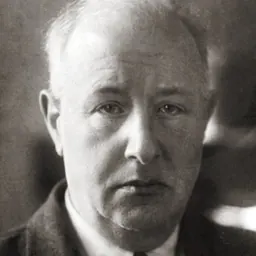
Walter Hayes
English journalist and public relations executive
About Walter Hayes
Lived 1924 – 2000 (aged 76). Walter Hayes was a journalist, businessperson and ford Motor Company.
Walter Leopold Arthur Hayes (12 April 1924 – 26 December 2000) was an English journalist, and later public relations executive for Ford.
Hayes was key in developing Ford's Formula One program, by signing Jackie Stewart and funding the building of the Cosworth DFV V8 Formula One racing engine; and the creation of the Premier Automotive Group with the purchases of classic English brands Jaguar and Aston Martin.
Biography Walter Leopold Arthur Hayes was born in Harrow, Middlesex, the eldest child of lithographer Walter Leopold Hayes and Hilda Beatrice Fisher. Hayes won a scholarship to Hampton School, and served in the Royal Air Force, where he was a cadet pilot. and educator.
Journalist After World War II, as the son of a lithographer Hayes found entry to Fleet Street relatively easy through the network of printing chapels, which controlled newspaper production in the United Kingdom at the time.
Working his way up through the defined path of local, regional and national journalistic work; dedicated pipe smoker Hayes became associate editor of the Daily Mail and in 1956 and at the age of 32, the last editor of the "Sunday Dispatch" newspaper. Looking for something different to revive the motoring column, he was introduced to Lotus Cars owner Colin Chapman, who became an occasional contributor and commentator.
Ford Married with a son and resident at the time in Surrey, Hayes was seeking a secure future for his family when Ford asked him whether he would become head of Ford UK's public relations department. Although it meant crossing the tracks and probably never returning to journalism due to the prejudices at the time, Hayes accepted the job as head in January 1962. Ford had a series of dour but reliable products, including the Ford Cortina and Ford Zodiac. Hayes concluded that a push into racing and competition was key to developing the image, and in his very first weeks in his job he gave the go-ahead for his first motor sport activity with support for the successful private entrant Tony Brookes attack on six International class G World records at Montlhery with the 105E Anglia. Two years later he supported the same team in capturing 13 World Records in International class F with a Corsair GT at Monza. Under the project and campaign brand of "Total Performance" the thrust of Ford worldwide. was so successful, Hayes elevated Ford's public perception from that of vaguely sinister giant of car manufacturing to purveyor of cars which, while resolutely egalitarian, oozed speed, power, guts and sex appeal.
Racing
One of the first crises Hayes had to deal with was the fallout of Ferrari's rejection of the proposed Ford takeover. Hayes became part of the team that supported Henry Ford II's thoughts that Ford should take on Ferrari directly in their own home market of racing. Hayes initiated discussion with Cooper which didn't come to fruition; but agreements with Lotus resulted in a successful Indianapolis 500 program, and with Lola to design, engineer and produce the prototypes of the all conquering Ford GT40.
As well as reviving the rallying program, one of Hayes first accomplishments was to sign relatively unknown Scottish racing driver Jackie Stewart. Stewart was attending the 1964 British International Motor Show at Earl's Court, London, when Hayes approached him and later offered Stewart £500 to promote Ford products in 1965, along with the white Ford Zodiac that was the centrepiece of Ford's exhibit to drive that year. Stewart later commented: "I didn’t know who Walter Hayes was, but I did know that to have a contract with Ford Motor Company was a big deal with great opportunities for the future, even though I wasn’t yet aware that Ford would enter Formula One". The relationship was to last forty years, and be so successful it was the model for other Formula One stars and motor manufacturers.
Cosworth DFV
Hayes next project came about as an approach from Colin Chapman. Chapman's cars had until that point relied on power from fast revving Coventry Climax engines, but with the change in Formula One regulations to three litre capacity from 1966, Coventry Climax decided for business reasons not to develop a large capacity engine. Chapman had approach the fledgling Cosworth group, with Keith Duckworth commenting that he could produce a competitive three litre engine, given a development budget of £100,000.
Chapman approach Ford and also David Brown of Aston Martin, each without initial success. Hayes arranged dinner for Chapman with Harley Copp, an American engineer who had backed and engineered Ford's successful entry into NASCAR in the 1950s. Hayes and Copp developed a business plan, which was backed by Ford UK's new chairman Stanley Gillen, and approved by Ford's Detroit head office as a two part plan – stage one would produce a four-cylinder twin-cam engine for Formula Two; by May 1967, stage two would produce a V-8 Formula One unit. In return, Chapman agreed to engineer "specials" for Ford, the first of which was 1963's Lotus Cortina. Hayes concluded that Ford's name could become tarnished, and that they should agree to use the unit in other teams, and hence potentially dominate Formula One. Chapman, on the back of the pairs long friendship agreed,
Hayes was one of many who wrote a biography of Henry Ford II, writing "Henry: a memoir of Henry Ford II (1990)" in which he commented that Ford treated "housemaids and hotel maids and secretaries and drivers and the people in the plants like dukes and duchesses".
Hayes returned to Europe as vice-president of Ford of Europe, and became vice-chairman in 1976. In 1980 he was made a vice-president of the American parent under new Ford chairman Philip Caldwell, and moved to Detroit to head public affairs for the corporation. He launched new motorsports initiatives there, including the IMSA GTP projects. Hayes was appointed CBE for services to the motor industry in 1982.
Hayes recognized the need for a higher-volume, lower cost Aston Martin, and under his guidance the plans for a DB7 were created and the car was brought into production. His first move was to shrewdly appointed the industrialist Sir David Brown, an enthusiastic backer of Aston Martin in its post-war glory days, as honorary life president – a small move that nonetheless did wonders for Aston's image among its heritage-conscious customers. In 1992, the Vantage version was announced, and the following year the company renewed the DB range by announcing the Jaguar XJS based, Tom Walkinshaw's TWR Group engineered
Quotations "'That engine was literally done by Keith Duckworth, and he designed all the test rigs for it, too. And he allowed me to spend £100,000 in instalments. I think we should recognise it as a kind of foundation point in our life when we in a sense established this country – in an international fashion, not a silly flag-waving fashion – as the place where you go to have motor racing cars and engines made." Hayes to journalist John Blunsden at the 1997 30th birthday party of the DFV at Donington Park "It was a fair old gesture of confidence on my part. I hadn't been with the company all that amount of time, and I sort of hung my career on the line with that engine. In fact, I stuck my neck out a million miles. I must say, though, that frankly it never occurred to me that Keith's engine would be anything other than a tremendous success. He'd had such a good record all along, and we knew where he'd been." Hayes to journalist John Blunsden at the 1997 30th birthday party of the DFV at Donington Park "A man who had an unconventional approach, yet an outstandingly mature man." Stuart Turner, who had followed Hayes footsteps in leaving journalism for an industry role "He was always a gentleman of great dignity and style, and had this tremendous peripheral vision. He was involved in many prestigious charities and trusts, about which he rarely spoke, and besides being a great writer was probably the greatest public relations officer that the motor industry has ever had." Jackie Stewart on hearing of death of Hayes
Don’t just read it —
keep it.
Full-length biographies made to live with: read them, listen on the way to work, watch them tonight.
- E-book
- Audio
- Video
Instant download · yours to keep · every purchase keeps this site free
Important facts
People in Walter Hayes's life
Named in this biography and alive at the same time







Related people
Same field, nearest in time

Contemporaries
People whose lives overlapped Walter Hayes's



Frequently asked questions
Who was Walter Hayes?
English journalist and public relations executive
When was Walter Hayes born?
Walter Hayes was born on 12 April 1924 in London Borough of Harrow.
When did Walter Hayes die?
Walter Hayes died on 26 December 2000 in Shepperton.
What was Walter Hayes's occupation?
Walter Hayes was a journalist, businessperson and ford Motor Company.
Sources & further reading
Cite this page
APA: Biography.guide. (2026). Walter Hayes. https://biography.guide/walter-hayes/
MLA: "Walter Hayes." Biography.guide, https://biography.guide/walter-hayes/.
Chicago: "Walter Hayes." Biography.guide. https://biography.guide/walter-hayes/.
Data last updated: 2026-09-22 · Spot an error? Report a correction.
Page generated 2026-09-27 05:16 UTC