
About Walter Elmer Schofield
Lived 1867 – 1944 (aged 76). Walter Elmer Schofield was an American painter.
Biography W. Elmer Schofield (pronounced "SKŌ-field") was the youngest of the eight children of Philadelphia businessman Benjamin Schofield (1820–1900) and Mary Wollstonecraft Schofield (1822–1899). His parents emigrated from England to Philadelphia in 1845, and his father and uncles built textile mills in Manayunk, along the Schuylkill River. He grew up in the Germantown section of Philadelphia, and graduated from Central High School in 1886. He attended Swarthmore College for a year,
Schofield returned to Philadelphia at the end of 1894. Schofield was among a group of Philadelphia artists – William Glackens, Edward Willis Redfield, John French Sloan, Everett Shinn, George Luks, James Moore Preston, Edward Davis, Charles Grafly, Stirling Calder, Hugh Breckenridge – who would meet at Henri's studio on Tuesday nights to discuss art and aesthetics. Schofield, Henri, Glackens, Grafly and artist Augustus Koopman sailed for France together in June 1895. Schofield was also influenced by Les Nabis, "a group of French painters whose work emphasized bright colors, flattened forms and decorative patterning."
Bust of W. Elmer Schofield (1905), by Charles Grafly, National Academy of Design Schofield returned to Philadelphia in Fall 1895, and worked in his father's textile business for a short time. painted in a Tonalist style "characterized by muted colors and soft, flowing brushwork". Schofield would spend half of the year in Philadelphia, painting his signature autumn and winter scenes, while his wife and sons remained in England. which made cotton yarn for knitting hosiery and underwear. Schofield, Albert and their unmarried sister Alice each inherited a one-third interest in the company from their father. Valerio, p. 39. and family in the Chestnut Hill neighborhood of the city. Art historian Thomas Folk discovered the likely reason for the intensity of Redfield's anger toward Schofield: Across the River depicts the Delaware River from the front yard of Redfield's own house.
Schofield painted in a brighter palette after World War I, applying this new approach to snow scenes, to coastal scenes of Cornwall, and to landscapes of California, New Mexico and Arizona.
World War II ended Schofield's annual trips to the United States.
After the war, Schofield and his wife lived in Perranporth, Cornwall for several years, and in Otley, Suffolk from 1925 to 1937. Many of Schofield's late paintings depict the manor and its gardens. The couple moved to the smaller "Gwedna House" on the same property in 1941, and gave the manor house to Sydney and his bride.
Walter Elmer Schofield died of a heart attack at "Gwedna House" on March 1, 1944. Sydney's widow sold "Godolphin House" to the National Trust in 2007.
Exhibitions, awards and honors The Hill Country (1913), Woodmere Art Museum, Philadelphia. Winner of PAFA's 1914 Temple Gold Medal The Rapids (1914), Smithsonian American Art Museum. Winner of the National Academy of Design's 1920 Altman Prize Schofield exhibited at a number of international expositions: the 1900 Exposition Universelle in Paris (honorable mention for January Evening); the 1901 Pan-American Exposition in Buffalo, New York (silver medal for Autumn in Brittany); the 1904 World's Fair in St. Louis, Missouri (silver medal for Winter Morning); the 1915 Panama-Pacific Exposition in San Francisco (silver medal for The Hilltop); PAFA awarded him its 1903 Jennie Sesnan Gold Medal (best landscape painting exhibited by an American artist) for Breezy Day, Early Autumn; and its 1914 Temple Gold Medal (best oil painting exhibited by an American artist) for The Hill Country. He exhibited regularly at the National Academy of Design in New York City. NAD awarded him its 1901 First Hallgarten Prize for Winter Evening; its 1911 Inness Gold Medal for February Morning; and its 1920 Altman Prize for The Rapids. The Society of American Artists awarded him its 1900 Webb Prize of $300 (best landscape exhibited by an American artist under 40) for Autumn in Brittany. The Carnegie Institute in Pittsburgh awarded him its 1900 honorable mention (4th prize) for January Woods; and its 1904 gold medal and $1,500 prize for Across the River. The St. Louis Art Museum hosted a one-man show of his paintings in 1912. Schofield visited the exhibition, and painted two works during his stay, both of which are now in the gallery's collection. The Art Institute of Chicago hosted a one-man-show of his paintings in 1920, Schofield also exhibited at the Royal Academy of Arts in London. – and an Academician in 1907. He was a Fellow of the Pennsylvania Academy of the Fine Arts, and a member of the Art Club of Philadelphia. In New York City, he was a member of the Century Association and the Salmagundi Club, He was a member of the Chelsea Arts Club in London, and the St Ives Society of Artists in Cornwall. The Brandywine River Museum mounted a 1983 retrospective exhibition: Walter Elmer Schofield, Bold Impressionist. The Payne Gallery at Moravian College mounted a 1988 retrospective exhibition: W. Elmer Schofield: Proud Painter of Modest Lands. The Woodmere Art Museum mounted a 2014 retrospective exhibition – Schofield, International Impressionist – that focused on his career on both sides of the Atlantic;
Selected works Montmartre (1896), Woodmere Art Museum, Philadelphia. Painted under the influence of Les Nabis.
Montmartre (1896), Woodmere Art Museum, Philadelphia. Winter (1899), Pennsylvania Academy of the Fine Arts, Philadelphia. Winter Evening (1899), Philip and Muriel Berman Museum of Art, Ursinus College, Collegeville, Pennsylvania. Awarded NAD's 1901 First Hallgarten Prize. Autumn in Brittany (1900), Albright-Knox Art Gallery, Buffalo, New York. Awarded the Society of American Artists' 1900 Webb Prize, and a silver medal at the 1901 Pan-American Exposition. Breezy Day, Early Autumn (1902), Reading Public Museum, Reading, Pennsylvania. Awarded PAFA's 1903 Sesnan Gold Medal. Morning After Snow (1903), Corcoran Gallery of Art, Washington, D.C. Across the River (1904), Carnegie Art Museum, Pittsburgh, Pennsylvania Awarded the Carnegie Institute's 1904 gold medal. Sand Dunes near Lelant, Cornwall (1905), Metropolitan Museum of Art Winter in Picardy (1907), Philadelphia Museum of Art Evening along the Shore, St. Ives (1907), National Academy of Design, New York City The Lock (1908). Ex collection: St. Louis Art Museum On the Canal, Bruges (1908), private collection The Landing Stage, Boulogne (1908–09), Cincinnati Art Museum Winter Landscape (1909), private collection. Sold at Shannon's Fine Art Auctioneers, Milford, CT, October 25, 2018, Lot 45. Realized $75,000 plus buyer's premium. The First Days of Spring (1910), Juan Manuel Blanes Museum, Montevideo, Uruguay. Covered Bridge on the Schuylkill (The Red Bridge) (1912), Brandywine River Museum, Chadds Ford, Pennsylvania Frosty Morning (1913), Avery Galleries, Bryn Mawr, Pennsylvania. Ex collection: Montclair Art Museum The Hill Country (1913), Woodmere Art Museum, Philadelphia. Awarded PAFA's 1914 Temple Gold Medal. The Spring Thaw (1913), Biggs Museum of American Art, Dover, Delaware. Awarded the National Arts Club's 1913 gold medal. The Powerhouse, Falls Village, Connecticut (1914), Art Institute of Chicago Building The Coffer-dam (1914), Art Institute of Chicago The Rapids (1914), Smithsonian American Art Museum. Awarded NAD's 1920 Altman Prize. On loan to Brooklyn Museum, 1920-1954 (The Brooklyn Museum hosted the National Academy of Design's 1920 Spring Exhibition.) NAD purchased The Rapids at the exhibition, and placed the painting on long-term loan to the museum as a token of thanks. It was transferred to the Smithsonian Institution in 1954. The Lower Falls (1915), Memorial Art Gallery, University of Rochester, Rochester, New York In the Dugway (1915), Memorial Art Gallery, University of Rochester, Rochester, New York Mining Village in Cornwall (1920), Minneapolis Institute of Arts Morning Light (Lumiere du Matin) (1921), Musée d'Orsay, Paris, France Awarded the Art Institute of Chicago's 1921 Spalding Prize. Cliff Shadows (1921), National Gallery of Art, Washington, D.C. Awarded the Corcoran Art Gallery's 1926 silver medal and Clark Prize. The Birches (The Ravine) (1922), Fine Arts Museums of San Francisco Sunlit Cove (1923), High Museum of Art, Atlanta, Georgia The Little Harbor (1925), private collection. Awarded a silver medal at the 1926 Sesquicentennial Exposition. The Red Barn (1930), Payne Gallery, Moravian College, Bethlehem, Pennsylvania Cornish Coast (1934), James A. Michener Art Museum, Doylestown, Pennsylvania Tujunga Canyon (1934-35), Los Angeles County Museum of Art Summer Morning (1935) Sold at Rago Auction, November 12, 2021, Lot 446. Realized $40,000 + buyer's premium. Rapids in Winter (1936), private collection. Sold at Sotheby's NY, December 1, 2004, realized $456,000 (auction record).
Don’t just read it —
keep it.
Full-length biographies made to live with: read them, listen on the way to work, watch them tonight.
- E-book
- Audio
- Video
Instant download · yours to keep · every purchase keeps this site free
Important facts
People in Walter Elmer Schofield's life
Named in this biography and alive at the same time
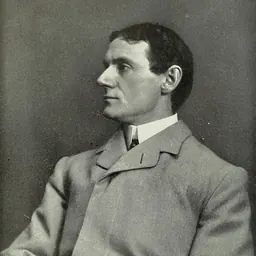



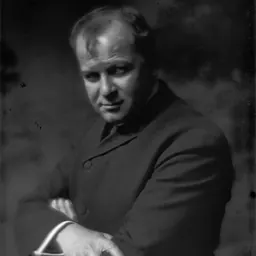
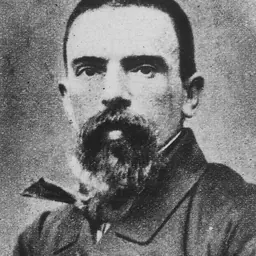
Related people
Same field, nearest in time
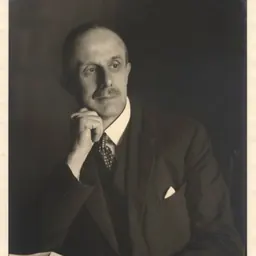
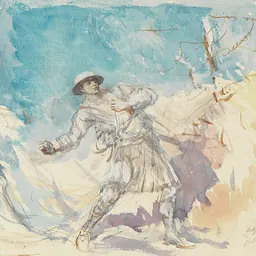
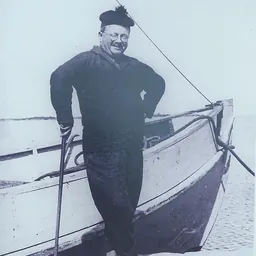

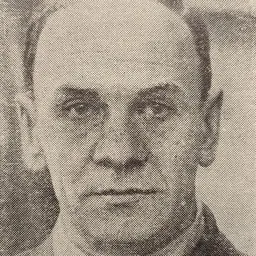
Contemporaries
People whose lives overlapped Walter Elmer Schofield's
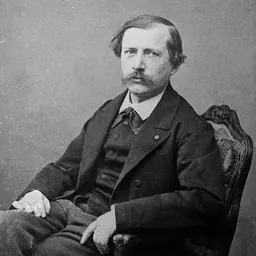


Frequently asked questions
Who was Walter Elmer Schofield?
American painter (1867–1944)
When was Walter Elmer Schofield born?
Walter Elmer Schofield was born on 9 September 1867 in Philadelphia.
When did Walter Elmer Schofield die?
Walter Elmer Schofield died on 1 March 1944 in England.
What was Walter Elmer Schofield's occupation?
Walter Elmer Schofield was a painter.
What nationality was Walter Elmer Schofield?
Walter Elmer Schofield was American.
Sources & further reading
· Wikipedia: Walter Elmer Schofield
· DBpedia: Walter Elmer Schofield
Cite this page
APA: Biography.guide. (2026). Walter Elmer Schofield. https://biography.guide/walter-elmer-schofield/
MLA: "Walter Elmer Schofield." Biography.guide, https://biography.guide/walter-elmer-schofield/.
Chicago: "Walter Elmer Schofield." Biography.guide. https://biography.guide/walter-elmer-schofield/.
Data last updated: 2026-09-20 · Spot an error? Report a correction.
Page generated 2026-09-27 05:33 UTC