
Walter de Gray
Lord Chancellor; Bishop of Worcester; Archbishop of York
About Walter de Gray
Lived 1188 – 1255 (aged 66–67). Walter de Gray was a catholic priest, politician and judge.
Walter de Gray (died 1 May 1255) was an English prelate and statesman who was Archbishop of York from 1215 to 1255 and Lord Chancellor from 1205 to 1214. His uncle was John de Gray, who was a bishop and royal servant to King John of England. After securing the office of chancellor, the younger Gray was a supporter of the king throughout his struggles and was present at the signing of Magna Carta in 1215. After two unsuccessful elections to a bishopric, he became Bishop of Worcester in 1214 but soon after moved to York. During the reign of John's son, King Henry III, Gray continued to serve the king while also being active in his archdiocese. He died in 1255 and was buried at York Minster, where his tomb still survives.
Early life Gray was the son of John de Gray, of Eaton in Norfolk and nephew of John de Gray, Bishop of Norwich. His birth year is not recorded, nor is his age when he died, but according to the historian Lee Wyatt, Gray was probably born around 1180. This assumes that in 1214 he was at least 30, the earliest legal age for consecration as a bishop, which would mean he was not born after 1184. Likewise, it is unlikely he was much older than 80 when he died, which gives an earliest possible birth year of 1175. He heard Edmund of Abingdon lecture at University of Oxford, although it does not appear that he was granted a degree.
Royal service under John Gray was a favourite of King John of England, in return, Gray paid John 5,000 marks for the office. In 1209, Gray was one of the king's supporters who helped delay the promulgation in England of the papal bull declaring John excommunicated. Gray accompanied the king to Dover in May 1213 when the king issued a royal charter whereby John became a papal vassal, although Gray did not appear as a witness on the charter. A story was later told that he refused to affix his chancellor's seal to the charter, but this is a later invention. In late 1213 Gray went to Flanders, relinquishing custody of the great seal until his return in January 1214. John was so determined to secure Gray's election, that one of John's knights locked the cathedral chapter into a room, supposedly telling them that they would not be released until Gray was selected. His election was set aside by Pandulf Verraccio, the papal legate. A second election to the see was also unsuccessful in 1213. after resigning as chancellor in October 1214. through the influence of John and Innocent III. John had wanted Walter, but the canons of York felt that Walter was ill-educated, and elected Simon Langton, brother of Stephen Langton, Archbishop of Canterbury. John objected and wrote to Innocent III complaining of the election of the brother of one of his staunchest enemies, with which Innocent agreed. Innocent was said to have finally decided to give York to Gray because of Gray's virginity, which the pope was said to have declared a great virtue for Gray. However, Gray eventually paid more than 10,000 pounds to the pope in various fees to get his election confirmed. Gray was attending the Fourth Lateran Council when he secured the papal assent to his translation to York and received his pallium at the council.
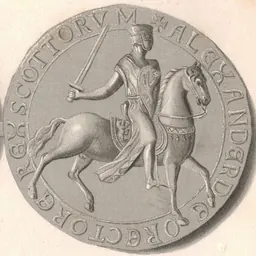
Gray was an important royal official during the minority of Henry, who often posted him as a diplomatic envoy. Gray performed the marriage ceremony of Henry's sister Joan to King Alexander II of Scotland in 1221. In 1238 Gray mediated between the papal legate Otto of Tonengo and the University of Oxford, and eventually secured a pardon for the university due to its role in the dispute. Henry also named Gray as guardian of England when the king went to France in 1242.
As archbishop Gray attempted to assert his archiepiscopal authority over Scotland, which was not only resisted by the Scots but by the Archbishops of Canterbury. Gray had little success in defending his rights to Scotland against either adversary. and translated the relics of Saint Wilfrid to a new shrine at Ripon. Besides Ripon, he also gave to the construction of the churches at Beverley and Southwell. Traditionally, the south transept has been ascribed to Gray's patronage, although there is no direct evidence for this, merely the location of his tomb within that transept. The north transept was funded by John le Romeyn, the treasurer of the cathedral chapter and a close friend of Gray's. The motive for the construction of new transepts is not known for certain, but Lawrence Hoey speculated that a need to put the shrine of the local saint – William of York – into a grand setting, the need to replace the previous transepts, and the ambition of Romeyn and Gray to display their wealth and power.
Gray held a series of councils in his diocese from 1241 to 1255 which endeavoured to enforce clerical celibacy, keep benefices from being inherited, and improve the education and morals of the clergy.
Death and legacy In 1255 Gray visited London to attend a meeting of parliament, (The painted portrait was apparently a temporary effigy while the tomb was constructed.) (The paten, ring, crozier, and chalice are on display at York Minster.) Walter Giffard, a later Archbishop of York, was also a relative of some degree that is not precisely known.
Don’t just read it —
keep it.
Full-length biographies made to live with: read them, listen on the way to work, watch them tonight.
- E-book
- Audio
- Video
Instant download · yours to keep · every purchase keeps this site free
Important facts
Family & relationships
People in Walter de Gray's life
Named in this biography and alive at the same time



Related people
Same field, nearest in time


Contemporaries
People whose lives overlapped Walter de Gray's


Frequently asked questions
Who was Walter de Gray?
Lord Chancellor; Bishop of Worcester; Archbishop of York
When was Walter de Gray born?
Walter de Gray was born in 1188 in Eaton.
When did Walter de Gray die?
Walter de Gray died on 1 May 1255 in London Borough of Hammersmith and Fulham.
What was Walter de Gray's occupation?
Walter de Gray was a catholic priest, politician and judge.
Sources & further reading
Cite this page
APA: Biography.guide. (2026). Walter de Gray. https://biography.guide/walter-de-gray/
MLA: "Walter de Gray." Biography.guide, https://biography.guide/walter-de-gray/.
Chicago: "Walter de Gray." Biography.guide. https://biography.guide/walter-de-gray/.
Data last updated: 2026-09-20 · Spot an error? Report a correction.
Page generated 2026-09-27 05:19 UTC