
Walter Courvoisier
Swiss composer and music educator
About Walter Courvoisier
Lived 1875 – 1931 (aged 56). Walter Courvoisier was a Swiss composer, music educator, university teacher, conductor and physician.
Walter Courvoisier (7 February 1875 – 27 December 1931) was a Swiss composer.
Life Born in Riehen, Courvoisier was a son of the surgeon Ludwig Georg Courvoisier. He initially studied medicine and worked as a doctor after obtaining his doctorate. In 1902 he went to Munich to study music. He was a student of Selmar Bagge and Ludwig Thuille - whose son-in-law he became - and then taught at the Hochschule für Musik und Theater München, first music theory, and later music composition.
Courvoisier died in Locarno at the age of 66.
Compositions Operas Lanzelot und Elaine, musical drama in four acts; libretto: Berta Thiersch, pseudonym "Walter Bergh" (1910–12, first performance Munich 1917) Die Krähen (The Crows), comedy in one act; libretto: Alois Wohlmuth (1919/20, first performance Munich 1920) Der Sünde Zauberei (The Sin of Magic), opera in one prelude and two scenes; libretto: Joseph von Eichendorff after Pedro Calderón de la Barca (1929, unperformed) online
Vocal works The Muse, for baritone and orchestra op. 4; after Heinrich Leuthold (1903) Gruppe aus dem Tartarus, ballad for mixed choir and orchestra Op. 5; after Friedrich Schiller (1904) Der Dinurstrom, ballad for mixed choir and orchestra op. 11; after Wilhelm Hertz (1906) Das Schlachtschiff Téméraire (1796), Ballad for male chorus and orchestra Op. 12; after Detlev von Liliencron (1906) Auferstehung (former title: Totenfeier), Cantata for four soloists, mixed choir and orchestra op. 26; after words of the Bible, arranged by Alfred Bertholet (1915) Three Choirs a cappella Op. 33; after Joseph von Eichendorff (1931) Five Songs for mixed choir a cappella Op. 34 (1931)
Lieder with piano accompaniment Sechs Lieder für tiefe Stimme op. 1 (1903) Sieben Lieder op. 2 (1903) Acht Gedichte von Anna Ritter op. 3 (1903) Sechs Lieder op. 6 (1904) Fünf Lieder für tiefe Stimme op. 7 (1904) Sieben Gedichte von Peter Cornelius op. 8 (1905) Sechs Gedichte von Theodor Storm op. 9 (1905) Zwei Gedichte von Theodor Storm, Vier Gedichte von Klaus Groth op. 13 (1906) Fünf Gedichte von Wilhelm Hertz op. 14 (1903/04) Drei Gedichte von Emanuel Geibel op. 15 (1906) Fünf Gedichte von Friedrich Hebbel op. 16 (1907/08) Fünf Gedichte von Peter Cornelius op. 17 (1908) Zwei Sonette von Michelangelo und altitalienisches Sonett op. 18 (1906/08) Sieben Gedichte von Emanuel Geibel op. 19 (1906/08) Sieben alte deutsche Gedichte op. 23 (1909/10) Gedichte von Hermann Hesse op. 24 (1917, then 1929) Geistliche Lieder in fünf Bänden op. 27 (1917–1919) Kleine Lieder zu Kinderreimen in four volumes op. 28 (1916–1919) Lieder auf alte Deutsche Gedichte op. 29 (1912/14, 1920–1925)
Instrumental works Sonatina for piano Op. Piano Trio Op. (1902) Symphonic Prologue to Carl Spitteler's Olympic Spring for Orchestra Op. 10 (1905) Passacaglia and Fugue in B flat minor for piano op. 20 (1908/09) Variations and Fugue on a separate theme in E flat major for piano Op. 21 (1909) Variations on an own theme D major for piano Op. 22 (1909) Festival Overture for Orchestra (1920s) Six Suites for violin solo Op. 31 (1921/22) Slow movement for string quartet Op. (1921/22)
Students Dora Pejačević (1885–1923), composer Max Butting (1888–1976), composer Gerhart von Westerman (1894–1963), composer Robert Gerhard (1896–1970), composer Paul Ben-Haim (1897–1984), composer, conductor Albert Moeschinger (1897–1985) Walter Simon Huber (1898–1978), music teacher, organist and choir director Willy Burkhard (1900–1955), composer Hermann Reutter (1900–1985), composer, pianist Franz Rupp (1901–1992), pianist and accompanist Hans Haug (1900–1967), composer, conductor, pianist Heinrich Sutermeister (1910–1995), composer
Don’t just read it —
keep it.
Full-length biographies made to live with: read them, listen on the way to work, watch them tonight.
- E-book
- Audio
- Video
Instant download · yours to keep · every purchase keeps this site free
Important facts
People in Walter Courvoisier's life
Named in this biography and alive at the same time



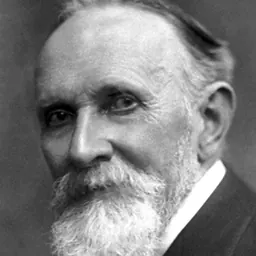
Related people
Same field, nearest in time

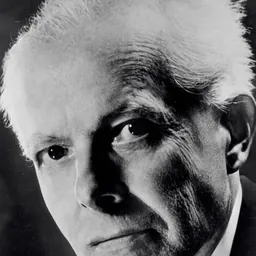


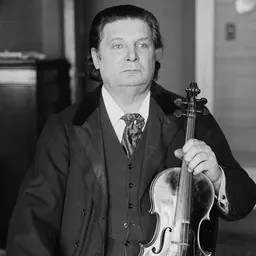

Contemporaries
People whose lives overlapped Walter Courvoisier's

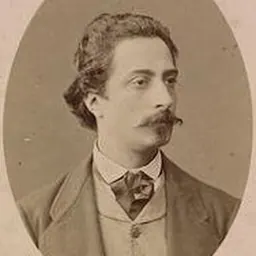

Frequently asked questions
Who was Walter Courvoisier?
Swiss composer and music educator (1875-1931)
When was Walter Courvoisier born?
Walter Courvoisier was born on 7 February 1875 in Riehen.
When did Walter Courvoisier die?
Walter Courvoisier died on 27 December 1931 in Locarno.
What was Walter Courvoisier's occupation?
Walter Courvoisier was a composer, music educator, university teacher, conductor and physician.
What nationality was Walter Courvoisier?
Walter Courvoisier was Swiss.
Sources & further reading
· Wikipedia: Walter Courvoisier
Cite this page
APA: Biography.guide. (2026). Walter Courvoisier. https://biography.guide/walter-courvoisier/
MLA: "Walter Courvoisier." Biography.guide, https://biography.guide/walter-courvoisier/.
Chicago: "Walter Courvoisier." Biography.guide. https://biography.guide/walter-courvoisier/.
Data last updated: 2026-09-26 · Spot an error? Report a correction.
Page generated 2026-09-27 05:14 UTC