
Walt Kiesling
American football player and coach
About Walt Kiesling
Lived 1903 – 1962 (aged 58). Walt Kiesling was an American american football player and american football coach.
Walter Andrew Kiesling His parents, Wenzel and Barbara Kiesling, were natives of Bohemia who immigrated to the United States in 1890 and 1888, respectively. Kiesling had a younger brother, Edward. His father worked as a cutter in a leather works and later in a garment factory.
Kiesling attended Cretin High School, a Catholic high school in Saint Paul where he played football as a tackle. He graduated in 1926 with a Bachelor of Science degree in mathematics.
Professional playing player Duluth and Pottsville In the fall of 1926, Kiesling joined the Duluth Eskimos of the National Football League (NFL), appearing in 11 games as a tackle for a team that featured star backs Ernie Nevers and Johnny Blood. He remained in Duluth for the 1927 season, moving to the guard position and appearing in six games. In 1930, he appeared in 11 games, nine as a starter, and was selected as a first-team All-Pro in 1930 by both Collyer's Eye and the Green Bay Press-Gazette, based on the returns of ballots sent to the league's coaches, club officials, sports writers and officials, In 1931, he started nine games at left guards and was selected as a second-team All-Pro by the United Press, the Green Bay Press-Gazette, and Collyer's Eye. In 1932, he started 10 games at left guard and was selected as a first-team All-Pro by the Associated Press.
Kiesling was the Cardinals' heaviest player, ranging from 235 to 260 pounds at six feet, three inches. He was reputed to be "excellent on defense and unusually shifty on offense." He also played league baseball in Montana and Canada.
Bears and Packers In August 1934, George Halas signed Kiesling to a one-year contract with the Chicago Bears. Kiesling appeared in 13 games for the Bears, only five as a starter.
Kiesling appeared in 10 games for the Packers in 1935. He also appeared in eight games for the 1936 Green Bay Packers team that won the NFL championship. He also made 12 cameo appearances as a player in the 1937 and 1938 seasons. Kiesling led the Pirates to a 1–6–1 record in the final eight games of the 1939 season.
The Pirates were renamed the Steelers in 1940, and Kiesling led them to a 2–7–2 record during the 1940 season. He was replaced by Bert Bell and Aldo Donelli in 1941. Kiesling resumed his role as head coach near the end of the 1941 season, leading the team to a 1–2–1 in the final four games. Kiesling's 1942 team was led on the field by rookie halfback Bill Dudley who totaled 1,138 yards of total offense (696 rushing and 438 passing) and also had 576 yards on punt and kickoff returns. Dudley was drafted into Army after the 1942 season.
In 1943, with so many players lost to military service, the Steelers were temporarily merged with the Philadelphia Eagles to form the Steagles. Kiesling and the Eagles' coach Greasy Neale served as co-coaches of the Steagles. The Steagles compiled a 5–4–1 record.
Green Bay Packers In January 1945, Kiesling resigned as the Steelers' coach. Hours after resigning his position with the Steelers, Kiesling was hired as assistant coach for the Green Bay Packers. He coached the Packers' linemen, and in December 1945, he signed a contract extending his service through the 1947 season. In January 1948, his contract was renewed again through the 1948 season. At the time, Curly Lambeau called Kiesling the top line coach in college or professional football.
Kiesling contracted pneumonia in the winter of 1947 and lost 51 pounds while battling the illness. In February 1949, Kiesling was released by the Packers, with Lambeau advising Kiesling "in the interests of his health to take a year's vacation from football."
Return to the Steelers Ignoring Lambeau's advice, Kiesling returned to the Steelers in March 1949 as the line coach. He signed a contract extension with the Steelers in March 1950, and remained as line coach through the 1953 season.
In March 1952, Kiesling was hospitalized with what was described as a "heavy cold". In November 1953 he was hospitalized again with pneumonia. Starting with his 1947 bout with pneumonia, Kiesling was plagued with respiratory ailments for the rest of his life.
In late August 1954, Joe Bach resigned as the Steelers' head coach after a poor showing by the team in exhibition games, and Kiesling was promoted to head coach. In his third stint as head coach, Kiesling led the Steelers to records of 5–7 in 1954, 4–8 in 1955, and 5–7 in 1956.
Kiesling's health was declining by the mid-1950s. Steelers' owner Art Rooney considered firing him, but concluded that loyalty outweighed winning. Rooney reportedly said, "Walt will be my head coach as long as he wants to be, and even if he doesn't want to be." Kiesling's health was poor during the 1956 season, yet he returned for the pre-season in 1957, finally retiring in late August 1957. He remained an aide to the Steelers' coaching staff until his death. He died in March 1962 at age 58 at Divine Providence Hospital in Pittsburgh. The cause of death was acute bacteremia due to pyelonephritis. He was buried at Christ Our Redeemer Catholic Cemetery in Pittsburgh.
Kiesling was posthumously inducted into the Pro Football Hall of Fame in 1966. In 1969, he was also selected by the Pro Football Hall of Fame as a guard on the NFL 1920s All-Decade Team.
Don’t just read it —
keep it.
Full-length biographies made to live with: read them, listen on the way to work, watch them tonight.
- E-book
- Audio
- Video
Instant download · yours to keep · every purchase keeps this site free
Important facts
People in Walt Kiesling's life
Named in this biography and alive at the same time



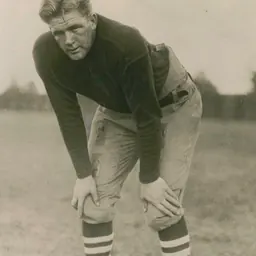


Related people
Same field, nearest in time

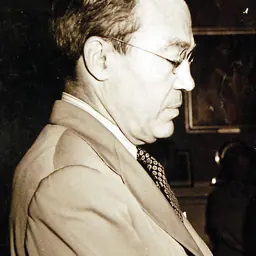

Contemporaries
People whose lives overlapped Walt Kiesling's
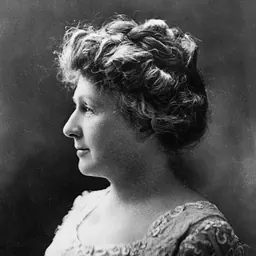
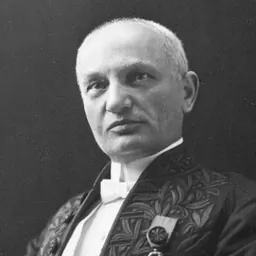
Frequently asked questions
Who was Walt Kiesling?
American football player and coach (1903-1962)
When was Walt Kiesling born?
Walt Kiesling was born on 27 May 1903 in Saint Paul.
When did Walt Kiesling die?
Walt Kiesling died on 2 March 1962 in Pittsburgh.
What was Walt Kiesling's occupation?
Walt Kiesling was an american football player and american football coach.
What nationality was Walt Kiesling?
Walt Kiesling was American.
Sources & further reading
Cite this page
APA: Biography.guide. (2026). Walt Kiesling. https://biography.guide/walt-kiesling/
MLA: "Walt Kiesling." Biography.guide, https://biography.guide/walt-kiesling/.
Chicago: "Walt Kiesling." Biography.guide. https://biography.guide/walt-kiesling/.
Data last updated: 2026-09-20 · Spot an error? Report a correction.
Page generated 2026-09-27 05:31 UTC