
About Walker Keith Baylor
Lived 1794 – 1845 (aged 50–51). Walker Keith Baylor was an American lawyer and politician.
Career He was elected to the Alabama House of Representatives in 1825. He represented Jefferson County along with John Brown and John M. Dupuy. As a representative of Jefferson County, he presented a petition to establish a permanent seat of justice in Walker County. He voted in favor of James C. Neill's bill "to more effectually prevent Sabbath breaking", which lost. He voted against William C. Watson's bill entitled "an act to suppress immorality". He also voted against James Dellet's offered amendment to the bill. And be it further enacted, that any person who shall be guilty of endeavoring to procure votes in any manner whatever, shall be subject to an indictment, and on conviction thereof shall receive thirty nine lashes on his bare back at the public whipping post of the county, and shall not thereafter be a competent witness in any court of law or equity in this state.
He served as a judge of the county court, now known as the probate court, of Jefferson County for several years. In 1834, Baylor issued a penal bond to John Cantley and Harrison W. Goyne, who he later succeeded in the Alabama Senate, to the amount of $361 and executed a chattel mortgage.
Baylor represented Jefferson County at the Railroad Convention of the State of Alabama in November 1835. Henry W. Collier, the president of the convention, appointed Baylor to a committee to discern the "practicability and expediency" of railroad construction as was demanded by the people.
Shortly after the Battle of San Jacinto, Baylor's nephew, John Walker Baylor Jr., set out to visit his uncles R. E. B. Baylor and Walker Keith Baylor in Mobile, Alabama. While at the home of relatives on furlough from the Texian Army, J. W. Baylor Jr. died from wounds he received that had become infected.
In 1838, he was a member of the Alabama Senate, from the Jefferson County and Walker County district.
Walker Keith Baylor moved to Texas with his brother R. E. B. Baylor in 1839. He was the chairman of the educational committee in the senate.
He was appointed by Governor Benjamin Fitzpatrick to the Third Judicial Circuit Court to succeed Peter Martin of Tuskaloosa in 1843. He was elected to the position by the legislature soon after in the following legislative session. Baylor was holding this office when his death occurred in 1845. was published in several newspapers. He was killed at La Grange. By the time this reaches you, you will have heard of the melancholy fate of my brother, Walker K. Baylor, His death was sudden and unexpected. A Mr. Rivers, late of the State of Tennessee, having a revolving pistol in his hand, the hammer slipped through his fingers, causing the pistol to fire, and shooting my brother immediately through the heart. He died instantly. A nephew standing by exclaimed, "You have killed my uncle!"—Poor Walker replied, "Oh no!"—and never spoke again. Mr. Rivers, I learn, suffered greatly from agony of mind, and expressed the deepest sorrow on account of his being the cause of this fatal occurrence.
A genealogy of the Baylor family written in 1899 recites Walker Keith Baylor as having been "killed by an accidental discharge of his gun in 1845". In Orval Walker Baylor and Henry Bedinger Baylor's Baylor's History of the Baylors, written in 1914, it mentions that he was accidentally killed by Colonel Jones Rivers at La Grange, Texas, in 1848.
He was buried on the farm belonging to his older brother William Miller Baylor.
Personal life He was never married and had no children. Du Bose wrote that before he left Kentucky, Baylor "parted from a pure, sweet girl, who was soon to become his wife." However, upon returning to Kentucky he discovered she was dead. Brewer mentions that between his terms in the legislature, "he showed a preference for professional and literary rather than political life". Greatly interested in philosophy and astronomy, he often visited the Old University of Alabama Observatory, where he studied the planetary system with Professor Frederick A. P. Barnard.
He spent many evenings and nights examining the planetary system with Professor Barnard, aided with improved instruments that were ordered from London. He was considered to be somewhat eccentric, and had a strong belief in the doctrines of phrenology and physiognomy. His convictions were often acted upon by measuring the face and head of candidates seeking office with a tape line to determine their fitness. Du Bose wrote that Baylor was highly educated, not regarded as a particularly great lawyer, and was not studious. William Garret noted in his reminiscence of Baylor:
Don’t just read it —
keep it.
Full-length biographies made to live with: read them, listen on the way to work, watch them tonight.
- E-book
- Audio
- Video
Instant download · yours to keep · every purchase keeps this site free
Important facts
People in Walker Keith Baylor's life
Named in this biography and alive at the same time

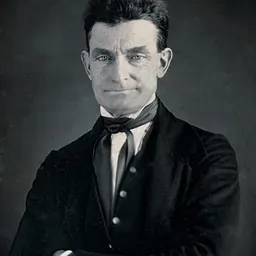
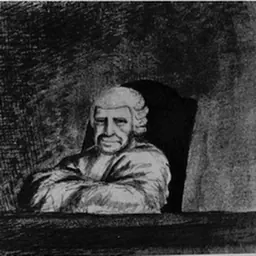
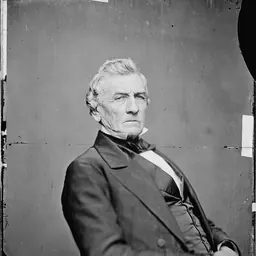

Related people
Same field, nearest in time



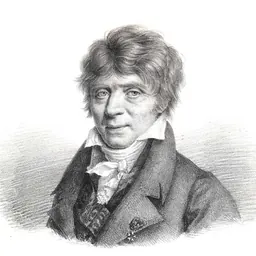
Contemporaries
People whose lives overlapped Walker Keith Baylor's




Frequently asked questions
Who was Walker Keith Baylor?
American judge and politician (c. 1794–1845)
When was Walker Keith Baylor born?
Walker Keith Baylor was born in 1794 in Bourbon County.
When did Walker Keith Baylor die?
Walker Keith Baylor died in 1845 in La Grange.
What was Walker Keith Baylor's occupation?
Walker Keith Baylor was a lawyer and politician.
What nationality was Walker Keith Baylor?
Walker Keith Baylor was American.
Sources & further reading
· Wikipedia: Walker Keith Baylor
· DBpedia: Walker Keith Baylor
Cite this page
APA: Biography.guide. (2026). Walker Keith Baylor. https://biography.guide/walker-keith-baylor/
MLA: "Walker Keith Baylor." Biography.guide, https://biography.guide/walker-keith-baylor/.
Chicago: "Walker Keith Baylor." Biography.guide. https://biography.guide/walker-keith-baylor/.
Data last updated: 2026-09-20 · Spot an error? Report a correction.
Page generated 2026-09-27 05:09 UTC