
About Waldemar Haffkine
Lived 1856 – 1930 (aged 74). Waldemar Haffkine was a Russian and French immunologist, physician, botanist, bacteriologist and microbiologist, known for Bubonic plague and Cholera.
Waldemar Mordechai Wolff Haffkine , born Vladimir Aronovich (Markus-Volf) Khavkin (; 15 March 1860 – 26 October 1930) was a Russian-born bacteriologist known for his pioneering work in vaccines.
Haffkine was educated at the Imperial Novorossiya University and later emigrated first to Switzerland, then to France, working at the Pasteur Institute in Paris, where he developed a cholera vaccine that he tried out successfully in India. He is recognized as the first microbiologist who developed and used vaccines against cholera and bubonic plague. He tested the vaccines on himself. Joseph Lister named him "a saviour of humanity".
He was appointed Companion of the Order of the Indian Empire (CIE) in Queen Victoria's 1897 Diamond Jubilee Honours. At that time The Jewish Chronicle noted "a Ukraine Jew, trained in the schools of European science, saves the lives of Hindus and Mohammedans and is decorated by the descendant of William the Conqueror and Alfred the Great." He naturalised as a British subject in 1900.
In his final years Haffkine became deeply religious, becoming an advocate and philanthropist for Orthodox Jewish causes and a supporter of Zionism.
Early years He was born into a Jewish family in Odessa, Kherson Governorate, Russian Empire, the fourth of five children of Aaron and Rosalie (daughter of David-Aïsic Landsberg) in a family of a Jewish schoolmaster. He received his education at the gymnasium of Berdyansk, Odessa, and St. Petersburg.
Young Haffkine was also a member of the Jewish League for Self-Defense in Odessa. In 1879 Haffkine was injured while defending a Jewish home during a pogrom. As a result of this action he was arrested but later released due to the intervention of biologist Ilya Mechnikov.
Haffkine continued his studies from 1879 to 1883 with Mechnikov at Odessa University, but after the assassination of Tsar Alexander II, the government increasingly cracked down on people it considered suspicious, including intelligentsia. His early research was on protists such as Astasia, Euglena, and Paramecium, as well as the earliest studies on Holospora, a bacterial parasite of Paramecium. "Haffkine's vaccine used a small amount of the bacteria to produce an immune reaction."
On 10 January 1897, Haffkine tested the vaccine on himself. After these results were announced to the authorities, volunteers at the Byculla jail were inoculated and survived the epidemics, while seven inmates of the control group died.
"Like others of these early vaccines, the Haffkine formulation had nasty side effects, and did not provide complete protection, though it was said to have reduced risk by up to 50 percent." "Unlike tetanus or diphtheria, which were quickly neutralized by effective vaccines by the 1920s, the immunological aspects of bubonic plague proved to be much more daunting."
Even though official Russia was still unsympathetic to his research, Haffkine's Russian colleagues, doctors V. K. Vysokovich and D. K. Zabolotny, visited him in Bombay. During the 1898 cholera outbreak in the Russian Empire, the vaccine called "лимфа Хавкина" ("limfa Havkina", Havkin's lymph) saved thousands of lives across the empire.
By the turn of the 20th century, the number of plague vaccine recipients in India alone reached four million and Haffkine was appointed the Director of the Plague Laboratory in Bombay (now called Haffkine Institute). In 1900, he was awarded the Cameron Prize for Therapeutics of the University of Edinburgh.
Connection with Zionism In 1898, Haffkine approached Aga Khan III with an offer for Sultan Abdul Hamid II to resettle Jews in Palestine, then split between a number of subdivisions of the Ottoman Empire: the effort "could be progressively undertaken in the Holy Land", "the land would be obtained by purchase from the Sultan's subjects", "the capital was to be provided by wealthier members of the Jewish community", but the plan was rejected.
Mulkowal desaster ("Little Dreyfus affair") In March 1902, 19 villagers from Mulkowal in Punjab (inoculated from a single bottle of Haffkine's plague vaccine) died of tetanus, whilst the other 88 villagers were well. This "Mulkowal disaster" led to an enquiry. Evidence pointed to the contamination of one bottle of vaccine. The procedure for sterilisation at Haffkine's Parel lab had been changed from carbolic acid to sterilisation using heating, a process that had been used at the Pasteur Institute safely for two years but was new in the British Empire. The 1903 commission from the Indian government concluded this was the source of the contamination, indicting Haffkine. He was relieved of his position and returned to England. His vaccine continued to be used in India. as a reminder of Haffkine's Jewish background and religion. Author Paul Twivy researched Haffkine and said "a number of doctors within the British Raj were envious of him and extremely antagonistic to him because he was Jewish, Russian and he wasn't a doctor", and that they hid evidence that an assistant had contaminated an instrument.
Later years
Since Haffkine's post in Bombay was already occupied, he moved to Calcutta and worked there as director in chief of the Calcutta Biological Laboratory. He was however confined to theoretical research, being prevented from conducting any practical trials.
In 1929, he established the Haffkine Foundation to foster Jewish education in Eastern Europe. Haffkine was also respectful of other religions, and "he considered it of the utmost importance to promote the study of the Bible."
In 1982, the Chabad Hasidic movement published three letters addressed to Haffkine by the sixth Lubavitcher Rebbe, Rabbi Yosef Yitzchak Schneersohn, who had engaged Haffkine to support the Jews living in communist Russia.
Don’t just read it —
keep it.
Full-length biographies made to live with: read them, listen on the way to work, watch them tonight.
- E-book
- Audio
- Video
Instant download · yours to keep · every purchase keeps this site free
Important facts
People in Waldemar Haffkine's life
Named in this biography and alive at the same time
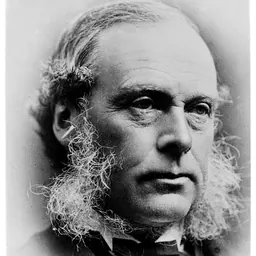


Related people
Same field, nearest in time



Contemporaries
People whose lives overlapped Waldemar Haffkine's




Frequently asked questions
Who was Waldemar Haffkine?
bacteriologist (1856–1930)
When was Waldemar Haffkine born?
Waldemar Haffkine was born on 15 March 1856 in Berdiansk.
When did Waldemar Haffkine die?
Waldemar Haffkine died on 25 October 1930 in Lausanne.
What was Waldemar Haffkine's occupation?
Waldemar Haffkine was an immunologist, physician, botanist, bacteriologist and microbiologist.
What was Waldemar Haffkine known for?
Waldemar Haffkine was known for Bubonic plague and Cholera.
What nationality was Waldemar Haffkine?
Waldemar Haffkine was Russian and French.
Sources & further reading
· Wikipedia: Waldemar Haffkine
Cite this page
APA: Biography.guide. (2026). Waldemar Haffkine. https://biography.guide/waldemar-haffkine/
MLA: "Waldemar Haffkine." Biography.guide, https://biography.guide/waldemar-haffkine/.
Chicago: "Waldemar Haffkine." Biography.guide. https://biography.guide/waldemar-haffkine/.
Data last updated: 2026-09-20 · Spot an error? Report a correction.
Page generated 2026-09-27 05:23 UTC