
Waheed Murad
Pakistani film actor, producer and script writer
About Waheed Murad
Lived 1938 – 1983 (aged 45). Waheed Murad was an Indian and Pakistani actor, film producer, screenwriter and film director.
Early life Murad was an only child who was born in Sialkot and grew up in Karachi. His mother was Shireen Murad (a Christian from Bikaner who had converted to Islam), and his father was Nisar Murad, a film distributor in Bombay, both of whom had migrated to Karachi before the partition of India (1947). His father's family belonged to the cultural elite of Sialkot.
Murad's ancestors had migrated from the Bahmani Sultanate in southern India to Kashmir and eventually settled in Sialkot in the 18th-century. Where Murad's grandfather Zahoor Murad, an advocate and a social activist, adopted the surname "Murad" in 1887. The Murads also claimed Turkish ancestry; claiming that one of their ancestors, Murat, was a soldier of Ottoman-origin serving in the Mughal Army who settled in Punjab. He then his father's established 'Film Art' in 1961 as a producer of the film Insan Badalta Hai. His second film as producer, Jab Se Dakha Hai Tumhein starring Darpan and Zeba, was commercially unsuccessful. Afterwards, Darpan most of the time started coming late at studio. Zeba suggested Waheed to cast himself as hero in his next film. Waheed was not ready to sign himself in his own movies. But when the same suggestion came from his old good friend Pervaiz Malik, he accepted it on the condition that if Zeba would be his co-star, Zeba accepted in return (according to Zeba). As a result, he debuted in a starring role in 1962's Aulad, where he played a support role. The film was directed by S.M. Yousuf. Murad's rise to fame came with Heera Aur Pathar, released in 1964. This film marked a significant milestone in his career as both a producer and actor. Notably, his childhood friend Pervez Malik made his directorial debut with this movie. He got the Nigar award in the Best Actor category for the same film.
In 1966, Murad produced and acted in Armaan, whose story was also written by him and directed by Pervaiz Malik. Nasir, the carefree son of a tycoon who switches place with his friend on their tour to Muree. Surpassing all the former box office records at that time by completing 75 weeks in the theaters, Armaan became the first film to celebrate its platinum jubilee at the box office. The film achieved cult status due to its music, composed by Sohail Rana, especially the song "Ko Ko Korina", the first popsong of South Asia. For the film, Murad received two Nigar awards in the categories of best producer and best actor.
Following the success of Armaan, Murad reunited the team for his next production Ehsaan, released in 1967, which was directed by Pervaiz Malik, and featured music by Sohail Rana. In the film, Murad played a psychiatrist who falls for a widow played by Zeba.
In 1967, he appeared as the leading actor in films like Devar Bhabi, Doraha, Insaaniyat and Maan baap. From 1964 to 1968, Murad and Pervaiz Malik made Heera Aur Pathar, Armaan, Ehsaan, Doraha and Jahan tum wahan hum. The combination of Waheed Murad, Pervaiz Malik, Masroor Anwar, Sohail Rana, Ahmed Rushdi and Zeba created a number of films. Waheed Murad brought Malik, Anwar and Rana under the umbrella of 'Film Arts'. Film Arts broke up and Pervaiz Malik started creating his own projects with new actors. A total of seven films, including two films, i.e., Usey dekha usey chaha and Dushman released after a long gap of 6 years in 1974, were produced with the combination of Waheed and Pervaiz (but not under 'Film Art' Production).
In 1968, Murad started in his production Samandar, co-starring Shabnam. Set in a fishing colony, Samandar explores themes of power struggles, foreign intrusion, and the complexities of relationships between different groups, marking a significant departure from Murad's earlier films. Murad made his debut as a singer in the film by singing "Saathi Tera Mera Saathi Hai" with Masood Rana. The film was a mediocre success at the box office.
In 1969, Murad made his directorial debut with Ishaara, for which he wrote the story and also produced. In the film, Murad played the role of a struggling artist, and sang the song "Jaise Taise Beet Gaya Din" with Deeba. The film also starring Rozina, Aliya and Talish, was commercially unsuccessful. Waheed Murad's son Adil Murad also reacted to the outcry by apologizing to the song's fans for the controversial remake. In 2022, "Ko Ko Korina", featured in the opening scene of American series Ms. Marvel and won top ratings.
Later life By the late 1970s, Waheed was being cast in supporting roles either with Nadeem or with Mohammad Ali. Most of the leading heroines like Zeba, Shabnam and Nisho were not allowed to play lead roles with Waheed by their husbands. Pervaiz Malik wrote in a local newspaper: "Not even once during that time [did] Waheed come to me seeking work in my films. Waheed was becoming depressed. His close friends revealed that he was becoming addicted to alcohol, oral tobacco and sleeping pills. Even his domestic life suffered and his wife Salma left for the United States. A combination of bad habits and stress caused ulceration in Waheed's stomach in 1981. He suffered from bleeding and had to undergo stomach removal to save his life. His many fans came to the hospital to donate blood to save his life. Although, he recovered, he lost a significant amount of weight. Even then, Iqbal Akhtar and Iqbal Yousuf, who proved to be real friends in difficult times, cast Waheed Murad in their movies. Waheed appeared old and charmless in Dil ney phir yaad keya and Ghairao. Even his loyal admirers felt that it was all over for him."
Babra Sharif, revealed that during the filming of a scene of Hero, Waheed lost his balance while walking toward her and fell down. He took several minutes to catch his breath prior to standing up on his feet again. Waheed was buried near his father's grave in Firdous Market Cemetery, Lahore.
Personal life Waheed Murad married Salma, the daughter of a Karachi-based industrialist, on 17 September 1964. They had two daughters, Aaliya and Sadia, and one son, Adil, who has also been an actor. Sadia died in infancy.
Awards and honours
On 2 October 2019, Google celebrated Murad's 81st birthday with a doodle on its homepage for Pakistan.
Tributes and honours His biography Waheed Murad: His Life and Our Times, authored by Khurram Ali Shafique, was published in 2015.
The Government of Pakistan named a street and intersection after him in Lahore on 16 August 2021.
Filmography
Don’t just read it —
keep it.
Full-length biographies made to live with: read them, listen on the way to work, watch them tonight.
- E-book
- Audio
- Video
Instant download · yours to keep · every purchase keeps this site free
Important facts
Family & relationships
People in Waheed Murad's life
Named in this biography and alive at the same time




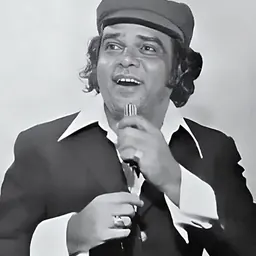



Related people
Same field, nearest in time
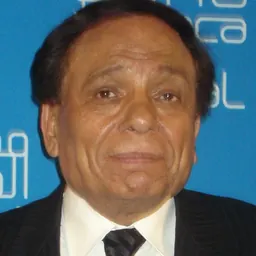
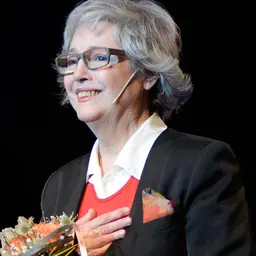



Contemporaries
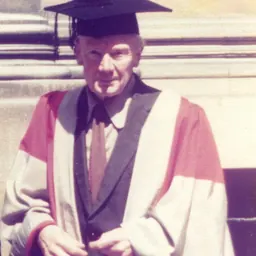
People whose lives overlapped Waheed Murad's


Frequently asked questions
Who was Waheed Murad?
Pakistani film actor, producer and script writer (1938–1983)
When was Waheed Murad born?
Waheed Murad was born on 2 October 1938 in Sialkot, Punjab.
When did Waheed Murad die?
Waheed Murad died on 23 November 1983 in Karachi.
What was Waheed Murad's occupation?
Waheed Murad was an actor, film producer, screenwriter and film director.
What nationality was Waheed Murad?
Waheed Murad was Indian and Pakistani.
Sources & further reading
Cite this page
APA: Biography.guide. (2026). Waheed Murad. https://biography.guide/waheed-murad/
MLA: "Waheed Murad." Biography.guide, https://biography.guide/waheed-murad/.
Chicago: "Waheed Murad." Biography.guide. https://biography.guide/waheed-murad/.
Data last updated: 2026-09-22 · Spot an error? Report a correction.
Page generated 2026-09-27 05:31 UTC