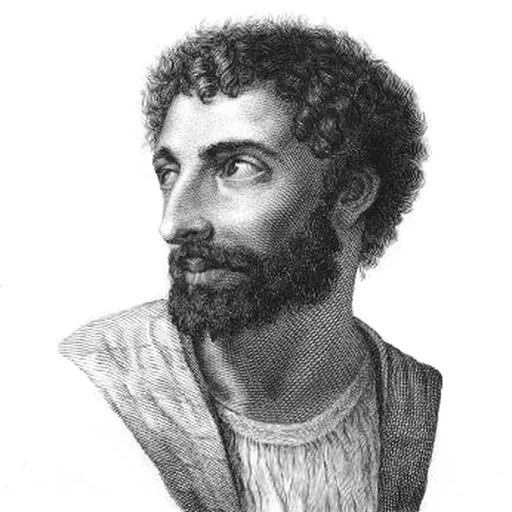
About Wacław of Szamotuły
Lived 1520 – 1560 (aged 39–40). Wacław of Szamotuły was a Polish poet, composer, writer and concertmaster.
Wacław z Szamotuł ( in Szamotuły, near Poznań – in Pińczów), also known as Wacław Szamotulski , was a Polish composer.
Life "Alleluja. Chwalcie Pana Boga" by Wacław z Szamotuł performed by the Collegium Vocale Bydgoszcz
Wacław z Szamotuł was a student at the Lubrański Academy in Poznań later studying at Kraków University in 1538. In 1547 or 1548 he was appointed composer to the court of Sigismund II Augustus. In 1555 Wacław left Kraków, having received the title of "royal composer." Nevertheless, during Szamotuly's lifetime his music was known outside of Poland.
He died early, and only a few of his works survive. In the words of Szymon Starowolski, who wrote the first concise biography of Wacław, "If the gods had let him live longer, the Poles would have no need to envy the Italians their Palestrina, Lappi or Vedana."
His motets In te Domine speravi and Ego sum pastor bonus were the first Polish musical compositions to be published abroad. According to Gustave Reese, Wacław's style may be seen in both of these motets; "the constant overlapping of phrases and full-fledged imitative style reveal Franco-Netherlandish influence."
Works Motets (Motety) In te, Domine, speravi (published in Nuremberg, 1554) Ego sum pastor bonus (published in Nuremberg, 1564) Nunc scio vere
Songs (Pieśńi) Alleluja, Chwalcie Pana Alleluia (Laudate Dominum omnes gentes — Hallelujah, Praise the Lord) Nakłoń, Panie, ku mnie ucho Twoje (Turn Thy Ear to Me, O Lord) Kryste dniu naszej światłości (O Christ, Day of Our Light) — a Lenten compline hymn (c. 800) Błogosławiony człowiek (Beatus vir, qui non abiit... — Blessed Is the Man) Modlitwa, gdy dziatki spać idą or Już się zmierzka (A Prayer When the Children Go To Sleep). This is perhaps his best-known composition. Henryk Górecki (born 1933) has used this beautiful Renaissance melody in at least three compositions: Chorale in the Form of a Canon (1961/1984), Old Polish Music (1969), and the First String Quartet (1988), subtitled Już się zmierzcha (Dusk is Approaching). Pieśń o narodzeniu Pańskim or Pochwalmyż wszytcy społem (Song of the Nativity) Powszechna spowiedź (Daily Confession). This composition has a homophonic texture, meaning that essentially all the notes occur at the same time, as contrasted with imitative polyphony.
Editions
Don’t just read it —
keep it.
Full-length biographies made to live with: read them, listen on the way to work, watch them tonight.
- E-book
- Audio
- Video
Instant download · yours to keep · every purchase keeps this site free
Important facts
Related people
Same field, nearest in time

Contemporaries
People whose lives overlapped Wacław of Szamotuły's




Frequently asked questions
Who was Wacław of Szamotuły?
Polish composer
When was Wacław of Szamotuły born?
Wacław of Szamotuły was born in 1520 in Szamotuły.
When did Wacław of Szamotuły die?
Wacław of Szamotuły died in 1560 in Vilnius.
What was Wacław of Szamotuły's occupation?
Wacław of Szamotuły was a poet, composer, writer and concertmaster.
What nationality was Wacław of Szamotuły?
Wacław of Szamotuły was Polish.
Sources & further reading
· Wikipedia: Wacław of Szamotuły
· DBpedia: Wacław of Szamotuły
Cite this page
APA: Biography.guide. (2026). Wacław of Szamotuły. https://biography.guide/waclaw-of-szamotuly/
MLA: "Wacław of Szamotuły." Biography.guide, https://biography.guide/waclaw-of-szamotuly/.
Chicago: "Wacław of Szamotuły." Biography.guide. https://biography.guide/waclaw-of-szamotuly/.
Data last updated: 2026-09-21 · Spot an error? Report a correction.
Portrait: Wikimedia Commons · author & licence
Page generated 2026-09-27 04:59 UTC