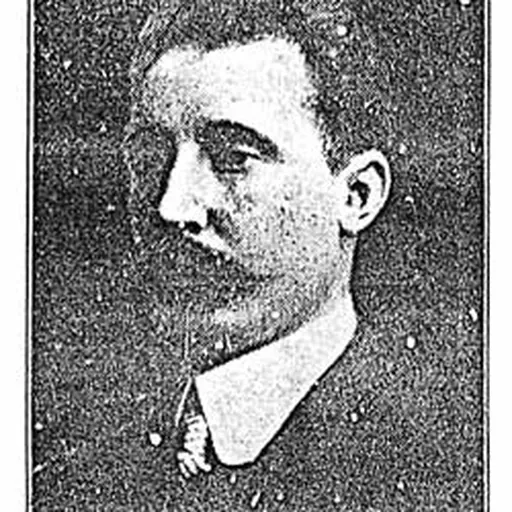
About W. J. Lincoln
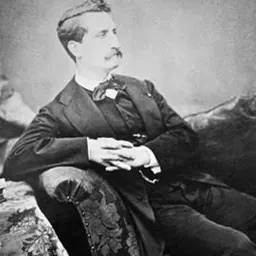
Lived 1870 – 1917 (aged 46–47). W. J. Lincoln was an Australian film director, playwright, film producer and screenwriter.
William Joseph Lincoln (1870 – 18 August 1917) was an Australian playwright, theatre manager, film director and screenwriter in the silent era. He produced, directed and/or wrote 23 films between 1911 and 1916.
One obituary called him "undoubtedly the pioneer of the Australian picture-producing industry".
Another obituary echoed these sentiments, adding that: His faith in the possibilities of Australia as a centre of' activity in moving picture production was unbounded, and for many years past he had devoted his energies chiefly to the realisation of this conviction. In common with others with whom he was at different periods associated in the making of film stories, Mr Lincoln's work was carried on under conditions that might well have daunted the most sanguine. That he made admirable use of the materials that lay to his hand is generally admitted, and in some of his earlier productions he achieved a technical standard that was little if at all inferior to the output of the overseas studios at that time. Film historians Graham Shirley and Brian Adams wrote that Lincoln's films "were more like stage tableaux than films. However, with the right ingredients at their disposal the best of Lincoln's early productions were well-received".
Early life and career Lincoln was born in Melbourne, the only son of Thomas and Esther Lincoln, and was brought up in St Kilda. Thomas Lincoln was a middle class merchant, a partner in the firm Lincoln, Stuart and Company.
Playwright Lincoln began as a playwright his first credit seemingly One Summer's Eve (1890). He wrote the play The Bush King which debuted in London in 1893 and in Melbourne in 1894. This play would later be rewritten by Alfred Dampier, a version which premiered in 1901 and became very successful over the following decade, being adapted into the popular film Captain Midnight, the Bush King (1911).
Lincoln wrote the one act plays After Sundown (1896) and An Affair of Honour (1897). He wrote another play The Power of Wealth (1900) which was also performed by Dampier, though with less success than The Bush King. He wrote the book to the pantomime Little Red Riding Hood. Lincoln appears to have worked with the Alfred Dampier Company from 1901 to 1904.
Manager Lincoln first became involved with the film industry for J. C Williamson, managing his Anglo-American Bio-Tableau in 1904 to 1905.
He then managed the Australasian tour of the Gaiety Company for Williamson. While doing this he received notice to meet up with Clement Mason who had film of the Russo-Japanese War. Lincoln toured with this and some other films throughout Western Australia. It was a massive success with the public.
According to Lincoln's obituary "He worked with Meynell, Gunn and Clarke in their early days" (the Meynell and Gunn Dramatic Company). In 1907 Harold Bessett went bankrupt. He blamed Lincoln, his manager, but Lincoln denied this. He then became the theatrical manager of Miss Lancashire Ltd which toured Australia; this production starred Florence Baines. Lincoln also worked as an advertising copywriter for The Bulletin. but this seems doubtful. Lincoln himself attributed the direction to Sam Crews.
According to historian Mary Bateman, "By 1909, he [Lincoln] was well versed in almost every facet of the theatrical and moving picture world. He was not, however, noted for his business acumen. One of his difficulties, wrote Theatre, was detail; he could never itemize an expense account... [He] had a good sense of humour. He was probably at his best writing plays and promoting companies in the grand manner, and forgetting about the tedious detail."
Filmmaker Amalgamated Pictures Lincoln made his film debut as director and writer with It Is Never Too Late to Mend (1911), based on a popular play and novel, for the Tait brothers. They appointed him director of their new company, Amalgamated Pictures, for whom he made nine films over the next year most based on play adaptations of a novel: The Mystery of a Hansom Cab (1911), The Luck of Roaring Camp (1911), Called Back (1911), The Lost Chord (1911), The Bells (1911), The Double Event (1911), After Sundown (1911) (based on Lincolns own play, but the film was not commercially released), Breaking the News (1911) and Rip Van Winkle (1912). Apart from the not-released After Sundown the films did good business.
Another article wrote Lincoln "had an undoubted capacity for .writing scenarios, and he had an excellent dramatic company, so that he produced quite a number of photo-plays. There were some big fakes in then occasionally, as when the St. Kilda railway station did duty for the great Euston station of London in Called Back.
The Taits withdrew from film production around 1912 to focus on importing and distributing overseas films, which was cheaper than making local movies. In 1912 Lincoln became publicity manager of Amalgamated. The following year he bought out Amalgamated Picture's interest in the "Paradise" theatre.
A 1913 article called Lincoln "a captivating conversationalist". Mary Bateman says around this time that "It is logical, given Lincoln's film experience and undoubted talent as a writer and producer, and his knowledge, that there was no outlet for his creative ability within his present position." According to a contemporary report "Mr. Lincoln has the literary taste, the business qualifications, and wide experience as a showman to justify him in taking this step." Lincoln said "they were Australians, and hopeful of interesting the public in Australian pictures. With the interest of the public and the generosity of the managers, they hoped to succeed, and to illustrate much which was interesting in Australia and its features." Australian films were now struggling to compete with American product – according to one report, the meteoric progress made in the development of moving pictures in America, due chiefly to the exploiting of the growing popular taste for this form of entertainment by wealthy organisations, quickly left the Australian product behind."
Lincoln wrote the scripts for Within Our Gates (1915), directed by Frank Harvey, and Within the Law (1916), directed by Monte Luke. Lone Hand wrote that in Within Our Gates Lincoln " succeeded in producing a strong story of German intrigue and cunning, of patriotism and valor all happening within our gates. Startling as the story is, it is made to appear quite feasible."
Lincoln was originally supposed to direct for Williamsons as well but according to Mary Bateman, "Lincoln's drinking appears to have been uncontrollable for a period during his association with Williamson's, and there were fears he would be unable to fulfil his obligations to them."
Lincoln recovered sufficiently to write and direct Nurse Cavell (1916) and La Revanche (1916).
Later years Lincoln later formed Lincoln-Barnes Productions in partnership with G.H. Barnes, directing The Life's Romance of Adam Lindsay Gordon (1916). The shoot was not easy and Lincoln was unwell during filming. However Mary Bateman later wrote, "Lincoln was a talented director and this film shows the maturity he had reached in film production" adding that the movie "has a haunting beauty. The long camera shots, interior lighting and sophisticated direction mark him as a particularly sensitive and advanced director for that time."
Lincoln and Barnes would up in litigation against Amalgamated Pictures in 1917.
Death Lincoln's drinking got worse and he died in Sydney on 18 August 1917. At the time of his death he was working on an adaptation of the stage play The Worst Woman in London called The Worst Woman in Sydney. It was unclear if this was a play or a film script. Lincoln's Bulletin obituary said his best films were The Sick Stockrider, After Sundown, Le Revanche, The Bells and Adam Lindsay Gordon. ) in 1896 – they were described as "a runaway match". They had one child, a daughter Marguerite ("Madge") (1897–1972). His daughter married in 1923.
Filmography Moonlite (1910) – based on his play Captain Moonlite The Bush King (1893) – writer; rewritten by Lincoln and Alfred Dampier (as Adam Pierre) in 1900 After Sundown (1896) – writer of one act play An Affair of Honour (1897) – one act play, writer The Power of Wealth (1900) – writer Little Red Riding Hood (pantomime) (1903) – writer of the book
Don’t just read it —
keep it.
Full-length biographies made to live with: read them, listen on the way to work, watch them tonight.
- E-book
- Audio
- Video
Instant download · yours to keep · every purchase keeps this site free
Important facts
People in W. J. Lincoln's life
Named in this biography and alive at the same time


Related people
Same field, nearest in time
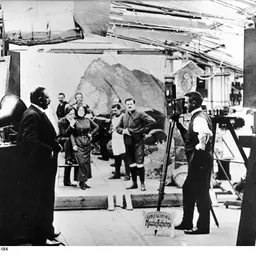
Contemporaries
People whose lives overlapped W. J. Lincoln's





Frequently asked questions
Who was W. J. Lincoln?
Australian film director
When was W. J. Lincoln born?
W. J. Lincoln was born in 1870 in Australia.
When did W. J. Lincoln die?
W. J. Lincoln died on 1 August 1917 in Sydney.
What was W. J. Lincoln's occupation?
W. J. Lincoln was a film director, playwright, film producer and screenwriter.
What nationality was W. J. Lincoln?
W. J. Lincoln was Australian.
Sources & further reading
Cite this page
APA: Biography.guide. (2026). W. J. Lincoln. https://biography.guide/w-j-lincoln/
MLA: "W. J. Lincoln." Biography.guide, https://biography.guide/w-j-lincoln/.
Chicago: "W. J. Lincoln." Biography.guide. https://biography.guide/w-j-lincoln/.
Data last updated: 2026-09-22 · Spot an error? Report a correction.
Page generated 2026-09-27 05:10 UTC