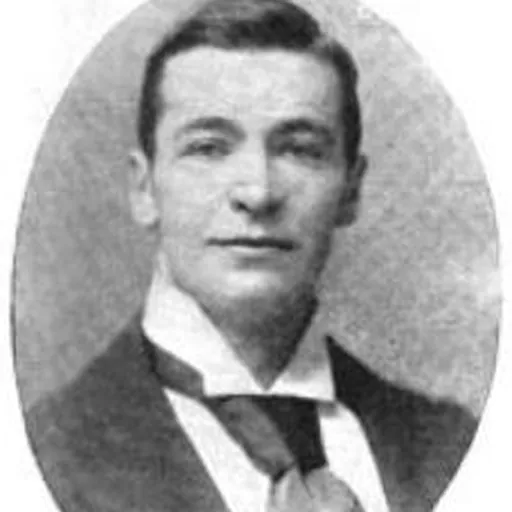
About W. G. R. Sprague
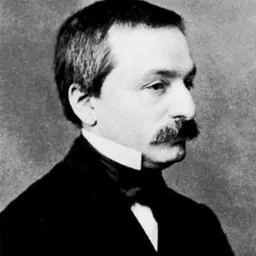
Lived 1863 – 1933 (aged 69–70). W. G. R. Sprague was an Australian architect.
William George Robert Sprague (1865 – 4 December 1933) was a theatre architect. He was apprenticed to Frank Matcham, and later established his own practice, designing at least thirty-five theatres between 1890 and 1929. Of his surviving London theatres, eleven are Listed – officially designated as of particular architectural or historic interest deserving special protection. Ten are listed in the basic category, Grade II, and one – Wyndham's is in the middle category, Grade II*.
The two substantially intact Sprague theatres outside London are the Lyceum, Sheffield, which is Grade II* Listed, and the Théâtre Édouard VII, Paris, designated a .
Life and career Sprague was born in Dunedin, New Zealand, in 1865, the son of an English actress, Dolores Drummond, and her husband, William Drummond Sprague, a law clerk.
Sprague married twice. His first marriage was in November 1890 to Mary Jane Beer; they had a daughter, Maud. They divorced in 1898 and in April 1900 he married Isabella Katherine Bennett; they had a daughter and two sons. Sprague died from heart failure at his home in Maidenhead on 4 December 1933, aged 68.
Theatres In London, except where stated. Of Sprague's surviving theatres, thirteen are Listed – officially designated as of particular architectural or historic interest deserving special protection. Eleven are listed in the lowest category, Grade II, and two – the Lyceum, Sheffield and Wyndham's, London are in the middle category, Grade II*. DateTheatreCapacityNotes 1890 Olympic Theatre, London (with Bertie Crewe) 3,000 Demolished 1905 1891 Theatre Royal, Aldershot (with Crewe) 700 Demolished 1893 Theatre Royal, Lincoln (with Crewe) 475 Exterior rebuilt in 1945. (Interior survives and is Listed Grade II) 1894 Camberwell Metropole (with Crewe) 2,200 Demolished 1937 1896 Shakespeare, Battersea 3,000 Demolished 1956 1897 Grand, Fulham 2,239 Demolished 1958 1897 Lyceum, Sheffield 3,000 Listed, Grade II* 1897 Lyceum, Newport 1,250 Demolished 1898 Coronet, Notting Hill Gate 1,143 Listed, Grade II 1899 Wyndham's 759 Listed, Grade II* 1899 Terriss Theatre, Rotherhithe (later called Rotherhithe Hippodrome) 2,087 Demolished 1955 1899 Holloway Empire 1,210 Demolished mid-1970s 1899 Princess of Wales's Theatre, Kennington 1,347 Demolished 1949 1899 Empire Palace of Varieties, Stratford 2,000 Demolished 1899 Royal Duchess, Balham 1,200 Demolished 1960s 1899 Empire, Bradford 2,000 Demolished 1980s 1900 Camden Theatre (now called Koko) 2,434 Listed, Grade II 1900 Euston Palace of Varieties (later called the Regent) 1,380 Demolished 1968 1902 King's, Hammersmith 3,000 Demolished 1965 1902 New, London (later called the Albery and then the Noël Coward Theatre) 1,250 Listed, Grade II 1902 Royal Artillery, Woolwich 1,000 Demolished 1956 1905 Hicks Theatre (now the Aldwych Theatre) 1,092 Listed, Grade II 1905 Waldorf (later the Strand; now called the Novello Theatre) 1,146 Listed, Grade II 1906 Globe (now called the Gielgud Theatre) 1,000 Listed, Grade II 1907 Queen's (now called the Sondheim Theatre) 1,120 Listed, Grade II 1907 Palace, Reading 1,460 Demolished 1961 1908 Grand Opera House, Norwich (later called the Hippodrome) 1,836 Demolished 1966 1908 New, Oxford 1,200 Demolished and replaced 1933 1910 Kilburn Empire (later called the Broadway) 1,913 Mainly rebuilt in 1970s; fragmentaryremainsofSprague'swork 1912 New, Northampton 2,300 Demolished 1950 1913 Ambassadors 490 Listed, Grade II 1913 Théâtre Édouard VII, Paris 800 1915 Penge Empire 1,500 Demolished 1960 1916 St Martin's 600 Listed, Grade II1929Streatham Hill Theatre 3,000 Listed, Grade II Source: Mackintosh and Sell, and Arthur Lloyd website.
Gallery
Notes, references and sources
Don’t just read it —
keep it.
Full-length biographies made to live with: read them, listen on the way to work, watch them tonight.
- E-book
- Audio
- Video
Instant download · yours to keep · every purchase keeps this site free
Important facts
People in W. G. R. Sprague's life
Named in this biography and alive at the same time






Related people
Same field, nearest in time



Contemporaries
People whose lives overlapped W. G. R. Sprague's


Frequently asked questions
Who was W. G. R. Sprague?
Australian architect, mainly known for theatres and cinemas (1865–1933)
When was W. G. R. Sprague born?
W. G. R. Sprague was born in 1863 in Australia.
When did W. G. R. Sprague die?
W. G. R. Sprague died on 4 December 1933 in Maidenhead.
What was W. G. R. Sprague's occupation?
W. G. R. Sprague was an architect.
What nationality was W. G. R. Sprague?
W. G. R. Sprague was Australian.
Sources & further reading
Cite this page
APA: Biography.guide. (2026). W. G. R. Sprague. https://biography.guide/w-g-r-sprague/
MLA: "W. G. R. Sprague." Biography.guide, https://biography.guide/w-g-r-sprague/.
Chicago: "W. G. R. Sprague." Biography.guide. https://biography.guide/w-g-r-sprague/.
Data last updated: 2026-09-20 · Spot an error? Report a correction.
Page generated 2026-09-27 05:10 UTC