
About W. Franke Harling
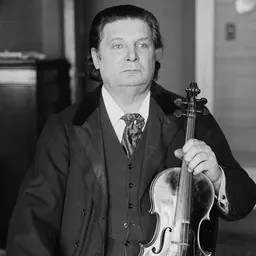
Lived 1887 – 1958 (aged 71). W. Franke Harling was an American and British composer, songwriter, film score composer and musician.
William Franke Harling (January 18, 1887 – November 22, 1958) was a composer of film scores, operas, and popular music.
Life and career Born William Franke Harling in London, he was educated at the Grace Choir Church School in New York City. After working as an organist and choir director at the Church of the Resurrection in Brussels, he spent two years at the United States Military Academy at West Point, and composed both its hymn, called "The Corps," and its official march, "West Point Forever."
In 1918, Harling contributed incidental music to the Broadway production of the 1898 play Pan and the Young Shepherd by Maurice Hewlett. In 1926, he collaborated with Laurence Stallings on Deep River, a voodoo-themed opera set in New Orleans in 1835. It opened on Broadway at the Imperial Theatre on October 4 and ran for 32 performances.
Harling began his Hollywood career in 1928. His film credits include The Vagabond King, This Is the Night, So Big!, A Bill of Divorcement, Blonde Venus, A Farewell to Arms, The Bitter Tea of General Yen, Monte Carlo, Souls at Sea, and Penny Serenade.
Harling won the Academy Award for Best Music Scoring for Stagecoach (1939) and was nominated for Souls at Sea (1937) and Three Russian Girls (1944).
Harling's popular songs include "Beyond the Blue Horizon" (with Richard A. Whiting) popularized by Jeanette MacDonald in 1930 and Lou Christie thirty years later, and "Sing You Sinners", originally performed by Lillian Roth in 1930 and a hit for Tony Bennett in 1950.
Harling won the Bispham Memorial Medal Award for his jazz-oriented opera A Light from St. Agnes.
Selected filmography Monte Carlo (1930) Every Woman Has Something (1931) Beauty and the Boss (1932) Penny Serenade (1941)
Selected songs "Where was I", song by W. Franke Harling and Al Dubin performed by Ruby Newman and His Orchestra with vocal chorus by Larry Taylor and Peggy McCall 1939
Don’t just read it —
keep it.
Full-length biographies made to live with: read them, listen on the way to work, watch them tonight.
- E-book
- Audio
- Video
Instant download · yours to keep · every purchase keeps this site free
Important facts
People in W. Franke Harling's life
Named in this biography and alive at the same time



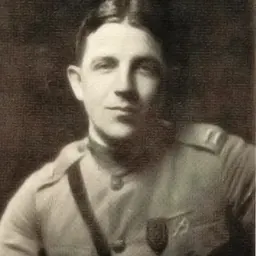
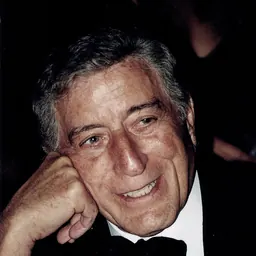


Related people
Same field, nearest in time

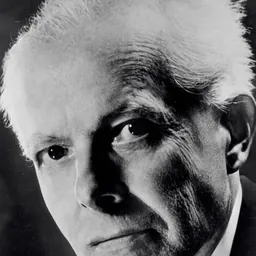

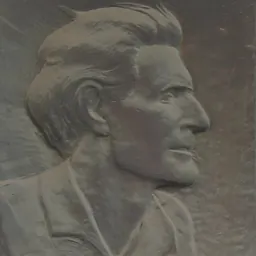

Contemporaries
People whose lives overlapped W. Franke Harling's




Frequently asked questions
Who was W. Franke Harling?
British-American composer (1887-1958)
When was W. Franke Harling born?
W. Franke Harling was born on 18 January 1887 in London.
When did W. Franke Harling die?
W. Franke Harling died on 22 November 1958 in Sierra Madre.
What was W. Franke Harling's occupation?
W. Franke Harling was a composer, songwriter, film score composer and musician.
What nationality was W. Franke Harling?
W. Franke Harling was American and British.
Sources & further reading
· Wikipedia: W. Franke Harling
Cite this page
APA: Biography.guide. (2026). W. Franke Harling. https://biography.guide/w-franke-harling/
MLA: "W. Franke Harling." Biography.guide, https://biography.guide/w-franke-harling/.
Chicago: "W. Franke Harling." Biography.guide. https://biography.guide/w-franke-harling/.
Data last updated: 2026-09-20 · Spot an error? Report a correction.
Page generated 2026-09-27 05:18 UTC