
About Vlado Kristl
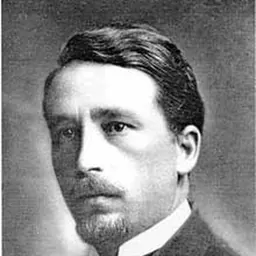
Lived 1923 – 2004 (aged 81). Vlado Kristl was a Croatian film director, painter, university teacher, writer, actor and poet.
Vladimir "Vlado" Kristl (24 January 1923, Zagreb, Croatia – 7 July 2004, Munich, Germany) was a filmmaker and artist, best known for his animations and short films.
Biography Vladimir "Vlado" Kristl was born 24 January 1923 in Zagreb, Croatia. Kristl first came to international prominence for his formally challenging and rigorous animations, particularly Don Kihot (freely inspired by Cervantes' Don Quixote). The film is a "graphical and abstract masterpiece which went beyond all existing conventions" and was awarded the main prize at the Oberhausen International Short Film Festival. Kristl regarded this film, which was not his first, as the one where he "was finally given a free rein".
In 1962 Kristl made General i resni clovek (The General and the real man), a satirical live action short film which got him into trouble with the board of censors. Following the banning of his early film The General in 1962, Kristl left Croatia and relocated to Germany where he created an incomparable body of work in the context of post-war European cinema. His work has a central position in the avant-garde scene in Zagreb, Yugoslavia, as well as the emergent radical political cinema in Germany in the 1960s influencing participants in the Oberhausen manifesto and the New German Cinema of the 1960s and 70s. In Germany, he created some of the key works of independent cinema in the 1960s, such as Arme Leute and Madeleine, Madeleine, and also began his cycle of uniquely anarchistic feature films.
He died in 2004, aged 81, in Munich, Germany. With his partner Jelena he had two children, Madeleine (b. 1966) and Pepe Stephan (b. 1968).thumb He published two books of poetry: Neznatna lirika (Insignificant lyrics, 1959), and Pet bijelih stepenica (Five white steps, 1961) in Croatian, and several books in German.
Filmography Šagrenska koža (The Piece of Shagreen Leather) – 1960 Don Kihot – 1961 General i resni človek/Der General und der Ernste Mensch (The General and the Real Human Being) – 1962 – 12 minutes Arme Leute – 1963 – 8 minutes Madeleine, Madeleine – 1963 – 11 minutes Der Damm (The Dam) – 1964 – 80 minutes Autorennen – 1965 – 10 minutes (The Letter) – 1966 – 83 minutes Prometheus – 1966 – 10 minutes Die Utopen – 1967 – 9 minutes Sekundenfilme – 1968 – 19 minutes 100 Blatt Schreibblock – 1968 – 26 minutes Italienisches Capricco – 1969 – 30 minutes Film oder Macht (Film or Power) – 1970 – 110 minutes Obrigkeitsfilm (The Film Of The Authority) – 1971 – 86 minutes Literaturverfilmung – 1973 – 10 minutes Horizonte – 1973 – 8 minutes Kollektivfilm – 1974 – 18 minutes Diese Gebichte: Tod Der Hierachie – 1975 – 58 minutes Verräter Der Jungen Deutschen Films Schlafen Nicht – 1982 – 6minutes Tod der Zuschauer (Death To The Spectator) – 1983 – 110 minutes Die Schule Der Postmoderne – 1990 – 15 minutes Die Hälfte Des Reichtums Für Die Hälfte Der Schönheit – 1994 – 9 minutes Als Man Noch Aus Persönlichen Gründen Gelebt Hat – 1996 – 6 minutes Der Letzte Klon – 1998 – 6 minutes Drei Faule Schweine – 2000 – 7 minutes Kunst Ist Nur Ausserhalb Der Menschengesellschaft – 2002 – 9 minutes Weltkongress Der Obdachlosen – 2004 – 5 minutes
Films about Kristl include: Vlado Kristl Portrait (directed by Kurt Benning; 2003) – 60 minutes Vlado Kristl – Ich bin ein Mensch-Versuch (Vlado Kristl – I am a Human Experiment; directed by Johanna Pauline Maier and Markus Nechleba; 2006) – 87 minutes
Publications in German Geschäfte, die es nicht gibt, Ed. Längsfeld, München 1966 Komödien, Kinema Verlag, Berlin 1968 Mundmaschine, UnVERLAG, München 1969 Vorworte (Zeitschrift für unbrauchbare Texte) 8 Nummern c/o Barbara Schlottke, München 1970/71 Sekundenfilme, Edition Suhrkamp Verlag (Wegen schlechtem Verkaufs barbarisch eingestampft vom selb. Verlag), Frankfurt/Main 1971 Kultur der Anarchie, Kommunales Kino, Frankfurt, 1975 Unerlaubte Schönheit, Filmkritikheft Nr 233, Mai 1976 Video-theater, Freunder der Deutschen Kinemathek e.V., Berlin, 1977 Körper des Unrechts, S.A.U.-Verlag, München 1979 Hamburg 1980, Verlag Michael Kellner, Hamburg 1980 Revolution 1941–1980, I. Band 1. und 2. Auflage, Hamburg 1980 Fremdenheft oder vom Glück unter Eingebildeten zu Sein, Hamburg 1981 (SV) Techniken der Kunst machen, Kiel 1981 (SV) Titel und Würden, Verlag Michael Kellner, Hamburg 1983 Zeichnung, 1.-DM Verlag, Hamburg, 1984 Revolution II. Band, mit Angehängtem I. Band, 1.-DM Verlag, Hamburg, 1984 Als man noch aus Persönlichen Grunden gelebt hat, 1.-DM Verlag, Hamburg, 1986 Die Postmoderne, 1.-DM Verlag, Hamburg, 1987 Die Intelligenz, Haus Höchster Schlossplatz 1 e.V., Höchst, 1990 Die Sonne, Haus Höchster Schlossplatz 1 e.V., Höchst, 1990
Don’t just read it —
keep it.
Full-length biographies made to live with: read them, listen on the way to work, watch them tonight.
- E-book
- Audio
- Video
Instant download · yours to keep · every purchase keeps this site free
Important facts
People in Vlado Kristl's life
Named in this biography and alive at the same time

Related people
Same field, nearest in time



Contemporaries
People whose lives overlapped Vlado Kristl's
Frequently asked questions
Who was Vlado Kristl?
Croatian artist and filmmaker (1923-2004)
When was Vlado Kristl born?
Vlado Kristl was born on 24 January 1923 in Zagreb, Germany.
When did Vlado Kristl die?
Vlado Kristl died on 7 July 2004 in Munich.
What was Vlado Kristl's occupation?
Vlado Kristl was a film director, painter, university teacher, writer, actor and poet.
What nationality was Vlado Kristl?
Vlado Kristl was Croatian.
Sources & further reading
Cite this page
APA: Biography.guide. (2026). Vlado Kristl. https://biography.guide/vlado-kristl/
MLA: "Vlado Kristl." Biography.guide, https://biography.guide/vlado-kristl/.
Chicago: "Vlado Kristl." Biography.guide. https://biography.guide/vlado-kristl/.
Data last updated: 2026-09-20 · Spot an error? Report a correction.
Page generated 2026-09-27 05:25 UTC