
About Vladislav Ravdonikas
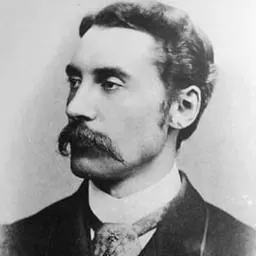
Lived 1894 – 1976 (aged 82). Vladislav Ravdonikas was a Russian archaeologist, historian and art historian.
Vladislav Iosifovich Ravdonikas (; 9 December 1894 – 28 November 1976) was a Soviet archeologist.
Life and career Ravdonikas was born in to a Russified Lithuanian family. His father worked as a paramedic in a military hospital. Ravdonikas was orphaned at an early age and was raised by a teacher's family and received secondary education. He later studied at the Mikhailovsky Artillery School and was a participant in the First World War.
Ravdonikas enthusiastically accepted the October Revolution and was elected a delegate to Russian Congress of Soviets. He was Commander of the artillery battalion of the Red Army in the Karelo-Finnish front against the forces of Yudenich. In Tikhvin, he was in charge of the Pedagogical College, initiated the museum status of the monastery, and edited the county newspaper.
In 1922, he did not comply with the order of the Provincial Committee of the Russian Communist Party to move to Cherepovets for party work in the newspaper, as he wanted to dedicate himself to scientific work and teaching. He subsequently left the party and remained non-partisan for the rest of his life.
In the late 1920s, Ravdonikas' career began to take off rapidly. In 1929, he criticized the pre-revolutionary school of archeology and, through his work, began to introduce the ideas of Marxism into Soviet archeology.
In the 1930s, Ravdonikas, already a professor and doctor of historical sciences, taught at Leningrad State University and headed the department of archeology at the university. Being a supporter of "Marrism", he retired from his scientific career in the late 1940s after being removed form most of his scientific posts.
Works and theories Ravdonikas was the author of a number of works on the history of the north-west of Russia in antiquity and the Middle Ages (settlement of the Baltic-Finnish tribes, the formation of statehood in the region) and the theoretical problems of primitive society. He developed the theory of stadiality, at one time he was under the influence of "the new teaching of Nikolai Marr on language." In 1930, he published the polemical work "For a Marxist History of Material Culture", which called for a revision of the heritage of the old pre-revolutionary archeology and for the introduction of Marxist methods into science. He strove to move from a simple description and classification of things to the study of the socio-economic and socio-political problems of ancient societies. He actively participated in the theoretical discussions of the early 1930s. about the subject and essence of archeology, its relationship with other sciences.
In the 1930s explored the burial ground of the Mesolithic-Neolithic era of the Islands of Lake Onega, rock carvings (petroglyphs) of Lake Onega and the White Sea, medieval burial mounds and burial grounds of the Ladoga and Gatchina region, burial grounds and cave cities in the Crimea. He wrote a large monograph on the petroglyphs of the Karelia of the White Sea, interpreting their semantic meaning associated with the cults and beliefs of ancient sea animal hunters and fishermen. He saw in the petroglyphs not “pictures from nature”, but images that passed through the prism of primitive thinking and were significantly rethought at the same time. In his opinion, most of the figures, especially those of Onega, are images of a symbolic order, having solar and lunar semantics. In 1938, he began excavations of the Earthen settlement in Staraya Ladoga, which continued after the end of the war. He was also one of the founders of the leading serial publication "Soviet Archaeology" and played a decisive role in the formation of the Department of Archeology at Leningrad State University. His lecturers was very popular among the students of the Faculty of History. Ravdonikas wrote the first textbook in the Soviet Union on the history of primitive society.
Don’t just read it —
keep it.
Full-length biographies made to live with: read them, listen on the way to work, watch them tonight.
- E-book
- Audio
- Video
Instant download · yours to keep · every purchase keeps this site free
Important facts
People in Vladislav Ravdonikas's life
Named in this biography and alive at the same time
Related people
Same field, nearest in time


Contemporaries
People whose lives overlapped Vladislav Ravdonikas's


Frequently asked questions
Who was Vladislav Ravdonikas?
soviet Archeologist (1894–1976)
When was Vladislav Ravdonikas born?
Vladislav Ravdonikas was born on 27 November 1894 in Tikhvin.
When did Vladislav Ravdonikas die?
Vladislav Ravdonikas died on 28 November 1976 in Saint Petersburg.
What was Vladislav Ravdonikas's occupation?
Vladislav Ravdonikas was an archaeologist, historian and art historian.
What nationality was Vladislav Ravdonikas?
Vladislav Ravdonikas was Russian.
Sources & further reading
· Wikipedia: Vladislav Ravdonikas
· DBpedia: Vladislav Ravdonikas
Cite this page
APA: Biography.guide. (2026). Vladislav Ravdonikas. https://biography.guide/vladislav-ravdonikas/
MLA: "Vladislav Ravdonikas." Biography.guide, https://biography.guide/vladislav-ravdonikas/.
Chicago: "Vladislav Ravdonikas." Biography.guide. https://biography.guide/vladislav-ravdonikas/.
Data last updated: 2026-09-20 · Spot an error? Report a correction.
Page generated 2026-09-27 05:16 UTC