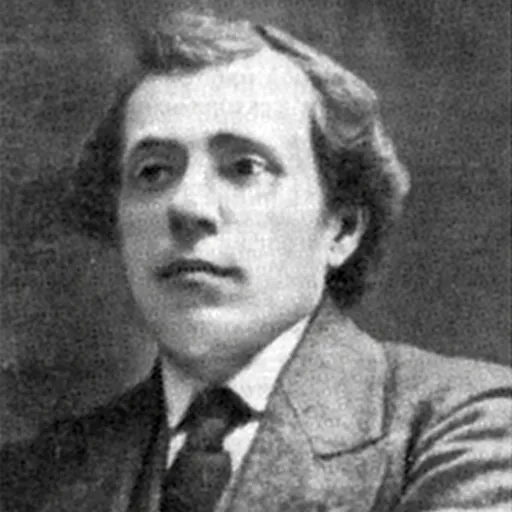
About Vladimir Nevsky
Lived 1876 – 1937 (aged 61). Vladimir Nevsky was a Russian historian, politician, librarian and revolutionary.
Vladimir Ivanovich Nevsky (Russian: Влади́мир Ива́нович Не́вский; 14 May [ O.S. 2 May] 1876 – 26 May 1937) was a Russian revolutionary, Bolshevik functionary, Soviet statesman, professor and historian.
Early career Nevsky was born Feodosii Ivanovich Krivobokov to a wealthy family of Old Believers He became involved in a political circle in 1895, and organised an illegal Social Democratic group in 1897. He joined the Russian Social Democratic Labour Party in 1898, as a student at Moscow University, shortly after the party was founded. He was expelled from university in 1899 for his revolutionary activities and sent back to Rostov under police supervision. He returned to Moscow, but was arrested again in 1901, held in prison for eight months, then exiled to Voronezh, where he helped set up a distribution network for Iskra, the newspaper founded abroad by Vladimir Lenin and others. He joined the Bolsheviks when the RSDLP split into factions in 1903.
Nevsky moved to Geneva in 1904 at a time when Lenin was losing control of the Bolshevik faction to 'conciliators' who wanted to reunite with the Mensheviks, but Nevsky backed Lenin and was sent to St Petersburg to organise the Bolshevik faction. He admitted, years later, that the St Petersburg Bolshevik committee was so engrossed in the dispute with the Mensheviks that they did not know about the strikes that marked the beginning of the 1905 revolution until they read about them in foreign newspapers. He helped prepare the party Congress that Lenin convened in London in April 1905. According to some reports, he was a delegate to the conference, representing the Caucasus, which would imply that he was in Baku for part of 1904 or 1905, but that is disputed. In 1906–08, he was a member of the executive of the St Petersburg Bolshevik committee. Arrested in 1908, he was released in 1909. Sent as a delegate to the Bolshevik conference which Lenin convened in Prague in 1912, he was arrested on the way, but later was co-opted onto the Central Committee.
Career from 1917 At the time of the February Revolution in 1917, Nevsky was in exile in Yekaterinburg, but he moved to Petrograd (St Petersburg) where, as a member of the military organisation of the Bolshevik party, he became known as the "idol of the soldiers" because of his popularity with troops based in the capital.
During the October Revolution, he was responsible for seizing control of Petrograd's railway network. Afterwards, he organised a conference of railway workers, to secure control of the railways nationwide. He was appointed Deputy People's Commissar (Minister) for Railways in February 1918, and was People's Commissar, July 1918-March 1919. In the same year, Nevsky publicly renounced the opposition, which was now led by Leon Trotsky. His last published article, entitled "The Brilliant Leader" appeared in Pravda on 22 January 1935. It was a tribute to Lenin, with no mention of Stalin. On May 25 he was sentenced by the Military Collegium of the Supreme Court of the Soviet Union to be shot. The sentence was carried out the next day.
Vladimir Nevsky was posthumously rehabilitated in 1955.
Don’t just read it —
keep it.
Full-length biographies made to live with: read them, listen on the way to work, watch them tonight.
- E-book
- Audio
- Video
Instant download · yours to keep · every purchase keeps this site free
Important facts
People in Vladimir Nevsky's life
Named in this biography and alive at the same time
Related people
Same field, nearest in time


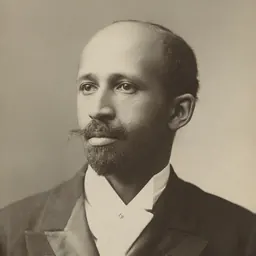
Contemporaries
People whose lives overlapped Vladimir Nevsky's

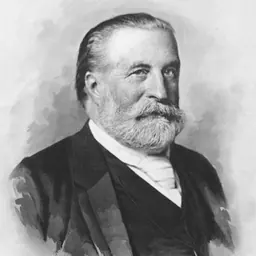
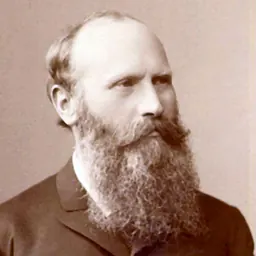
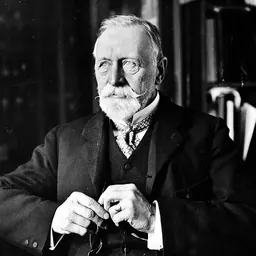
Frequently asked questions
Who was Vladimir Nevsky?
Russian historian (1876–1937)
When was Vladimir Nevsky born?
Vladimir Nevsky was born on 2 May 1876 in Rostov-on-Don.
When did Vladimir Nevsky die?
Vladimir Nevsky died on 26 May 1937 in Moscow.
What was Vladimir Nevsky's occupation?
Vladimir Nevsky was a historian, politician, librarian and revolutionary.
What nationality was Vladimir Nevsky?
Vladimir Nevsky was Russian.
Sources & further reading
Cite this page
APA: Biography.guide. (2026). Vladimir Nevsky. https://biography.guide/vladimir-nevsky/
MLA: "Vladimir Nevsky." Biography.guide, https://biography.guide/vladimir-nevsky/.
Chicago: "Vladimir Nevsky." Biography.guide. https://biography.guide/vladimir-nevsky/.
Data last updated: 2026-09-20 · Spot an error? Report a correction.
Page generated 2026-09-27 05:09 UTC