
About Vladimir Kirshon
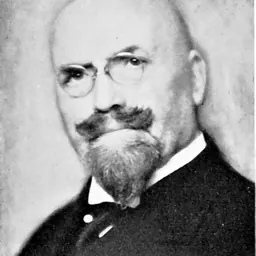
Lived 1902 – 1938 (aged 35). Vladimir Kirshon was a Russian librettist, playwright and writer.
Vladimir Mikhailovich Kirshon (; – July 28, 1938) was a Soviet playwright, poet, publicist and screenwriter.
Biography Born in Nalchik in the Caucasus into the family of a lawyer, Kirshon served in the Red Army during the Russian Civil War and in 1920 joined the Communist Party, which sent him to the Sverdlov Communist University. As a young idealist, he was upset by the New Economic Policy, and this is reflected in his early plays.
He was an organizer of the Association of Proletarian Writers in Rostov-on-Don and in the North Caucasus, and from 1925 was one of the secretaries of the Russian Association of Proletarian Writers (RAPP) in Moscow. He was among the most radical literary functionaries of the day, and was one of the most relentless persecutors of Mikhail Bulgakov. His ideological fervor recommended him to Joseph Stalin, to whom he sent his work for approval. "When he was in favour, he could do no wrong: 'Publish immediately,' Stalin scrawled on Kirshon's latest article when returning it to Pravda'''s editor." His early plays Konstantin Terekhin (1926) and Rel'sy gudyat (Rails are Humming, 1927) "caused a sensation," but Khleb (Bread, 1931) "had but an ephemeral success." His later Chudesny splav'' (Miraculous Alloy, 1934) was still popular in the 1960s. At the beginning of 1937, however, Kirshon fell out of favour due to his close association with Leopold Averbakh, former head of RAPP and brother-in-law of Genrikh Yagoda. At a public meeting he was relentlessly attacked by Vsevolod Vishnevsky for associating with an "enemy of the people" and criticizing decisions of the Politburo; he attempted to defend himself, but was expelled from the Party and the Writers' Union and soon disappeared from Moscow.
On August 29, 1937, he was arrested along with other former RAPP leaders as Trotsky sympathizers and charged with membership in a "counterrevolutionary terrorist organization. He was sentenced to be shot on April 21, 1938, and executed at Butyrka prison in Moscow on July 28, 1938.
He was posthumously rehabilitated in 1955 and his plays were performed again.
Works
Emigratsiia i oppozitsiia [The Emigration and the Opposition]. Moscow: Moskovskii Rabochii, 1927.
Don’t just read it —
keep it.
Full-length biographies made to live with: read them, listen on the way to work, watch them tonight.
- E-book
- Audio
- Video
Instant download · yours to keep · every purchase keeps this site free
Important facts
People in Vladimir Kirshon's life
Named in this biography and alive at the same time





Related people
Same field, nearest in time

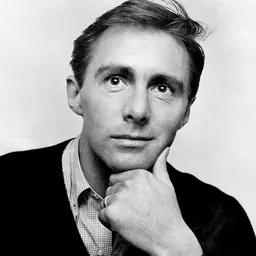
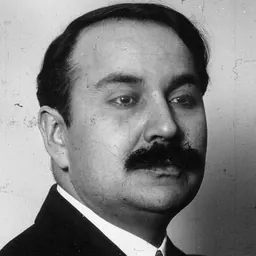
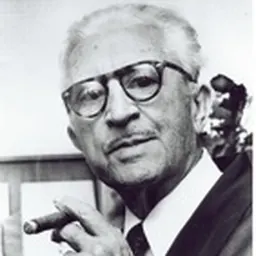
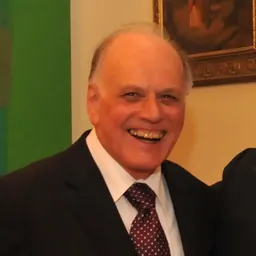
Contemporaries
People whose lives overlapped Vladimir Kirshon's



Frequently asked questions
Who was Vladimir Kirshon?
Soviet playwright (1902–1938)
When was Vladimir Kirshon born?
Vladimir Kirshon was born on 6 August 1902 in Nalchik.
When did Vladimir Kirshon die?
Vladimir Kirshon died on 28 July 1938 in Moscow.
What was Vladimir Kirshon's occupation?
Vladimir Kirshon was a librettist, playwright and writer.
What nationality was Vladimir Kirshon?
Vladimir Kirshon was Russian.
Sources & further reading
Cite this page
APA: Biography.guide. (2026). Vladimir Kirshon. https://biography.guide/vladimir-kirshon/
MLA: "Vladimir Kirshon." Biography.guide, https://biography.guide/vladimir-kirshon/.
Chicago: "Vladimir Kirshon." Biography.guide. https://biography.guide/vladimir-kirshon/.
Data last updated: 2026-09-20 · Spot an error? Report a correction.
Page generated 2026-09-27 05:10 UTC