
About Vladimír Fischer
Lived 1870 – 1947 (aged 77). Vladimír Fischer was a Czech architect, pedagogue and teacher.
Vladimír Fischer (4 June 1870 – 28 October 1947) was a Czech architect, professor and university administrator. He was a major figure in the development of modern architecture in the new state of Czechoslovakia after World War I and trained numerous university architecture students in Brno during the interwar period.
Early life and training Fischer was born on 4 June 1870 in Fryšták, Moravia, Austria-Hungary. He was the son of Antonín Fischer (1841–1905), who ran a construction company there and later in Holešov, and his wife Františka Rectorová. Vladimír Fischer attended state schools in Brno until 1887, then matriculated to the Czech Technical University in Prague, where he studied engineering construction under prominent Galician-born architect Friedrich Ohmann until 1893. Moving to Vienna, Fischer then studied building technology with the historicist architect Emil Ritter von Förster in 1894–95. Fischer worked as an intern in von Förster's office and later in the 1890s under Hermann Helmer and Ferdinand Fellner in Vienna.
Career
In 1899, Fischer returned to South Moravia, where he was commissioned as a civil surveyor in Holešov. He established his own independent architectural practice in Brno soon after the turn of the century, and in 1902 was appointed to the technical department of the Moravian Governorate, initially as a construction adjunct. He was promoted to engineer in 1906, and in 1913 to chief engineer. These works remained strongly historicist and eclectic, with Fischer often choosing from a wide range of well-worn architectural elements, including steeply-hipped roofs, turrets and onion-spired domes reminiscent of central European Baroque architecture.
During World War I he remained in Brno, becoming the Governorate's chief building commissioner in 1917. Upon the disintegration of Austria-Hungary in November 1918, he became chief building consultant and head of the surface structures department at the provincial political administration in Brno. Fischer was appointed to its faculty in 1923, where he served as dean of the faculty of architecture and civil engineering in 1924–25 and 1935–36, eventually becoming the university rector for 1931–32.
In this period Fischer's own practice also turned decidedly towards the modernist trends then sweeping central Europe, particularly the Functionalist vein of Czech architecture that became popular in the 1920s and 1930s, The marshy soil underneath the site required a lighter structure than the solid masonry that Fischer had originally intended, and so the finished product used a steel skeleton clad in reinforced concrete, with a copper-and-glass clad clock tower rising from the central pavilion. Fischer's mature modernist designs can be seen in the Trauma Hospital in Brno, designed with Karel Kapka and built from 1930 to 1933; and St. Augustine's Church in Brno (1930–1935), which retains the asymmetry of his earlier works but simplifies them into a minimalist prismatic volume for the sanctuary adjoined by a simple clock tower.
Ella Fischerová died in 1930 and was buried at the Brno Central Cemetery, in a grave with a tombstone designed by Fischer. The tombstone contains a richly decorated wrought iron cross from the turn of the 18th and 19th centuries and is protected as a cultural monument. Fischer died in Brno on 28 October 1947, at the age of 77, and was buried at the Brno Central Cemetery with his wife. Town hall in Fryšták (1900–1901) Reconstruction of the castle in Prostějov (1900–1906) Gymnasium in Antonínská Street in Brno (1902–1903) Augustinian house in Luhačovice (1903–1906) Primary school in Tišnov (1903) Town hall in Tišnov (1905–1906) Hotel U tří králů in Prostějov (1906) Archbishop's Palace in Olomouc (1906–1910) Primary school in Slavkov u Brna (1907) Financial directorate in Olomouc (1908) Church of St. Elisabeth of Thuringia in Vnorovy (1908–1909) The Swedish House in Smetana Street in Brno (1910) School in Veverská Bítýška (1910–1911) Villas and tenement houses in Brno in Merhautov, Štefánikov, Smetanov, Botanická, Merhoutová and Cihlářská streets (around 1910) Primary school in Holešov (1911) Vicarage in Vnorovy (1912) Tenement house of J. Stav in Prostějov (1912) Church of St. Bartholomew in Rohatec Cyril and Methodius Credit Union in Brno (now the, 1913–1915) Military chapel of the Sacred Heart of Jesus in Brno (1915) Pivovarská banka, Česká street, Brno (1920) Reconstruction of the Church of St. Bartholomew, Žebětín district of Brno (1922–1923) Church of St. John of Nepomuk, Staré Lískovec district of Brno (1923–1925) Girls' dormitory of the Kounice student dormitories, Mučednická street, Brno (1924) New City Hall in Ostrava (1924–1930) Mechanical-technological pavilion of the Czech Technical University, Veveří Street, Brno (1925–1926) Cyrillic monastery with an institution for mentally disabled children and school, Lerchová Street, Brno (1924–1925, 1930) Church of the Sacred Heart of God in Vacenovice (1927–1930) K. Vágner's department store, Česká Street, Brno (1928) Trauma hospital in Ponávka Street in Brno (with Karel Kepka, 1930–1933) St. Augustine's Church on Náměstí Míru, Brno (1930–1935) Church of Christ the King in Sudoměřice (1930–1932) Church of St. Anne in Tvarožná Lhota (1932–1933) Oncology hospital (the so-called "House of Comfort") on Žlutý kopec, Brno (with Bedřich Rozehnal, 1931–1934) Girls' gymnasium, Lerchova Street, Brno (1935)
Don’t just read it —
keep it.
Full-length biographies made to live with: read them, listen on the way to work, watch them tonight.
- E-book
- Audio
- Video
Instant download · yours to keep · every purchase keeps this site free
Important facts
People in Vladimír Fischer's life
Named in this biography and alive at the same time
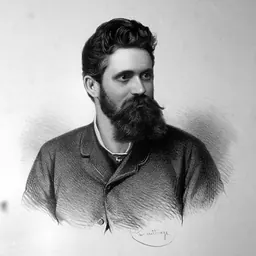


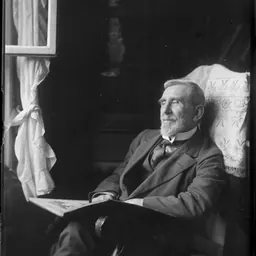
Related people
Same field, nearest in time
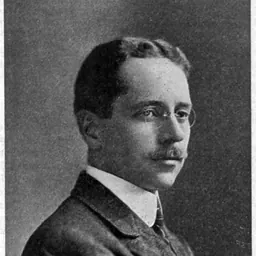



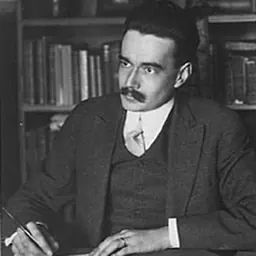
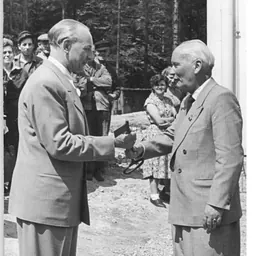
Contemporaries
People whose lives overlapped Vladimír Fischer's



Frequently asked questions
Who was Vladimír Fischer?
Czech architect and university educator (1870–1947)
When was Vladimír Fischer born?
Vladimír Fischer was born on 4 July 1870 in Fryšták.
When did Vladimír Fischer die?
Vladimír Fischer died on 28 October 1947 in Brno.
What was Vladimír Fischer's occupation?
Vladimír Fischer was an architect, pedagogue and teacher.
What nationality was Vladimír Fischer?
Vladimír Fischer was Czech.
Sources & further reading
Cite this page
APA: Biography.guide. (2026). Vladimír Fischer. https://biography.guide/vladimir-fischer/
MLA: "Vladimír Fischer." Biography.guide, https://biography.guide/vladimir-fischer/.
Chicago: "Vladimír Fischer." Biography.guide. https://biography.guide/vladimir-fischer/.
Data last updated: 2026-09-20 · Spot an error? Report a correction.
Page generated 2026-09-27 05:28 UTC