
About Virginia Clay-Clopton
Lived 1825 – 1915 (aged 89–90). Virginia Clay-Clopton was an American suffragist.
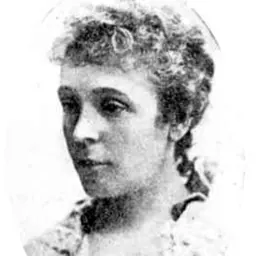
Virginia Caroline Clay-Clopton (; January 1825 – June 23, 1915), also known as Virginia Tunstall, Virginia Clay, and Mrs. Clement Claiborne Clay, was an American political hostess, activist, and socialite. She assumed various responsibilities after the American Civil War. As the wife of U.S. Senator Clement Claiborne Clay from Alabama, she was part of a group of young southerners who boarded together in Washington, D.C. in particular hotels. In the immediate postwar period, she worked to gain her husband's freedom from imprisonment at Fort Monroe, where Jefferson Davis, former president of the Confederate States of America, was also held.
In the late 19th century, Clay-Clopton (who remarried after her first husband died) became an activist in the United Daughters of the Confederacy, a group established after the Civil War that was instrumental in promoting the Lost Cause narrative. She worked to raise funds for Confederate cemeteries and memorials and campaigned for women's suffrage. Clay-Copton was one of several Southern women to publish her memoir at the turn of the 20th century; these women's accounts became part of the public discourse about the war. The United Daughters of the Confederacy specifically recommended her book as one of three for serious discussion by the membership. Early life Virginia Caroline Tunstall was born in 1825 in Nash County, North Carolina. Her parents were Anne Arrington and Dr. Peyton Randolph Tunstall. She was raised by several of her mother's numerous half-siblings after her mother died when Virginia was three years old. Her father left her with her mother's family and moved to Alabama. She lived first with the Drakes in North Carolina. In 1837 he was made chief justice. More than a decade later, in 1849 he was elected by an overwhelming margin as the governor of the state, and served for two terms.
After four years, Virginia's aunt was suffering failing health. Virginia went to live with her maternal uncle, Alfred Battle, and his family on their plantation outside Tuscaloosa. Virginia was tutored but also had much time to play with her cousins and have the run of the property. She moved with him to Huntsville, Alabama, where his family was based. In 1849, her uncle Henry Collier was elected governor of Alabama.
When her husband was elected by the legislature as a U.S. senator in 1853, Virginia Clay moved with him to Washington, D.C. On the train they met numerous other people from the state who were going to be part of Congress and the administration, forming friendships that lasted. In the capital, they were part of the political social life of the elite. That first winter, Clay gave birth to her only child, who died soon after. Within a year, she was fully participating in the many events of the city.
In rounds of dinners, Virginia Clay met other congressmen and their wives as well as members of the diplomatic corps and President Franklin Pierce's administration. During these years in Washington, she and her husband and numerous other Southerners lived at Brown's Hotel on Pennsylvania Avenue. For a couple of winters, they shifted to the Ebbitt Hotel, but returned to Brown's, where many of their friends stayed during congressional sessions. The hotel was an extension of their social life.
Virginia Clay's husband Clement died in 1882. In 1887, she married Judge David Clopton, and became known as Mrs. Clay-Clopton. He died in 1892.
During these years, Virginia Clay-Clopton became active in the women's suffrage movement and the United Daughters of the Confederacy, founded in 1894. Beginning with women's groups arranging for burial and commemoration of the Confederate dead, the chapters grew rapidly into the 20th century, when membership reached into the hundreds of thousands. UDC activities and intervention into textbook content strongly shaped memory and public opinion about the Civil War.
In 1904, Clay-Clopton published a memoir titled A Belle in the Fifties, covering her life from girlhood through her confinement at Fort Monroe. It was one of three memoirs recommended by the UDC to its membership for serious study, together with those of Sara Agnes Rice Pryor and Louise Wigfall Wright.
Death Clay-Clopton died in her home in Huntsville on June 23, 1915 aged 90. She is buried in Maple Hill Cemetery in Huntsville, Alabama, near her first husband.
Don’t just read it —
keep it.
Full-length biographies made to live with: read them, listen on the way to work, watch them tonight.
- E-book
- Audio
- Video
Instant download · yours to keep · every purchase keeps this site free
Important facts
Family & relationships
People in Virginia Clay-Clopton's life
Named in this biography and alive at the same time
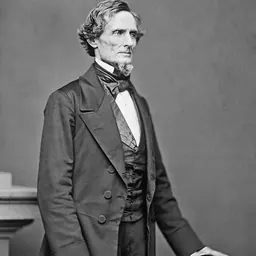

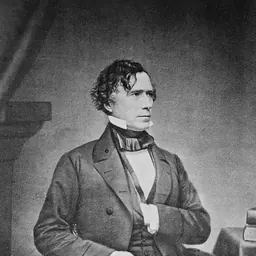


Related people
Same field, nearest in time

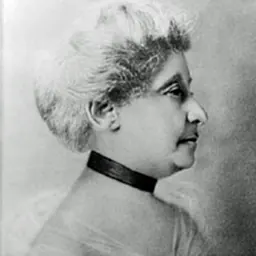

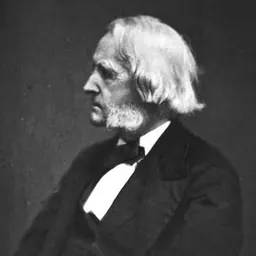

Contemporaries
People whose lives overlapped Virginia Clay-Clopton's



Frequently asked questions
Who was Virginia Clay-Clopton?
American suffragist (1825–1915)
When was Virginia Clay-Clopton born?
Virginia Clay-Clopton was born in 1825 in Nash County.
When did Virginia Clay-Clopton die?
Virginia Clay-Clopton died in 1915.
What was Virginia Clay-Clopton's occupation?
Virginia Clay-Clopton was a suffragist.
What nationality was Virginia Clay-Clopton?
Virginia Clay-Clopton was American.
Sources & further reading
· Wikipedia: Virginia Clay-Clopton
· DBpedia: Virginia Clay-Clopton
Cite this page
APA: Biography.guide. (2026). Virginia Clay-Clopton. https://biography.guide/virginia-clay-clopton/
MLA: "Virginia Clay-Clopton." Biography.guide, https://biography.guide/virginia-clay-clopton/.
Chicago: "Virginia Clay-Clopton." Biography.guide. https://biography.guide/virginia-clay-clopton/.
Data last updated: 2026-09-25 · Spot an error? Report a correction.
Page generated 2026-09-27 05:11 UTC