
About Virendra Singh
Born 1938. Virendra Singh is an Indian physicist, known for High energy physics.
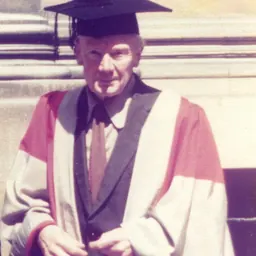
Virendra Singh (born 8 June 1938) is an Indian theoretical physicist and a former C. V. Raman chair professor and director of the Tata Institute of Fundamental Research (TIFR). Known for his research in high energy physics, Singh is an elected fellow of all the three major Indian science academies - Indian National Science Academy, Indian Academy of Sciences and National Academy of Sciences, India as well as The World Academy of Sciences. The Council of Scientific and Industrial Research, the apex agency of the Government of India for scientific research, awarded him the Shanti Swarup Bhatnagar Prize for Science and Technology, one of the highest Indian science awards, for his contributions to Physical Sciences in 1973.
Biography
Early life and education Born in Bijnor in the Indian state of Uttar Pradesh, Singh completed his schooling at Dev Nagri Inter College, Meerut in 1951 and passed the intermediate course from Meerut College of Agra University in 1953. After earning a BSc in physics, chemistry and mathematics in 1955 and an MSc in physics in 1957 from the same institution, he joined Tata Institute of Fundamental Research as a research assistant the same year. Subsequently, taking a sabbatical from service, he enrolled for doctoral studies at University of California, Berkeley and worked under the guidance of Geoffrey Chew, known for his contributions to the fields of mesons and bootstrap model, to secure a PhD in 1962. He stayed in the US to complete his post-doctoral work at three institutions, Lawrence Berkeley National Laboratory (1959–62) as a graduate student, California Institute of Technology (1962–63) as a research fellow with Murray Gell-Mann and Institute for Advanced Study, Princeton (1963–64) as a member.
Career On his return to India in 1964, he resumed his career at TIFR and served the institution in such various capacities as a professor (1970–81), senior professor (1981–90), and a professor of eminence till his superannuation from service in 2003. During this period, he held the directorship of the institution from 1987 to 1997. Post-retirement, he continued his association with TIFR as a C. V. Raman Research Professor of the Indian National Science Academy till 2008.
Personal life Singh lives in Andheri west in Mumbai.
Legacy
Singh's studies spanned the fields of high energy physics, quantum mechanics and particle physics and he has made reportedly significant contributions on S-matrix theory and symmetry theories of hadrons. His collaboration with Virendra Gupta resulted in the development of Gupta-Singh coupling constant sum rule related to baryon decuplet and he worked along M. A. Beg to develop the Beg-Singh SU (6) mass formula. His theoretical work on scattering amplitudes have helped widen the understanding of high energy total cross-sections in hadronic processes. He proposed Singh lemma, a method of calculating the threshold value of the amplitude from the gauge condition. His other contributions include Singh-Pais theorems and Singh-Roy bounds related to compton scattering and scattering amplitudes. His studies have been documented by way of a number of articles and the article repository of the Indian Academy of Sciences has listed 84 of them. Besides, he has contributed chapters to books published by others including a lecture in a book edited by B. V. Sreekantan and Scientific Realism and Classical Physics, a general article published in History and Philosophy of Physics published by Indian Council of Philosophical Research. His work has also drawn citations from other authors.
Professional associations On the academic front, he was instrumental in organizing a school of research on theoretical physics at Tata Institute of Fundamental Research, along with Bhalchandra Udgaonkar. He served as the chairman of the Mumbai chapter of Society for Applied Microwave Electronics Engineering & Research (SAMEER) of the Ministry of Electronics and Information Technology (1993–97) and the Nehru Science Centre (1994–96). He has been associated with the Indian Academy of Sciences as a council member (1977–82) and with National Academy of Sciences, India as the president of its Mumbai chapter (2001–07). He has also been a member of the councils of a number of institutes and associations which included Indian Statistical Institute (1986–88), Saha Institute of Nuclear Physics (1987–92), Indian Science News Association (1994–2001) and National Council of Science Museums (1994–98). and the Council of Scientific and Industrial Research awarded him the Shanti Swarup Bhatnagar Prize, one of the highest Indian science awards in 1973. He became an elected fellow of the Indian National Science Academy in 1975 and four years later, the university Grants Commission of India selected him for the 1979 Meghnad Saha Award. and the Goyal Prize for Physical Sciences in 1995. He is also a fellow of the Institute of Physics and the award orations delivered by him include K. R. Ramanathan Memorial Lecture of Physical Research Laboratory (1995), Bicentennial Lecture of Indian Institute of Astrophysics (1995), S. N. Bose Memorial Lecture of S.N. Bose National Centre for Basic Sciences (1995), S. N. Bose Memorial Lecture of Kolkata Mathematical Society (1995), Meghnad Saha Lecture of National Academy of Sciences, India (1996) and Bhabha Memorial Lecture of the Institution of Electronics and Telecommunication Engineers (1997).
Selected bibliography Chapters
Articles
Don’t just read it —
keep it.
Full-length biographies made to live with: read them, listen on the way to work, watch them tonight.
- E-book
- Audio
- Video
Instant download · yours to keep · every purchase keeps this site free
Important facts
People in Virendra Singh's life
Named in this biography and alive at the same time
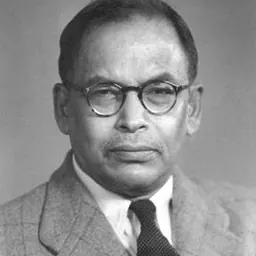

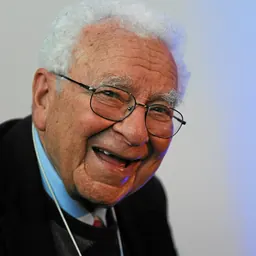


Related people
Same field, nearest in time

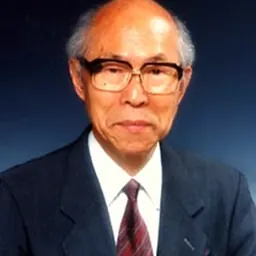
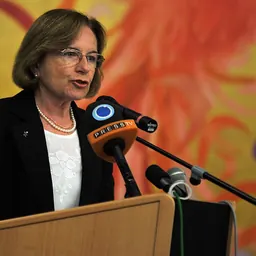

Contemporaries
People whose lives overlapped Virendra Singh's



Frequently asked questions
Who is Virendra Singh?
Indian physicist
When was Virendra Singh born?
Virendra Singh was born on 8 June 1938 in Bijnor.
What is Virendra Singh's occupation?
Virendra Singh is a physicist.
What is Virendra Singh known for?
Virendra Singh is known for High energy physics.
What nationality is Virendra Singh?
Virendra Singh is Indian.
Sources & further reading
· DBpedia: Virendra Singh (physicist)
Cite this page
APA: Biography.guide. (2026). Virendra Singh. https://biography.guide/virendra-singh-physicist/
MLA: "Virendra Singh." Biography.guide, https://biography.guide/virendra-singh-physicist/.
Chicago: "Virendra Singh." Biography.guide. https://biography.guide/virendra-singh-physicist/.
Data last updated: 2026-09-20 · Spot an error? Report a correction.
Page generated 2026-09-27 05:01 UTC