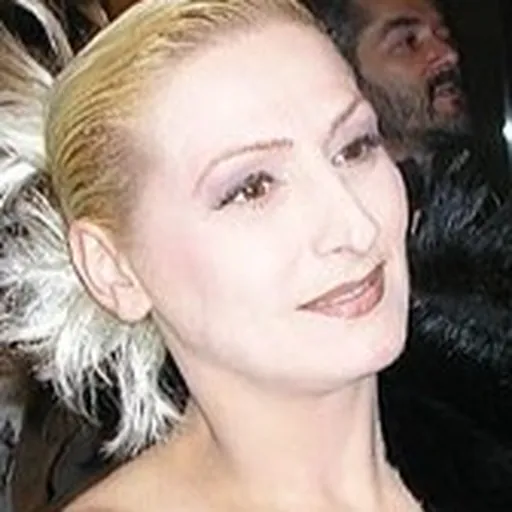
About Viktorija
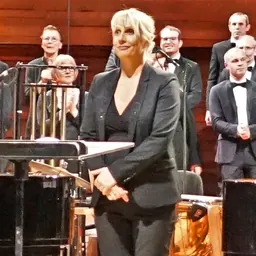
Born 1958. Viktorija is a Serbian and Yugoslav singer.
Snežana Mišković (; ; born 19 December 1958), better known by her stage name Viktorija (; ), is a Serbian and Yugoslav semi-retired rock singer. Known for her raspy voice, Viktorija was one of the most popular and prominent female vocalists of the Yugoslav rock scene.
Mišković rose to prominence in the early 1980s, as the vocalist and the leader of the girl group Aska, releasing two albums with the group and representing Yugoslavia at the 1982 Eurovision Song Contest. In 1986, she disbanded Aska and formed the band Viktorija. Initially, Viktorija was the name of the Mišković-fronted rock group, but soon she adopted Viktorija as her stage name. Viktorija gained nationwide popularity with her 1988 debut album Spavaćeš sam, followed by the equally successful 1991 album Ja verujem, cooperating with a number of prominent Yugoslav songwriters and musicians on both. However, following the release of her third studio album Ja znam da je tebi krivo in 1995, she retired from the scene, making a brief comeback with the 2000 cover album Nostalgija. Since mid-2000s, Viktorija has released new songs and performed live sporadically only.
Biography
Early life and career Mišković was born in Vučitrn on 19 November 1958. She came to Belgrade for her studies in 1976, soon starting to perform with Society of Culture and Arts Branko Krsmanović choir and with the band Pop Polifonija (Pop Polyphony). In 1983, as a part of cultural exchange between Yugoslavia and Kenya, Aska held twenty concerts in Kenya. In 1985, Mišković, alongside Snežana Stamenković and Izolda Barudžija, took part in YU Rock Misija, a Yugoslav contribution to the Live Aid campaign, contributing vocals to the charity single "Za milion godina"; in addition, Aska took part in the corresponding charity concert held at Red Star Stadium. From 1984 to 1986, about 25 different singers passed through Aska, Mišković eventually deciding to end the group's activity.
In 1988, Viktorija released the album Spavaćeš sam (You'll Be Sleeping Alone), recorded throughout two years in four different studios in Zagreb and Belgrade. and the recording featured Piloti member Safet Petrovac (guitar), Ekatarina Velika member Bojan Pečar (bass guitar), studio musician Nenad Stefanović "Japanac" (bass guitar), Animatori member Tomislav Brezičević "Toco" (drums), Bijelo Dugme member Laza Ristovski (keyboards) and Rex Ilusivii (emulator programming). During the same year, Mišković won the Female Singer of the Year Award at the MESAM music festival.
In 1997, she announced her retirement from the scene.
In 2015, Viktorija saw new attention, when her claims of Mark Ronson and Bruno Mars plagiarizing Aska song "Ulice mračne nisu za devojke" ("Dark Streets Are Not for Girls") for the 2014 song "Uptown Funk" appeared in Serbian and foreign media; the song "Ulice mračne nisu za devojke" was written by Snežana Mišković and Momčilo Bajagić "Bajaga" for Aska's 1984 album Katastrofa.
Reality TV
Mišković was a contestant of the reality TV shows Farma, Season 1 and Zadruga, Season 1
Legacy
Viktorija's song "Barakuda" was covered in 1999 by Serbian rock band Negative for their debut self-titled album.
In 1998, the album Spavaćeš sam was ranked at number 49 on the list of 100 Greatest Yugoslav Popular Music Albums in the book YU 100: najbolji albumi jugoslovenske rok i pop muzike (YU 100: The Best Albums of Yugoslav Pop and Rock Music).
Discography
Studio albums
Spavaćeš sam (1988) Ja verujem (1991) Ja znam da je tebi krivo (1995)
Compilations
Viktorija (1991) Kada gužva prođe (1998)
Live albums
Nostalgija (2000)
Singles
"Kaži, sestro" (2005) "Spas" (2010)
Don’t just read it —
keep it.
Full-length biographies made to live with: read them, listen on the way to work, watch them tonight.
- E-book
- Audio
- Video
Instant download · yours to keep · every purchase keeps this site free
Important facts
People in Viktorija's life
Named in this biography and alive at the same time
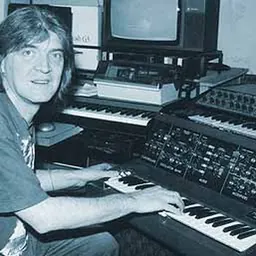



Related people
Same field, nearest in time

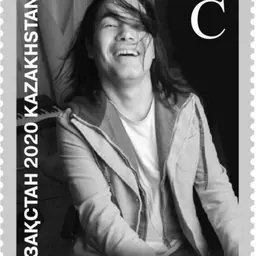
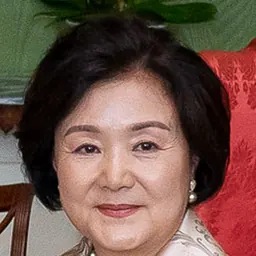


Contemporaries
People whose lives overlapped Viktorija's


Frequently asked questions
Who is Viktorija?
Serbian singer
When was Viktorija born?
Viktorija was born on 19 December 1958 in Vushtrri.
What is Viktorija's occupation?
Viktorija is a singer.
What nationality is Viktorija?
Viktorija is Serbian and Yugoslav.
Sources & further reading
Cite this page
APA: Biography.guide. (2026). Viktorija. https://biography.guide/viktorija/
MLA: "Viktorija." Biography.guide, https://biography.guide/viktorija/.
Chicago: "Viktorija." Biography.guide. https://biography.guide/viktorija/.
Data last updated: 2026-09-22 · Spot an error? Report a correction.
Portrait: Wikimedia Commons · author & licence
Page generated 2026-09-27 05:03 UTC