
Victor Niederhoffer
American statistician, businessman and squash player
About Victor Niederhoffer
Lived 1943 – 2026 (aged 82). Victor Niederhoffer was an American investor, squash player, statistician, economist and financier.
Education Niederhoffer attended P.S. 225 in Brooklyn. His sixth-grade teacher wrote to him: "Although a little trying at times, you were the spark the class needed this year. You have a keen mind; learn to curb your inclinations to demonstrate superiority." His Ph.D. dissertation in December 1969 was entitled "World Events and Stock Prices: A Study of New York Times Headlines and Subsequent Movements in the Standard and Poor's Composite Index." In it, he concluded that during the 1960–68 study period, there was a consistent pattern of stock price movement on the Standard & Poor's Composite Index subsequent to "bad" world events: the day after such an event, the index fell, but on days two through five, the market rose, suggesting a tendency for investors to initially overreact to bad news and then recover. As a college professor, he wrote academic articles about market inefficiencies, and a number of papers on anomalies in stock market behavior. He used innovative methods to search for opportunities in stock markets, such as the one reflected in his paper "The Analysis of World Events and Stock Prices" (1971), which used the font size of newsprint headlines to determine the relative importance of news events and measure how they affected the stock market.
Early career In 1965, while still at college, he co-founded Niederhoffer, Cross and Zeckhauser, Inc., with Frank Cross. It was a boutique investment bank which sold small, privately held family-owned companies to public companies, and it became one of the leading specialists in the U.S. in mergers and acquisitions, representing sellers. He also bought many privately held firms with Dan Grossman, his partner during this period.
In 1980, influenced by his academic studies on market inefficiencies, he founded a trading firm, NCZ Commodities, Inc. (later known as Niederhoffer Investments, Inc.), and began to trade in commodities, including gold, silver, fixed income, and foreign exchange. He explained the need for elite conditioning, saying: "In squash, you're constantly springing back and forth. Each point is like rushing the net in tennis for a drop shot and racing back to the baseline—10 times for one point." Among others, Monroe Trout, Toby Crabel, and Victor's brother Roy Niederhoffer all traded at the firm. For a decade, the two of them spoke 50 times a day. Soros wrote in The Alchemy of Finance that Niederhoffer was the only one of his managers who had retired voluntarily from trading for him while still ahead. Soros held Niederhoffer in such high esteem that he sent his son to work for him, to learn how to trade. From the early 1960s through the mid–1990s he made hundreds of millions of dollars for his clients. In 1994, Business Week named him the No. 1 commodities and futures manager in the United States. Traders at the time said his broker Refco may have been responsible for as much as $35 million of Niederhoffer's losses.
He lost his $130 million fund, as well as the majority of his own savings. Depressed, lost, and not knowing what to do with himself, he retreated into re-reading novels.
Squash and other racket sports Niederhoffer spent his early years excelling in wall sports such as handball, paddleball, paddle tennis, and tennis at the beach and sports complex Brighton Beach Baths, three blocks from his home.
His college roommate Jim Wynne said: "Vic was always aware that he grew up in a poor section of Brooklyn, the other side of the tracks, and that he was Jewish. He always had something to prove. He would chew on glass to win."
Squash
Niederhoffer was subsequently a multi-time U.S. National Squash Champion, and is a member of the U.S. Squash Hall of Fame and the College Squash Hall of Fame. Niederhoffer had never played squash when he entered Harvard University in 1960, though he had played other racquet sports.
One year later, despite being unseeded, the 18-year-old Niederhoffer won the U.S. National Junior Championship early in his sophomore year. His Harvard coach, describing him as one of the most competitive characters he had ever seen, said: "you feel like you are watching a person of Ty Cobb's cut in action again." He played No. 1 for Harvard Crimson men's squash during his college career, was named First Team All-American each year, and each year Harvard won the Ivy League title. In 1965, he then won every major amateur tournament. In the 1974-75 season, he won every major singles tournament, winning 60 matches and not losing any.
In 1976, Niederhoffer received the Pierre de Coubertin Fair Play Trophy at the UNESCO headquarters in Paris, France. In 1988, he was inducted into the Harvard Varsity Club Hall of Fame, and in 2018 into the Jewish Sports Heritage Hall of Fame.
As to his approach to shot-making, he said that " employ the concept that all shots should have high rewards in relation to risks.”
Racquetball Not having ever played racquetball before as of February 1975, two months later Niederhoffer competed n the 1975 U.S. Racquetball National Championships. In his short racquetball career, he had a winning career record against multi-time world champion Marty Hogan (racquetball).
Writing In 1997, Niederhoffer published a New York Times bestselling memoir, The Education of a Speculator; The New York Times described it as "An instructional autobiography by the colorful commodities trader.".
He also had some advice for those who came to his book looking for investing secrets:
It is inconceivable that anyone will divulge a truly effective get-rich scheme for the price of a book. There is ample opportunity to use wealth in this world, and neither I nor my friends, nor anyone else I have ever met, has so much of it that they are interested in putting themselves at a disadvantage by sharing their secrets. He and Kenner co-wrote Practical Speculation (John Wiley & Sons, February 2003). The NYC Junto focused on libertarianism, Objectivism, and investing and was inspired by the Junto hosted by Benjamin Franklin in Philadelphia from 1727 to 1757. Squash historian Rob Dinerman said "That was sort of his way of saying: I'm not like you and I'm going to beat you anyway." While teaching finance at the University of California, Berkeley, he kept a pet monkey. The comic originally appeared in the alternative comic book Keyhole #6, before it was compiled into the anthology book Titans of Finance: True Tales of Money and Business.
Death Niederhoffer died of natural causes on August 4, 2026, at the age of 82, at his home in Weston, Connecticut.
Don’t just read it —
keep it.
Full-length biographies made to live with: read them, listen on the way to work, watch them tonight.
- E-book
- Audio
- Video
Instant download · yours to keep · every purchase keeps this site free
Important facts
People in Victor Niederhoffer's life
Named in this biography and alive at the same time

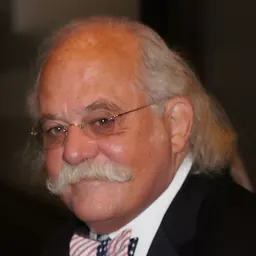
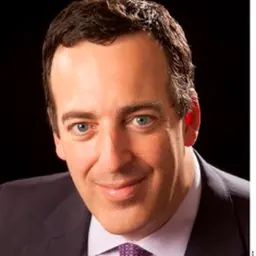

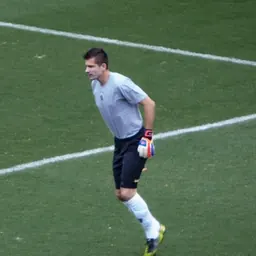


Related people
Same field, nearest in time
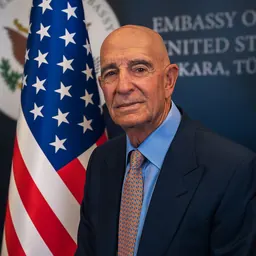




Contemporaries
People whose lives overlapped Victor Niederhoffer's



Frequently asked questions
Who was Victor Niederhoffer?
American statistician, businessman and squash player
When was Victor Niederhoffer born?
Victor Niederhoffer was born on 10 December 1943 in Brooklyn.
When did Victor Niederhoffer die?
Victor Niederhoffer died on 4 August 2026.
What was Victor Niederhoffer's occupation?
Victor Niederhoffer was an investor, squash player, statistician, economist and financier.
What nationality was Victor Niederhoffer?
Victor Niederhoffer was American.
Sources & further reading
· Wikipedia: Victor Niederhoffer
· DBpedia: Victor Niederhoffer
Cite this page
APA: Biography.guide. (2026). Victor Niederhoffer. https://biography.guide/victor-niederhoffer/
MLA: "Victor Niederhoffer." Biography.guide, https://biography.guide/victor-niederhoffer/.
Chicago: "Victor Niederhoffer." Biography.guide. https://biography.guide/victor-niederhoffer/.
Data last updated: 2026-09-22 · Spot an error? Report a correction.
Page generated 2026-09-27 05:23 UTC