
About Vicente Lusitano
Lived 1520 – 1561 (aged 40–41). Vicente Lusitano was a composer and music theorist.
Vicente Lusitano was a Portuguese composer and music theorist of the late Renaissance. Some of his works on musical theory and a small number of compositions survive. Lusitano was for a time a Catholic priest and taught in several Italian cities, but later converted to Protestantism.
He is believed to have been of mixed race. Since the 1980s, he has been described as the first published black composer.
Life and career Lusitano, a Portuguese-language term for "Portuguese", appears to be a descriptive nickname rather than a family name. Little is known of his life. He was born in Olivença, likely around 1520. Lusitano is described as pardo, a Portuguese term indicating he was of mixed European and non-European heritage. By 1561 he had married, converted to Calvinist Protestantism, and traveled to Germany. There is no record of him after 1561. and published as Un tratado de canto de órgano (siglo XVI) in 1913. Introdvttione facilissima, et novissima, di Canto Fermo, Figvrato, Contrapon to semplice, et in concerto. Con Regole Generali per far fvghe differenti sopra il Canto Fermo, a ii, iii & iiii. voci, & compositioni, proportioni, generi. S. Diatonico, Cromotico, Enarmonico (Rome: Antonio Blado, 1553; Venice: Francesco Marcolini, 1558; Venice: Francesco Rampazetto, 1561). All three editions dedicated to Marc' Antonio Colonna, Duke of Marsi.This treatise was reportedly also translated into Portuguese by Bernardo da Fonseca (Lisbon, 1603).
Lusitano was notable during his lifetime for his work as a theorist. In a 1551 debate in Rome, he espoused traditional views on the role of the three genera in music (diatonic, chromatic and enharmonic) over more radical ones put forward by Nicola Vicentino. Lusitano was deemed to have won the debate and Vicentino was fined. In 1555 Vicentino published an account of the debate that was recognised as misleading. This went on to influence later composers and may be a factor in omission of Lusitano from subsequent works on early European composers. contains an introduction to music, his views on the three genera, and uniquely,
Lusitano's music has been revived in recent years, for example by the Australian Chamber Choir in 2019 the Marian Consort in 2021 and Chineke! Voices in 2022. and present until this day in Portuguese musicological investigation of the 16th century. Since the summer of 2020, when the Black Lives Matter movement re-ignited discussions about race in the United States, there has been a flurry of interest in Lusitano and his work. and has continued until our days with the modern publishing of motets like Regina coeli and Heu me Domine in 2012 by mpmp. In 2022, the music historian Joseph McHardy also made Lusitano's scores accessible in modern editions on the Internet, which allowed dozens of non-Portuguese-speaking choirs to perform and record his music.
Works
Motets
Praeter rerum seriem Inviolata, integra et casta es Salve regina Emendemus in melius Regina caeli Aspice Domine
Don’t just read it —
keep it.
Full-length biographies made to live with: read them, listen on the way to work, watch them tonight.
- E-book
- Audio
- Video
Instant download · yours to keep · every purchase keeps this site free
Important facts
People in Vicente Lusitano's life
Named in this biography and alive at the same time
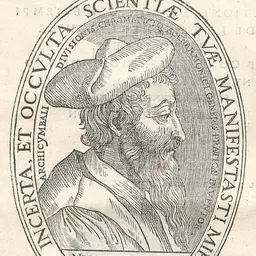
Related people
Same field, nearest in time
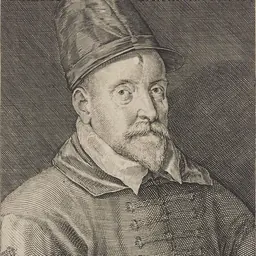
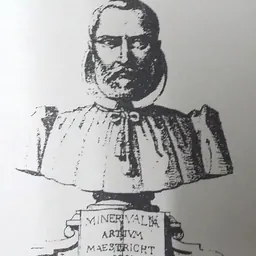

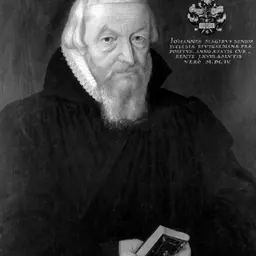
Contemporaries
People whose lives overlapped Vicente Lusitano's


Frequently asked questions
Who was Vicente Lusitano?
Portuguese composer
When was Vicente Lusitano born?
Vicente Lusitano was born in 1520 in Portugal.
When did Vicente Lusitano die?
Vicente Lusitano died in 1561.
What was Vicente Lusitano's occupation?
Vicente Lusitano was a composer and music theorist.
What nationality was Vicente Lusitano?
Vicente Lusitano's recorded nationality: Kingdom of Portugal.
Sources & further reading
Cite this page
APA: Biography.guide. (2026). Vicente Lusitano. https://biography.guide/vicente-lusitano/
MLA: "Vicente Lusitano." Biography.guide, https://biography.guide/vicente-lusitano/.
Chicago: "Vicente Lusitano." Biography.guide. https://biography.guide/vicente-lusitano/.
Data last updated: 2026-09-20 · Spot an error? Report a correction.
Page generated 2026-09-27 05:26 UTC