
About Vicent Andrés Estellés
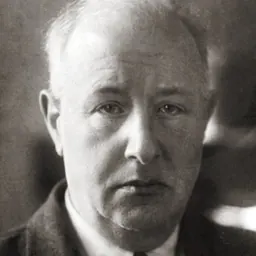
Lived 1924 – 1993 (aged 68). Vicent Andrés Estellés was a Spanish journalist, writer and poet.
Vicent Andrés Estellés (; 4 September 1924 in Burjassot, Valencia – 27 March 1993 in Valencia) was a Valencian journalist and poet. He is considered one of the main renovators of modern Valencian poetry, with a similar role to that of Ausiàs March or Joan Roís de Corella in earlier periods, and one of the most important poets in Catalan language in the 20th Century.
Biography
Vicent Andrés Estellés was 12 years old when the Spanish Civil War broke out. During its course, he trained to become both a baker and a goldsmith, and learned to write on a typewriter. The war had a profound impact on his work, in which death is a recurring theme.
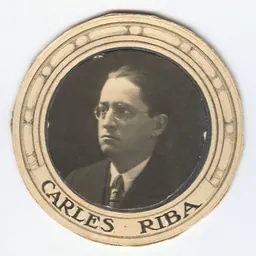
Estellés spent his teenage years in Valencia, where he developed an interest in literature. During that period, he was most influenced by Charles Baudelaire, Pablo Neruda, Paul Éluard, Cesare Pavese, and Walt Whitman, and by poetry in Catalan language, such as Catalan poets Màrius Torres, Jacint Verdaguer, Josep Carner, Carles Riba, Santiago Rusiñol and Joan Salvat-Papasseit, as well as the Valencian poet Ausiàs March and the Balearic poet Bartomeu Rosselló-Pòrcel.
In 1942, at the age of 18, Estellés moved to Madrid to study for a degree in Journalism. Three years later, he left to do his military service in Navarre. At the age of 24, he moved back to Valencia and became a journalist for the newspaper Las Provincias. He befriended Joan Fuster, Xavier Casp and Manuel Sanchis i Guarner – all three of them well-known Valencian writers in Catalan – and met Isabel, who would later influence his writings as well.
In 1955 Estellés married Isabel. The couple had a daughter, who died when she was four months old. After the death, which Estellés recalled in Coral romput, death became a recurring theme in his works.
In 1958 he became editor-in-chief of Las Provincias, only to be dismissed for political reasons in 1978, thus being forced into early retirement at the age of 54. This allowed him to devote himself entirely to writing and engaging in a variety of cultural activities, such as art exhibitions. That same year, Estellés was awarded the Premi d'Honor de les Lletres Catalanes. In 1984 he was awarded the Premi d'Honor de les Lletres Valencianes.
Estellés spent a few years in Benimodo, a municipality in the comarca of Ribera Alta, in the Valencian Community. During this period, he combined poetry with prose in his works. He received several awards in the 1990s, including the Premis Octubre.
Works
The works of Vicent Andrés Estellés, one of the most important Catalan-language poets of the 20th century, are diverse and extensive. Although he is better known for his poetry, he also wrote novels, plays, screenplays, as well as his memoirs. The main themes of his work are death and sex, and they are always dealt with from a popular, everyday, simple, direct, and even vulgar perspective. It is difficult to categorize his entire work. In fact, some works were reworked from books or private notes such as "Manuscrits de Burjassot" (the Manuscripts from Burjassot), "Cançoner" (Anthology) or "Mural del País Valencià" (Mural of the Valencian Country), from which he only published extracts or the poems he considered most appropriate.
His first publications were "Ciutat a cau d'orella" (Whispered City) (1953), "La nit" (The Night) (1956), "Donzell amarg" (Bitter Youth) (1958) and "L'amant de tota la vida" (The Lifelong Lover) (1966), which are only a small selection of what he had written at that point.
From the 1970s onwards, he published more frequently and received numerous awards. He published "Lletres de canvi" (Bills of Exchange)(1970), "Primera audició" (First Audition) (1971), "L'inventari clement" (The Clement Inventory) (1971). In (1971) he published two major works: "La clau que obri tots els panys" (The Key That Opens All Locks) (which contained "Coral Romput" (Broken Coral)) and the best-seller "Llibre de les meravelles"
Awards
The most important awards he received are:
1978, Premi d'Honor de les Lletres Catalanes (Catalan Literary Lifetime Achievement Award) awarded by the Generalitat of Catalonia. 1982, Premi Creu de Sant Jordi awarded by the Generalitat of Catalonia. 1990, Premi d'Honor de les Lletres Valencianes awarded by the Generalitat Valenciana. 1992, Porrot d'Honor de les Lletres Valencianes de Silla. 1994, Medalla de Oro al mérito en las Bellas Artes awarded by the Ministry of Culture of Spain after his death.
Statues and streets
In several towns in the Valencian Country, Streets have been named after Estellés.
There is also a bronze statue in Emilio Castelar square, in Burjassot, Andrés Estellés's birthplace. This piece, showing him sitting on a park bench, writing on top of a pile of books, has suffered four loutish attacks. For instance, it was covered in blue paint and the arms of his glasses were broken. Likewise, extreme right blavers attempted to destroy a bust of Estellés that was put up in Burjassot in 1979.
Works set to music
Estellés is one of the most popular Catalan-language poets among musicians. His works have been set to music several times, mostly by Ovidi Montllor. Montollr's version of the poem "Els Amants" (The Lovers) is especially remarkable — it has been performed live on many occasions. Other singers, singer-songwriters, or groups that have also set his works to music are Paco Muñoz, Celdoni Fonoll, Maria del Mar Bonet, Obrint Pas, Pau Alabajos, Remigi Palmero, Vicent Torrent, Miquel Lluis, Els pavesos, Lluis the Sifoner, and Esteve Ferre.
Don’t just read it —
keep it.
Full-length biographies made to live with: read them, listen on the way to work, watch them tonight.
- E-book
- Audio
- Video
Instant download · yours to keep · every purchase keeps this site free
Important facts
People in Vicent Andrés Estellés's life
Named in this biography and alive at the same time





Related people
Same field, nearest in time



Contemporaries
People whose lives overlapped Vicent Andrés Estellés's

Frequently asked questions
Who was Vicent Andrés Estellés?
Spanish journalist and poet (1924-1993)
When was Vicent Andrés Estellés born?
Vicent Andrés Estellés was born on 4 September 1924 in Burjassot.
When did Vicent Andrés Estellés die?
Vicent Andrés Estellés died on 27 March 1993 in Valencia.
What was Vicent Andrés Estellés's occupation?
Vicent Andrés Estellés was a journalist, writer and poet.
What nationality was Vicent Andrés Estellés?
Vicent Andrés Estellés was Spanish.
Sources & further reading
· Wikipedia: Vicent Andrés Estellés
· DBpedia: Vicent Andrés Estellés
Cite this page
APA: Biography.guide. (2026). Vicent Andrés Estellés. https://biography.guide/vicent-andres-estelles/
MLA: "Vicent Andrés Estellés." Biography.guide, https://biography.guide/vicent-andres-estelles/.
Chicago: "Vicent Andrés Estellés." Biography.guide. https://biography.guide/vicent-andres-estelles/.
Data last updated: 2026-09-20 · Spot an error? Report a correction.
Page generated 2026-09-27 05:30 UTC