
About Vica
Lived 1902 – 1948 (aged 45). Vica was a French caricaturist, comics artist and animator.
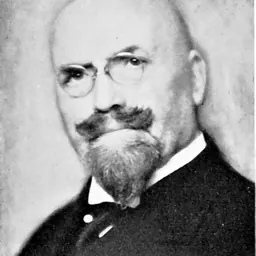
Vincent Krassousky (22 July 1902 – 31 May 1948) was a Ukrainian cartoonist who immigrated to France as a refugee. Krassousky's character, Vica, was a sailor, and Vica was also Krassousky's nickname. He is known chiefly for publishing pro-Axis propaganda cartoons for children during the Nazi occupation of France.
History In 1902 he was born in Kyiv, then in the Russian Empire. Claire Tufts, author of "Vincent Krassousky - Nazi Collaborator or Naïve Cartoonist?", noted that he considered the Soviets responsible for the deaths of his loved ones, he had "an intense, visceral hatred of the Russians" that others in France were aware of. He never fathered children and had not married. Vica comics were published in Gavroche from 1940, a comics publication for children that aligned with the Axis; as part of the latter Krassousky wrote some comics supporting the Nazi German cause. In the comics the character Vica, in Alaniz's words, "mocked and excoriated England, America, the Bolsheviks, and "Jewish conspiracies."" Claire Tufts stated that the Krassousky comics were "far less offensive" compared to other Le Téméraire comics. Le Téméraire ended on 1 August 1944.
According to Alaniz, the author "may have been mentally deranged". and was accused of having fascist sympathies by members of the public. He stated that he was innocent, but he was convicted. He was given a prison sentence of one year and a 1,000 franc fine on 23 February 1945.
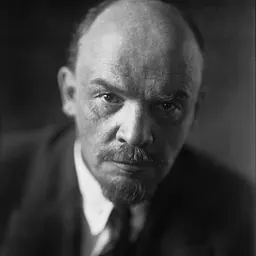
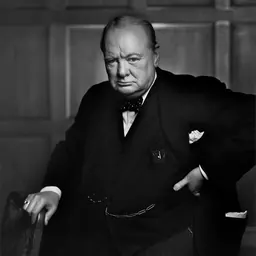
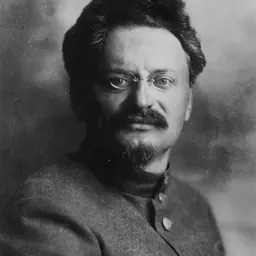
Works Les aventures de Vica. Editions , Liège. 1935. Vica au Pôle Nord. Studio André Teixier, 1935; réédition: Editions , Liège. 1936. Poum Plum. Editions , Liège. 1936. Vica au fond d'un volcan. Editions , Liège. 1937. Vica fait de la peinture. Editions , Liège. 1937. Me voici scaphandrier. Editions , Liège. 1938. Histoire du joyeux Yabon le petit Négrillon, 1939. Vica au paradis de l'URSS ("Vica in the Paradise of the USSR"). Editions Dompol, 1942. The comic portrays Madame Angleterre (Mrs. England) tormenting a bear representing Russia by injecting a virus with Vladimir Lenin and Joseph Stalin, and she is assisted by Leon Trotsky, who is a Jewish caricature. Tufts describes Madame Angleterre was an "old hag". The spread of Communism continues with the alliance of Jewish people, Soviet Union, and the United Kingdom. After Tatave decides to adopt Communist ideals, Vica comes to the Soviet Union but leaves only after being enslaved for a time. Vica tells Tatave that Soviet Russia had problems, but Tatave does not believe him. He takes Tatave to the "Le Bolchevisme contre l'Europe" (Bolshevism against Europe) exposition to watch "Au Paradis des Soviets", which documents poor conditions in the Communist Soviet Union. Tatave, now despising Stalin, angrily attacks the film screen. Vica contre le Service Secret Anglais ("Vica against the English Secret Service") (the title on the cover page is: Vica contre l'Intelligence Service. Editions Dompol, 1942. Whilst on a spying mission, Vica travels to the United Kingdom and humiliates Winston Churchill after a fight, while Tatave does the same to Joseph Stalin. Krassousky uses his Vica character to criticize the British Empire, and this comic also discusses Anglo-French relations, stating that France is threatened by the alliance between Jewish people, the Soviet Union, and the United Kingdom. It also advocates for the construction of the Canal des Deux-Mers. A Jewish advisor of United States President Franklin D. Roosevelt, Lévy, is described as "the spokesman for the American Jew". Roosevelt begins war preparation efforts, including releasing inmates at Sing Sing Prison to be used as soldiers, after Lévy encourages him to do so. First Lady of the United States Eleanor Roosevelt moves the Statue of Liberty away and stands in its place out of jealousy; Tufts stated that the comic shows the First Lady as "a frumpy old housewife". The comic states that German workers are happy while U.S. workers are unhappy and rioting. In addition the French ocean liner SS Normandie is destroyed in the harbor of New York after the U.S. military seizes it. Vica and Tatave travel to Sub-Saharan Africa and plant a cacti patch to foil the United States's war efforts. The U.S. invades North Africa, killing and enslaving locals. When the U.S. military moves south, Vica and Tatave force Uncle Sam out of his aircraft, and as he parachutes, he lands in the cacti patch they planted. Vica and Tatave consider Uncle Sam's defeat to be revenge for the loss of the SS Normandie. Pousse-Tout et Passe-Partout (under the pseudonym "Tim"), 1946.
Don’t just read it —
keep it.
Full-length biographies made to live with: read them, listen on the way to work, watch them tonight.
- E-book
- Audio
- Video
Instant download · yours to keep · every purchase keeps this site free
Important facts
People in Vica's life
Named in this biography and alive at the same time


Related people
Same field, nearest in time





Contemporaries
People whose lives overlapped Vica's


Frequently asked questions
Who was Vica?
French caricaturist
When was Vica born?
Vica was born on 22 July 1902 in Kyiv.
When did Vica die?
Vica died on 31 May 1948 in 13th arrondissement of Paris.
What was Vica's occupation?
Vica was a caricaturist, comics artist and animator.
What nationality was Vica?
Vica was French.
Sources & further reading
Cite this page
APA: Biography.guide. (2026). Vica. https://biography.guide/vica/
MLA: "Vica." Biography.guide, https://biography.guide/vica/.
Chicago: "Vica." Biography.guide. https://biography.guide/vica/.
Data last updated: 2026-09-22 · Spot an error? Report a correction.
Page generated 2026-09-27 05:28 UTC