
About Vernon Berrangé
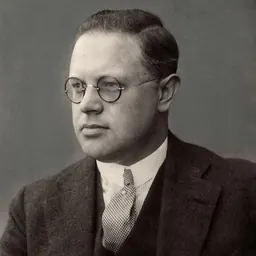
Lived 1900 – 1983 (aged 82). Vernon Berrangé was a South African lawyer.
Vernon Celliers Berrangé (25 November 1900 – 14 September 1983) was an eminent South African human rights advocate, and criminal defense and human rights lawyer (QC). The South African government posthumously bestowed the Order of the Companion of O.R. Tambo, April 27, 2010, for his contributions to ending apartheid.
Forebears Berrangé's forebears were in the third wave of French Huguenots who went to the Cape (via Holland) in 1775 and as history evolved became Afrikaners (Boers). The Berrangés were essentially a family of Dutch Reformed ministers, but there were also "sick-comforters," medical doctors, public servants, politicians and advocates. His mother was Elizabeth Theresa Krogh. Berrangé's maternal grandfather, Johannes C. Krogh of Danish extraction, was Special Commissioner sent from the South African Republic to Swaziland (1894 to 1898), head of the Boundary Commission that settled the border between Swaziland and Moçambique (Maputo) in 1897 and one of the Boer signatories to the "Treaty of the Peace of Vereeniging".
Family Berrangé married (7 March 1930) Yolande Viviane Brewer, née de Pierres (born 1900), who loved and supported him in all ways for 50 years until her death (1980). They had one son, Jevan Pierres Berrangé (b. 1931, d. 2018); a daughter Gelda Frances Berrangé (b.8 February 1927, d. 2015), and a son Eric Brewer (b. 15 June 1921, d. 30 March 2010) from their respective earlier marriages.
Education Berrangé was born in Pretoria soon after it had been occupied by the British during the Anglo-Boer War. He received his primary education at the Falk Real Gymnasium in Berlin (1907–1910) and at the German School in Johannesburg (1911). His secondary school was Hilton College, Natal, where he is commemorated on a plaque as "Scholar of the Year'". On leaving school (1917) he enlisted as one of Major Miller's recruits and became a Lieutenant in the Royal Air Force, being trained in Kent, UK. After demobilisation (1919) he returned to South Africa and worked briefly for the Institute for Medical Research before going to the University of Cape Town from which he graduated (1924) with a law degree – BA LLB.
Recreation and other interests Berrangé was an immaculate dresser and had a penchant for high living and fast cars. He was always against authority, loved a challenge and revelled in danger. He was a very active man, both intellectually and physically. Sports at school, in the RAF and at university included boxing, rowing, rugby and swimming. Later he became a motor racing driver (1932) on South African circuits. He had a large collection of sporting firearms and was keen on big game hunting and bird shooting. His considerable knowledge of guns and ballistics was something that he found useful in some of his criminal cases. In the 1930s he had an interest in a small gold mine in Swaziland. He read avidly and travelled widely in Africa and Europe.
Communist
Berrangé joined the South African Communist Party of his own volition in about 1938, holding the opinion that it was an organisation which expressed in practice those economic and social theories which appealed to him. Berrangé was an ordinary member attached to the Central Branch in Johannesburg, except for a period when he was on a committee dealing with Industrial Legislation and Trade Union Work. Berrangé resigned from the SACP in 1950 when and because it was dissolved, after the passing of the Suppression of Communism Act 1950. Berrangé later reappraised and radically changed his views, to become critical of the theories and practices of the party. Despite this change of views he remained friends with some former comrades and subsequently was a member of the team defending Bram Fischer in court.
Legal career Berrangé was admitted to the South African Bar in 1924 but in 1926 he left the Bar and went into partnership with his father, James Louis Steyn Berrangé (born 16 October 1865, died 1931), as an attorney. He remained at the Side Bar until 1950 when he was re-admitted to the Bar where he remained until his retirement in 1966.
Berrangé built up a reputation as an outstanding criminal defence and human rights lawyer with a reputation for devastating cross-examination. He was a co-founder of The Organisation for Rights and Justice and Chairman of the Legal Aid Society. As such he was often willing to accept briefs in cases where non-whites were charged under the discriminatory apartheid laws, and in such cases usually acted pro bono.
Special wartime duties In 1941 Berrangé was charged with special duties by Brigadier General Collyer, Military Secretary to General Smuts. This was the first of many times that Berrangé and Fischer worked together for justice for the oppressed.
African mine workers' strike In 1946, whilst he was on holiday in Europe, Berrangé received a phone call from Bram Fischer asking him to return to South Africa to defend him and others on a charge of inciting the African Mine Workers' Strike.
The F.M. Alexander case Together with others including Harold Hanson and Bram Fischer, He became friendly with Alexander, who joined Berrangé and his wife Yolande and the Barlows (Bill and Marjory, Alexander Technique teachers) on a short holiday to France. The trial proper was heard in South Africa in 1948. Alexander won his case and was awarded damages.
The Treason Trial The circumstances which led to the South African Treason Trial, the proceedings, and the conclusion some ten years later, all demonstrated Berrangé's personal qualities and professional skill.
In 1951 when the leaders of the Congress Movement developed a plan involving deliberate defiance of the apartheid laws, Berrangé was consulted on its legal implications. at the preliminary hearing, contended, inter alia, that the ideas and beliefs expressed in the Freedom Charter, although opposed to the policy of the Government, were shared by the overwhelming majority of humankind, of all races and all colours, and also the overwhelming majority of the country's citizens. He argued that the treason allegations amounted to a political plot comparable with the Inquisition and the Reichstag Fire Trial, and were an attempt to silence and outlaw the ideas held by the accused and the thousands whom they represented. This vibrant address was published in newspapers around the world.
The State alleged that holding the Congress of the People and adopting the Freedom Charter constituted steps towards the establishment of a communist state and the prelude to revolution. They aimed to show that speeches and writings by the accused were communistic. Probably the most farcical event in the trial occurred when expert witness for the prosecution, Prof. A.H. Murray of the University of Cape Town, gave evidence on the nature of communism and the infallible clues that he claimed indicated certain statements and speeches were communistic or communist inspired. Berrangé's cross-examination was dramatic. He read out a number of statements by various people and the professor agreed that these were "the sort of statements that communists make". Berrangé then revealed that the statements had been made by persons such as former SA Prime Minister Malan, President Franklin Roosevelt, William Pitt, Heine, Luther, Voltaire, Milton and Jefferson and finally one written by Prof Murray himself in the 1930s!
The accused had been arrested in December 1956, but it was only in March 1961, after numerous hearings, that by unanimous verdict the Court found all the accused not guilty and Berrangé was carried aloft outside the court.
Move to Swaziland and retirement In 1959 Berrangé left Johannesburg to live in Swaziland, where he acquired Citizenship of the United Kingdom and Colonies thereby forfeiting his South African citizenship and passport. He continued to practise law intermittently, both in the Republic of South Africa and Swaziland, until his full retirement in 1966 and resignation from the Johannesburg Bar. The proceedings of the Truth and Reconciliation Commission show that South African Government continued to keep Berrange under close surveillance whenever he visited the country. He was briefly on a committee whose purpose was to afford assistance to political refugees from South Africa. In 1963, at the time of the Rivonia arrests, two suspects, Harold Wolpe and Arthur Goldreich, made a spectacular jail break from the Johannesburg Fort and eventually managed to get to Swaziland where Berrangé helped by arranging a charter plane to fly them to Bechuanaland (Botswana) The defence team was led by Bram Fischer and included Berrangé, whom he asked to come from Swaziland. and decided to turn the inquest into a forum on police torture. When the Court deemed evidence of torture to other detainees as inadmissible Berrangé withdrew from the proceedings in protest. The matter was subsequently raised in Parliament by Helen Suzman to the great embarrassment of the Government.
Trial of Rusty Bernstein Shortly after his acquittal in the Rivonia Trial, Rusty Bernstein was arrested again on three charges under the Suppression of Communism Act. Berrangé again 'appeared on his behalf and pulled off one of those spectacular pieces of legerdemain which Vernon managed so brilliantly from time to time. He persuaded the prosecutor and magistrate and do what everyone believed was quite impossible – to grant Bernstein bail'.
Don’t just read it —
keep it.
Full-length biographies made to live with: read them, listen on the way to work, watch them tonight.
- E-book
- Audio
- Video
Instant download · yours to keep · every purchase keeps this site free
Important facts
People in Vernon Berrangé's life
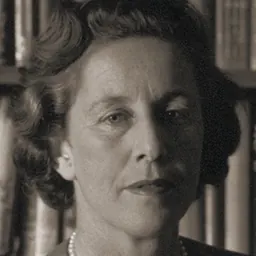
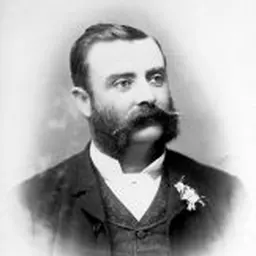
Named in this biography and alive at the same time





Related people
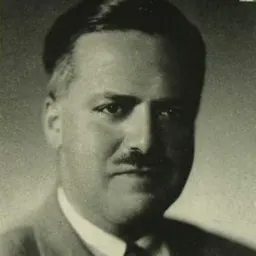
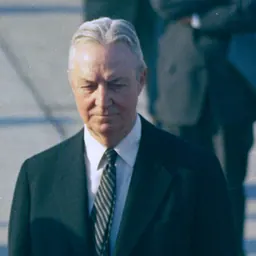
Same field, nearest in time

Contemporaries
People whose lives overlapped Vernon Berrangé's



Frequently asked questions
Who was Vernon Berrangé?
South African activist and lawyer (1900–1983)
When was Vernon Berrangé born?
Vernon Berrangé was born on 25 November 1900 in Pretoria.
When did Vernon Berrangé die?
Vernon Berrangé died on 14 September 1983 in Eswatini.
What was Vernon Berrangé's occupation?
Vernon Berrangé was a lawyer.
What nationality was Vernon Berrangé?
Vernon Berrangé was South African.
Sources & further reading
Cite this page
APA: Biography.guide. (2026). Vernon Berrangé. https://biography.guide/vernon-berrange/
MLA: "Vernon Berrangé." Biography.guide, https://biography.guide/vernon-berrange/.
Chicago: "Vernon Berrangé." Biography.guide. https://biography.guide/vernon-berrange/.
Data last updated: 2026-09-22 · Spot an error? Report a correction.
Page generated 2026-09-27 05:28 UTC