
About Vere Foster
Lived 1819 – 1900 (aged 81). Vere Foster was a British philanthropist.
Vere Henry Louis Foster (or Lewis) (25 April 1819 – 21 December 1900) was an Anglo-Irish philanthropist, educationalist and free thinker. After following his Irish father into the British diplomatic service, with postings in South America, in Ireland he was moved by the Great Famine to organise relief efforts and to improve the conditions of passage for emigrants. These he, himself, experienced travelling steerage to the United States. Later, he supported national schools in Ireland and was first president of what is today Ireland largest teachers' union the Irish National Teachers' Organisation. He died in Belfast where he had been working for the relief of the sick and the poor.
Early life Foster was born in Copenhagen on 25 April 1819, where his Anglo-Irish father, Sir Augustus John Foster, was the British minister. His mother, Albinia Jane was the granddaughter of George Hobart, 3rd Earl of Buckinghamshire. He was educated at Eton College, and matriculated at Christ Church, Oxford, on 30 May 1838.
Leaving Oxford without a degree, Foster joined the diplomatic service on an unpaid basis. From 1842 to 1843 he was attached to the diplomatic mission of Sir Henry Ellis in Rio de Janeiro, and from 1845 to 1847 to that of Sir William Gore Ouseley in Montevideo. He alarmed his superiors, and his father, by the enthusiasm he evinced for Garibaldi and his Redshirts in the Uruguayan Civil War. The Foreign Office made no further use of his services after it ordered the Montevideo consulate closed in June 1847.
Response to the Irish famine When news reached England of the Irish famine, Foster was sent to report the effects on his family's estate, Glyde Court in County Louth. Their tenants were not the worst effected by the potato blight, but Foster was appalled by the numbers of starving people staggering along the roads, many trying to reach the ports in the hopes of finding passage to England or the United States. In August 1848, his father who been tortured by religious doubt, committed suicide. Returning again to Ireland, with his eldest brother Frederick, he toured the country and was persuaded to devote his junior share of his father's fortune (Frederick inherited the estate) to relieve the distress they witnessed.
He shed attachment to divine revelation and the established church, convinced that:it is more pleasing, to be at peace than at enmity with one’s fellow creatures, and… that superior pleasure is derivable from doing that which is agreeable to the best interests of society rather than the contrary. This appears to me to be a practical religion, based on common sense and the best interests of mankind, to combine all the advantages of all other religions, with none of their mystery or faults. He enrolled in the Glasnevin Model Farm in the hope of being able assist in the promotion of progressive techniques that would improve both the quantity and quality of foodstuffs produced in Ireland, and reduce the fatal dependence of poorer tenant farmers and cottiers on the potato. But such was the nature of landholding in Ireland and the scale of the crisis, that he believed that for many the surer prospect lay in emigration. He then decided "to comprehend in the most practical manner every conceivable aspect of an endeavour or transaction in which he became involved." Dressed as a poor emigrant, with a former Glasnevin teacher, James Ward, in 1850 he travelled steerage to New York on one of the notorious “coffin ships”, contracting fever and, on arrival, remaining in hospital for some months. His reports of the appalling conditions they had witnessed, and those of his cousin Stephen de Vere who had taken a similar passage to Canada in 1847, helped prompt public debate and led to new legislation in Britain, Canada and the United States to regulate and improve the provision for emigrants aboard ship.
Back in Ireland, Fosterestablished an assisted emigration scheme in partnership with a reputable shipping agent. He drew on connections in Ireland and England to have the scheme recommended to public figures and employers in Washington and New York (where he won the support of the Catholic Archbishop John Hughes). He travelled twice yearly on inspection to North America, and out of his own pocket continued to assist emigrants until the outbreak of the American Civil War in 1861. Determined that teaching be a recognised and supported profession, he advocated free teacher accommodation and pensions on retirement. He retired as president of INTO in 1873.
His name is remembered in Belfast in the Vere Foster Medical Practices on Sandy Row and the Falls Road, the former Vere Foster Primary School (1963-2011) on the Upper Springfield Road, and Vere Foster Walk (New Barnsley). He is also commemorated in Dublin by Irish National Teachers’ Organisation, at their head office, Vere Foster House in Parnell Square.
In 2002, the Ulster History Circle honoured Foster with a Blue Plaque at INTO's Belfast offices, 23 College Gardens, Belfast.
Elementary Drawing Copybooks, 1868. Copybooks, 1870. Drawing Copybooks, 1870. Advanced Water-colour Drawing, 1872. Public School Writing Copybooks, 1881. Simple Lessons in Watercolour, 1883. Drawing Books ... in Pencil and Watercolours, 1884. Painting for Beginners, 1884. Upright Writing Charts, 1897.
In 1898 he edited, as The Two Duchesses, the family correspondence of Georgiana Cavendish, Duchess of Devonshire (1757–1806) and Elizabeth Cavendish, Duchess of Devonshire (1759–1824).
Don’t just read it —
keep it.
Full-length biographies made to live with: read them, listen on the way to work, watch them tonight.
- E-book
- Audio
- Video
Instant download · yours to keep · every purchase keeps this site free
Important facts
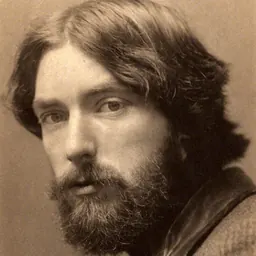
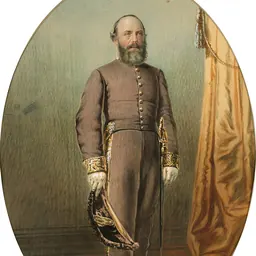
People in Vere Foster's life
Named in this biography and alive at the same time





Related people
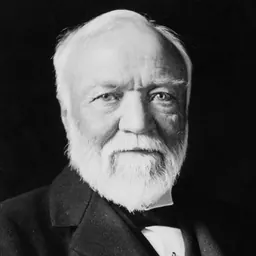
Same field, nearest in time




Contemporaries
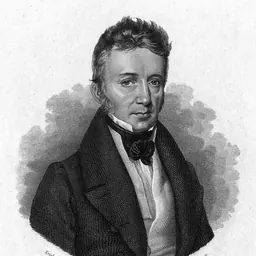
People whose lives overlapped Vere Foster's


Frequently asked questions
Who was Vere Foster?
British philanthropist and educationist
When was Vere Foster born?
Vere Foster was born on 17 January 1819.
When did Vere Foster die?
Vere Foster died on 17 January 1900.
What was Vere Foster's occupation?
Vere Foster was a philanthropist.
What nationality was Vere Foster?
Vere Foster was British.
Sources & further reading
Cite this page
APA: Biography.guide. (2026). Vere Foster. https://biography.guide/vere-foster/
MLA: "Vere Foster." Biography.guide, https://biography.guide/vere-foster/.
Chicago: "Vere Foster." Biography.guide. https://biography.guide/vere-foster/.
Data last updated: 2026-09-26 · Spot an error? Report a correction.
Page generated 2026-09-27 05:14 UTC