
About Vera Starkoff
Lived 1867 – 1923 (aged 55–56). Vera Starkoff was a Russian playwright and writer.
Véra Starkoff (1 April 1867 – 19 March 1923) was a French playwright, anarchist, and feminist born in Russia-occupied Poland. Born under the name Tauba Efron to a wealthy Jewish family, she moved to Geneva, Switzerland to study in 1884. She moved to Paris, France in 1889, where she resided until her death on March 19, 1923.
Starkoff was significantly involved in the People’s University (Université Populair) movement that emerged in Europe during the early 20th century. She staged and directed plays that included feminist ideals and advocated the working-class to receive an education. Her work in this movement provided the groundwork for establishing the "popular theater" in Paris. She used the theater to express her political ideas about the working class, women’s rights, marriage, and humanism.
She established one of the People's University branches and was engaged with the Union Fraternelle des Femmes, writing for a feminist newspaper, La Fronde. She worked with the Théâtre du Peuple, and her plays, written for working class-audienced and tied to Université Populair, were politically charged. Her two major works were L’amour libre (1902) and L'Issue (1903).
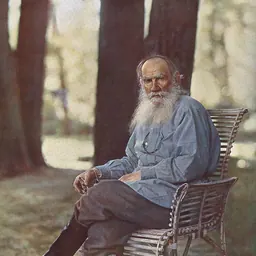
Starkoff was an ardent follower of Leo Tolstoy's works and philosophies, citing his work as the basis for much of her religious and philosophical beliefs. In Starkoff's nonfiction works, she drew on Tolstoy’s philosophies about beliefs of humanism and Christian anarchism as support for her arguments against repression and violence in all forms. She wrote a number of political and philosophical essays and articles for newspapers like Le Populaire, a socialist newspaper based in France.
She was a critic of the Russian Revolution. While she supported aspects of Communist thought, the Soviets’ methods of violent repression, like the Red Terror, conflicted with her deeply held pacifist views stemming.
Early and family life
Véra Starkoff was born on April 1, 1867 to a wealthy Jewish family in Poland, which was then under Russian occupation. Her birth name was not Véra Starkoff; she was born under the Jewish name Tauba Efron. The most notable book published by Efron’s publishing house was the Brockhaus-Efron Encyclopedia, an extensive multi-volume encyclopedia written in Russian. Akim Effront, her uncle born in 1855, was thought to be associated with the Russian government and was even believed to have been a Tsarist spy. Rather than attacking or denouncing these individuals, she provided a platform where these issues could be openly discussed.
Although it is unknown when she began using her pseudonym, Véra Starkoff, all of her theatrical works were published under this name. To Starkoff, the institution of marriage symbolized the bourgeois class, even arguing that it was better for a woman to raise her child as a single mother rather than to be part of the bourgeois system. This essay, like many of her non-fictions works, is difficult to locate physically or find where it was originally published. This essay established her continued interest in Russian culture and its people despite her absence from the nation.
The next non-theatrical work she produced was Le Vrai Tolstoi, or The Real Tolstoy, published in 1911. In this essay, Starkoff clarified what she believes are common misconceptions about Tolstoy and his philosophy. She emphasized his opposition to established organized Christianity and his adherence to a more primitive form. She also denied his family's claims that Tolstoy had accepted the Orthodox church upon his deathbed. She referenced his anti-clericalism as evidence for this. She claimed that, in fact, he was a "Christian Anarchist", i.e., a person who rejected institutionalized power like that of the Church. She called this the "Faith of the Old Man."
Starkoff published "Les Origines profondes du communisme russe" ("The Deep Origins of Russian Communism") in the socialist newspaper Le Populaire in 1919. This article explored the origins of Russian communism, drawing connections to historical practices in Russia, such as community land ownership and village self-governance. Starkoff connects these to the Soviets’ approach, but she also voices critiques of the Bolsheviks.
Her final nonfiction work, Le Bolchevisme, a short book around seventy pages, was released in 1922. In this work, Starkoff critiqued the Bolsheviks, condemning their violent methods. She argues that violent repression was a bourgeois method and that there should be a unilateral disarmament, citing her adherence to Tolstoy’s philosophy.
Almost none of Starkoff's non-fiction works have been officially translated and published in English, and are quite difficult to find actual copies of, digital or physical.
Russian Revolution and Tolstoy Starkoff was a follower of Leo Tolstoy’s philosophies, a Russian writer and fervent Christian anarchist and pacifist. Starkoff's overall political thought was consistently tied to Tolstoy's, with her dedication to humanism and non-violence. She frequently referred to him in her writings. Many of these essays, articles, and plays focused on Tolstoy's philosophies or applied them to contemporary events. She described Tolstoy’s view of religion as one of humanism or humanity, not one of the Church.
Starkoff interpreted Tolstoy's works and philosophies as being opposed to all forms of exploitation, repression, and violence. She was also consistently anti-state, aligning this position with her overall anarchist thought, which she claimed was based on Tolstoy's philosophies, thereby connecting to her feminist beliefs and arguments.
Starkoff had a shifting and complicated relationship with the October Revolution in 1917 and the early Communist government that emerged after. Initially, in 1917, she supported the revolution, speaking at a celebration of it organized by an all-women's Freemason lodge. Her pacifism, which she attributed to Tolstoy’s influence, led her to praise the Soviets for their efforts to end World War I. However, by 1919, she was becoming disillusioned with the Bolsheviks. In her book Le Bolchévisme, Starkoff criticized the Red Terror campaign. She claimed that any success the Soviets had so far was due to a limited application of Tolstoy’s philosophies, and they were diverging too far from his teachings. Starkoff's initial celebration of the Russian revolution and eventual denouncement show the ideological development she underwent and her commitment to humanist and pacifist ideals.
Personal and organizational affiliations Through her writing, playwrights, and activism, Starkoff drew inspiration from various notable figures and organizations. She was influenced by key feminist figure, Olympia de Gouges, a French writer, political activist, and playwright. Like Starkoff, Gouges believed that the Church and the bourgeois class were prohibiting women from gaining full liberation. Taking inspiration from Gouge's discussion of women's rights, Starkoff claimed that women had not been granted equal rights after the French Revolution, emphasizing it in her work.
As a journalist for La Fronde, a feminist newspaper, Starkoff helped portray women on stage. In fact, she published an article in 1903 in the newspaper, where she spoke about how she donated two copies of her play, L’amour libre, to the French League for Women’s Rights (LFDF) organization. Starkoff was a member of this organization, which aimed to attain political and social equalities for women. In the article, she also pushed forth a reform that would grant women the right to a divorce. Her membership in the Union Fraternelle des Femmes (UFF), a feminist association in France, fostered inspiration for her writing and plays.
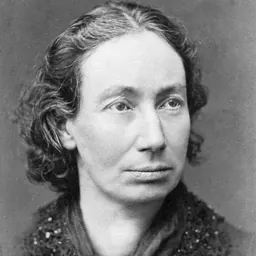
In May of 1901, Starkoff became a freemason after being initiated into the Diderot Lodge and officially joined on June 21, 1901. The Diderot Lodge of the Grand Symbolic Scottish Lodge had been founded in 1880 by twelve lodges of the Supreme Council of France. From 1903-1905, she served as the general secretary of the organization. This organization was influential, as at the end of the 19th century, it was one of the few that allowed women to join into freemasonry. It also helped found the Grand Lodge of France, which initiated Maria Deraismes and Louise Michel. After the lodge disappeared in 1911, Starkoff joined the lodge "Le Libre examen adoption" on January 23, 1913. She remained part of this lodge during World War I and the Russian Revolution. Before she denounced the Russian Revolution, she celebrated the February Revolution in May 1917 as a member of this lodge.
Aside from her work as a freemason, Starkoff participated in other organizations. In December 1906, Starkoff spoke at the food hygiene congress, where she presented a proposal for a Proletarian Children’s Fund. She wished to establish a fund where a portion of income tax could be allocated for the working mother’s child. She ensured that her proposal included both married and not married women. Further, she was a member of the Fraternal Union of Women, where she offered proposals and gave lectures. During her time with this organization, she suggested that freethinking include women’s demands and defended the need for women and men to be treated as equals. Starkoff gave two widely discussed lectures at this organization: "Freethought and Art" and "Freethought and Feminism." Starkoff was a strong believer in free thought, becoming a member of "La Libre Pensée" ("Free Thought").
Don’t just read it —
keep it.
Full-length biographies made to live with: read them, listen on the way to work, watch them tonight.
- E-book
- Audio
- Video
Instant download · yours to keep · every purchase keeps this site free
Important facts
People in Vera Starkoff's life
Named in this biography and alive at the same time

Related people
Same field, nearest in time



Contemporaries
People whose lives overlapped Vera Starkoff's



Frequently asked questions
Who was Vera Starkoff?
Russian playwright and libertarian feminist (1867-1923)
When was Vera Starkoff born?
Vera Starkoff was born on 1 April 1867 in Russian Empire.
When did Vera Starkoff die?
Vera Starkoff died in 1923.
What was Vera Starkoff's occupation?
Vera Starkoff was a playwright and writer.
What nationality was Vera Starkoff?
Vera Starkoff was Russian.
Sources & further reading
Cite this page
APA: Biography.guide. (2026). Vera Starkoff. https://biography.guide/vera-starkoff/
MLA: "Vera Starkoff." Biography.guide, https://biography.guide/vera-starkoff/.
Chicago: "Vera Starkoff." Biography.guide. https://biography.guide/vera-starkoff/.
Data last updated: 2026-09-20 · Spot an error? Report a correction.
Page generated 2026-09-27 04:59 UTC