
About Veli Bek Jedigar
Lived 1897 – 1971 (aged 74). Veli Bek Jedigar was a Russian and Polish military officer, military writer and author.
Veli bey Yadigar (; ; ; 31 October 1897 – 13 December 1971), also known as Veli bey Yadigarov (; ; ), was a soldier of the Imperial Russian Army and officer of the Azerbaijani Armed Forces, Polish Army in the Second Polish Republic and the Home Army. He served in different armed forces from 1916 until 1946, fighting in both World War I and World War II. In the interbellum Poland, he was promoted to commandant of the 7th Lublin Uhlan Regiment.
Background
He was born on in the real estate of Tekali, Tiflis Governorate, Russian Empire, (now Georgia) in a noble Azerbaijani family of Yadigarovs. His father, Sadig bey Yadigarov was a landowner, his mother was Georgian princess Olga Rusieva-Korchibasheva. He had an elder brother Archil (b. 1889), who were apparently baptized as Orthodox.
Education and service
Vali bey Yadigarov as a young sergeant of the Imperial Russian Army with the Order of St. George
He attended a private gymnasium in Tiflis, graduating on . After graduation, he briefly studied at Kyiv Polytechnic Institute, but changed his mind and joined Tiflis Cadet Corps, in 1916. Soon afterwards, together with Dagestan Cavalry Regiment, Jedigar was transported to the Eastern Front, to fight in the Brusilov Offensive. After its failure, Veli bey Yadigarov returned to Kiev, entering Kiev Artillery School in 1917. He was junker same year and later in view of the Bolshevik unrest and the Ukrainization (as well as of military units) of Kyiv, temporarily seconded to the regiment in Temir-Khan-Shura. Later that year he was seconded to the headquarters of the Caucasian Separate Muslim Corps and transferred to the 4th Cavalry Borchaly Regiment of Tatar Cavalry Regiment. He served in Caucasian Muslim Army as a senior officer in 1918. Later after establishment of Azerbaijan Democratic Republic, he went to serve in the army of the newly-formed nation on 5 April 1919.
The military leadership sent him to Karabakh to the 3rd Sheki Cavalry Regiment (based in Ganja) with him as a platoon commander. In 1919-1920, he was the commander of the machine-gun team of the 3rd Sheki Cavalry Regiment. He fought against the Armenian army near Çaylı and Bürc villages. He was promoted to senior lieutenant on 12 November 1919 and to captain on 28 February 1920. Following the Red Army invasion of Azerbaijan, Veli bey Yadigarov continued fighting against the Bolsheviks, later withdrawing with a division to Georgia on 15 June 1920. He was assigned to the emerging Georgian Tatar Division on 13 February 1921 and commanded its first squadron. Next year retreating with the Georgian army, he arrived with a squadron in Batum. In November 1922 he was officially accepted into the Polish Army, with the rank of the rittmeister.
Life in Poland
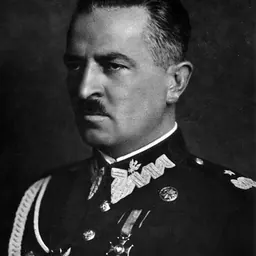
In October 1924, Veli Bek Jedigar completed cavalry training for officers, at the Cavalry Training Center in Grudziądz, and in January 1925, he was sent to the 10th Mounted Rifles Regiment, stationed in Łańcut. His skills were appreciated by the military authorities, and the Azerbaijani soldier was quickly promoted. Furthermore, he was a protege of General Janusz Głuchowski, deputy minister of military affairs and commandant of the 7th Lublin Uhlan Regiment.
In June 1930, Veli Bek Jedigar completed the battalion commandant course at the Training Center in Rembertów. In 1932, he completed with distinction the Higher War School in Warsaw, and as a qualified officer, was sent to Baranowicze Cavalry Brigade. In 1934, he was promoted to major, and in 1936, was appointed commandant of the 7th Lublin Uhlan Regiment, stationed in Mińsk Mazowiecki.
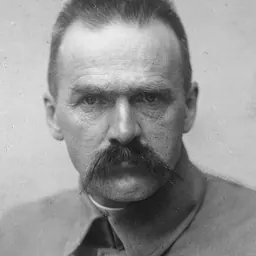
In the 1930s, Veli Bek Jedigar became acquainted with several high-ranking officers of the Polish Army. As a result, he was supportive of the policies of the Sanacja regime (see also Piłsudski's colonels). Following personal request of Józef Piłsudski, he was an interpreter of a Turkish mission to Poland. After Piłsudski's death, he was selected as one of the soldiers to stand guard over the open casket.
In late August 1939, Veli Bek Jedigar was a lecturer at the Cavalry Training Center in Grudziądz, and a contract officer in the Masovian Cavalry Brigade. Following the Invasion of Poland, he joined the brigade as its chief of staff. Captured by the Germans as a POW, he was released due to his foreign ethnicity, and returned to Warsaw in August 1940. After return to Warsaw, he immediately became involved in Polish resistance activities. He formed conspirational 7th Lublin Uhlan Regiment, and commanded it since August 1940 until July 1944. He was respected by the Home Army authorities, and as a personal friend of General Tadeusz Bór-Komorowski, was responsible for cavalry training.
In mid-July 1944, Bór-Komorowski ordered him to leave occupied Poland and escape to the West, to avoid Soviet captivity. Veli Bek Jedigar, together with wife and daughter, went to Vienna, to return to Warsaw after the outbreak of Warsaw Uprising. He remained in occupied Poland until January 1945. In mid-1945, he reached Italy, joining 2nd Polish Corps. After some time, he left for Great Britain, and in 1949, together with the family, emigrated to Argentina. He was a very active member of different associations of Polish war veterans, and deputy chairman of Organization of Subjugated Nations Liberacion Europea.
Veli Bek Jedigar died of heart attack in Buenos Aires, on 13 December 1971. On 4 August 1990, his ashes were buried at Warsaw's Muslim Tatar Cemetery, during an official ceremony. His bust was unveiled in 2017 in the Józef Poliński park in Warsaw.
Family
He married Wanda Eminowicz (1905-1954) in 1938, with whom he had a daughter, Zuleikha Jedigar-Kalinowska (born 1942).
Works
Outline of the military history of the Tatar Cavalry Regiment named after Colonel Mustafa Akhmatowicz , Warsaw, 1933. Crimea in 1860 in Głos z Minarettu, 1949.
Awards
- Croix de Guerre - Gold Cross of Merit, Cross of Valour, Cross of the Home Army - War Medal, Order of the Medjidie 5th class with sword
Don’t just read it —
keep it.
Full-length biographies made to live with: read them, listen on the way to work, watch them tonight.
- E-book
- Audio
- Video
Instant download · yours to keep · every purchase keeps this site free
Important facts
People in Veli Bek Jedigar's life
Named in this biography and alive at the same time

Related people
Same field, nearest in time


Contemporaries
People whose lives overlapped Veli Bek Jedigar's


Frequently asked questions
Who was Veli Bek Jedigar?
Polish officer (1897–1971)
When was Veli Bek Jedigar born?
Veli Bek Jedigar was born on 31 October 1897 in Tekali.
When did Veli Bek Jedigar die?
Veli Bek Jedigar died on 13 December 1971 in Buenos Aires.
What was Veli Bek Jedigar's occupation?
Veli Bek Jedigar was a military officer, military writer and author.
What nationality was Veli Bek Jedigar?
Veli Bek Jedigar was Russian and Polish.
Sources & further reading
Cite this page
APA: Biography.guide. (2026). Veli Bek Jedigar. https://biography.guide/veli-bek-jedigar/
MLA: "Veli Bek Jedigar." Biography.guide, https://biography.guide/veli-bek-jedigar/.
Chicago: "Veli Bek Jedigar." Biography.guide. https://biography.guide/veli-bek-jedigar/.
Data last updated: 2026-09-20 · Spot an error? Report a correction.
Page generated 2026-09-27 05:22 UTC