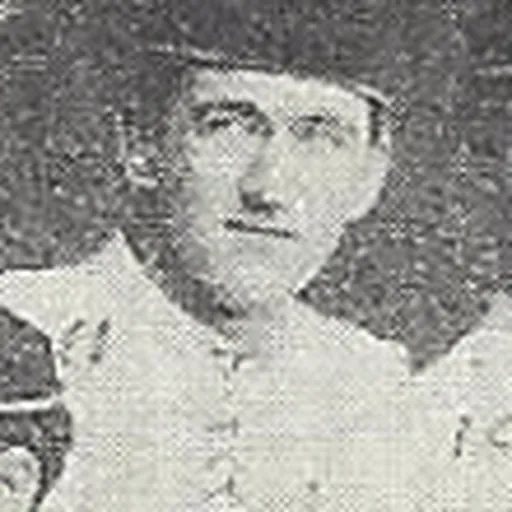
About Vauix Carter
Born 1863. Vauix Carter was an American head coach.
Information about Carter following his resignation from the academy is scarce. One Navy football historian described him as having "disappeared from the historical record". He attended some classes at Swarthmore College in 1883, but he did not complete a course. During the late 1880s, Carter was an instructor at the Hebrew Technical Institute and also worked as an engineer; he designed a parachute and a model of a plan for the Nicaragua Canal, both of which attracted media attention. During the 1890s, he was an assignee for several corporations in New York City. Carter later served as a lieutenant in the New York Naval Militia and worked for the New York City government. During the 1920s, he lived with his sister Laura on a farm in upstate New York, managing her accounts and occasionally contributing articles to a magazine she edited. According to census records, Carter died sometime before 1930.
Biography and career Early life and Naval Academy Vaulx Carter was born on August 14, 1863,#tag:ref|Sources disagree on Carter's birth date. Family records, including a genealogy compiled by his brother William Harding Carter, list the date as August 14, 1861. However, the American Genealogy Research Institute's History of the Carter Family records Carter's birth being two years later, on August 14, 1863. His mother was Anne Vaulx, the elder Carter's second wife. Among Vaulx's siblings were William Harding Carter, a major general in the United States Army and Medal of Honor recipient, He was raised there for the early part of his life, but was orphaned along with two of his siblings following his father's death in March 1873 and his mother's the next year. The siblings remained without a guardian until February 1875, when they were adopted by a family member and spent the rest of their childhood in Pennsylvania. Carter attended the Swarthmore Preparatory School during the 1877–78 and 1878–79 academic years as a science student. He then spent one year at Swarthmore College, again with a science focus. Following his freshman year at Swarthmore, in September 1880, Carter passed the entrance examinations for the United States Naval Academy. On the twenty-second of that month, he was admitted into the academy, one of four people selected to represent Pennsylvania at the academy in that year's class. In his second year at the school, Carter excelled in English and drawing, but had poor discipline and received 109 demerits; using a point evaluation system, the Naval Academy gave Carter fifty-three out of a possible seventy-six points for his conduct during the year. Between his second and third years, Cater sailed on the U.S.S. Constitution as a part of the academy's summer cruise. His conduct worsened that year, and he only excelled in drawing. At the end of the year, Carter received ninety-nine of a possible one-hundred fifty-two points. Carter was scheduled to graduate from the Naval Academy in 1884, but was forced to resign in 1883. While performing his duties as a naval cadet, Carter became caught in a gale and fell. He received permanent injuries from the accident, which caused his resignation on June 14, 1883.
1882 football season alt=A scan of a newspaper article headline reading: "A Rousing Foot-Ball Game: The Clifton Club Gave the Naval Academy Team a Hard Struggle" In 1879, football began as a sport at the academy. Student William John Maxwell organized a team made up of fellow students, without any support of faculty. He organized a game with the Baltimore Athletic Club, which ended in a scoreless tie. Maxwell graduated in 1880, and the football program ended in his absence. In 1882, Carter re-initiated and organized a new football team. He took a position as the team coach, the first in school history; he also functioned as a back when playing. He scheduled a single game for the season, which was played on Thanksgiving Day against the Baltimore-based Clifton Football Club. The Clifton team was made up of players from Johns Hopkins University, who were unable to play for their school due to the administrator's negative views towards the sport. Carter designed a maroon and white uniform for the squad and a strip of leather which was nailed to the bottom of their shoes to prevent slipping. During play, the ball was kicked over the seawall a number of times, once going so far out it had to be retrieved by boat before play could continue. After ten minutes interval the ball was again put in play, this time being kicked off by the Cliftons. The rest period had apparently stiffened the Cliftons, for the Academy making a vigorous spurt got the ball thru them, and Street, following it up well, scored a touchdown for the Academy.
The Naval Academy won the contest 8–0, which made it the academy's first ever football victory, and was the first match in which they recorded points. It would remain the school's only victory until the 1884 season, and would remain as the last shutout for the school until 1886, when a squad defeated Johns Hopkins 6–0.
After the Naval Academy Little is known of Carter after he left the Naval Academy. Sportswriter Jack Clary, in his history of the Navy Midshipmen football program, describes Carter as having "disappeared from the historical record", his establishment of the football team being Carter's "only claim to fame". The company went into bankruptcy and failed three years later, owing its creditors over $30,000 (equivalent to $ respectively in ). The year of Carter's death is unknown.
Head coaching record team
Don’t just read it —
keep it.
Full-length biographies made to live with: read them, listen on the way to work, watch them tonight.
- E-book
- Audio
- Video
Instant download · yours to keep · every purchase keeps this site free
Important facts
Related people
Same field, nearest in time



Frequently asked questions
Who was Vauix Carter?
American football player and coach
When was Vauix Carter born?
Vauix Carter was born on 14 August 1863 in Davidson County.
What was Vauix Carter's occupation?
Vauix Carter was a head coach.
What nationality was Vauix Carter?
Vauix Carter was American.
Sources & further reading
Cite this page
APA: Biography.guide. (2026). Vauix Carter. https://biography.guide/vauix-carter/
MLA: "Vauix Carter." Biography.guide, https://biography.guide/vauix-carter/.
Chicago: "Vauix Carter." Biography.guide. https://biography.guide/vauix-carter/.
Data last updated: 2026-09-22 · Spot an error? Report a correction.
Portrait: Wikimedia Commons · author & licence
Page generated 2026-09-27 05:02 UTC