
About Vastupala
Vastupala was a writer and vaghela dynasty.
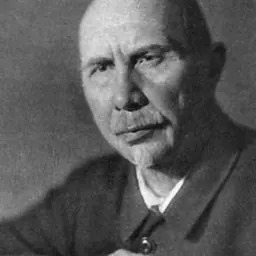
Vastupāla (died 1240 CE) was a prime minister of the Vāghelā king Vīradhavala and his successor Vīsaladeva, who ruled in what is now the Gujarat region of India, in the early 13th century. Although he served in an administrative and military capacity, he was also a patron of art, literature and public works. He, together with his brother Tejapāla, assisted in the restoration of peace in the kingdom, and served in a number of campaigns against Lāṭa, Godraha, Kutch and the Delhi Sultanate. The brothers were instrumental in the construction of the Luniga-vasahi temple on Mount Abu and the Vastupala-vihara on Girnar.
Ancestry and family Vastupala and his brother Tejapala were born to a Pragavata, or Porwad as they are known today, Jain family in Anahilavada Patan (modern day Patan, Gujarat). Vijayasenasuri, a Jain monk of Nagendra Gachchha, was their clan guru. Kumaradevi was apparently a widow when she married Ashwaraja; however, this has been disputed.
The couple had eleven children — seven daughters: Jalhu (or Bhau or Jalu), Mau, Sau, Dhanadevi, Sohaga, Vaijuka (or Tejuka) and Padmaladevi; and four sons: Luniga, Malladeva, Vastupala and Tejapala. Luniga died in childhood while Malladeva died after fathering a son, Purnasimha. During his tenure, he enacted reforms to the administration and increased state revenue. He also instituted measures against corruption and piracy. The Vastupala-charita mentions punishments being meted out to a wealthy Muslim trader from Stambhatirtha, various corrupt officials, citizens, and village headmen. Particular examples include the fining of the village heads of around five hundred villages in the region for irregularities, as well as the administrators of Vardhamanapur (modern day Wadhwan) and Gohilavati.
Military career The Prabandhas mention that Vastupala participated in 63 battles, although few of these are discussed. They mention his involvement in the military activities of Viradhavala, and state that he captured Vamanasthali (modern day Vanthali) from Samgana and Chamunda, brothers of Viradhavala's wife Jayataladevi.
The brothers also attacked Bhadreshwar, ruled by Bhimasimha of the Pratihara clan, in Kutch but were unsuccessful and ultimately concluded a peace treaty with him. Vastupala and Viradhavala were defeated by the three warriors from Marwar; Samantapala, Anandapala and Trilokasimha; who had supported Bhimasimha. Tejapala commanded an army against Ghughula, a chief of Godraha (modern day Godhra), and successfully captured him. Tejapala had him imprisoned within a wooden cage until he committed suicide by biting his tongue.
Sadik, a Muslim merchant, rejected the authority of Vastupala and induced Sankha (Sangramsimha),
During the reign of Viradhavala, the Sultan of Delhi Mojdin attacked Gurjaradesa, an event that was dramatised in Hammira-mada-mardana, a Sanskrit play by Jaysimha Suri. The Prabandhka-kosha describes the Delhi army being forced to retreat after being encircled by Dharavarsha of Chandravati from the north, and Vastupala from the south, leaving the army trapped in a mountain pass near Arbuda (modern day Mount Abu).
In another action against the Delhi Sultanate, Vastupala secretly hired pirates to rob the mother of the Sultan when she was to board a ship, possibly at Stambhatirtha, taking her on a pilgrimage to Mecca. The captain of the ship approached Vastupala who received the Sultan's mother with respect and returned the booty. Upon her return from Mecca, she presented Vastupala to the Sultan, who began friendly relations with Viradhavala. Vastupala was received with honour by Viradhavala for successfully safeguarding his realm from the predations of the Delhi Sultanate. Copied manuscripts of Hammira-mada-mardana are dated to around 1230 CE (VS 1286) and Vastupala had begun his career in 1220 CE (VS 1276) so this event is likely to have occurred between these two dates. These manuscripts are preserved in Jain library of Jaisalmer.
Death Vastupala died in 1240 CE (VS 1296),
Cultural activities Pilgrimages
Vastupala made thirteen pilgrimages to Mount Shatrunjaya and Girnar. In addition to his childhood visits with his father in 1193 CE and 1194 CE, he led five annual sanghas (pilgrim caravans) to Shatrunjaya and Girnar between 1221 and 1237 CE as well as annual pilgrimages with his family to Shatrunjaya between 1227 and 1233 CE. His pilgrimage in 1221 CE is mentioned repeatedly in Girnar inscriptions and in contemporary works such as the Kirti-kaumudi, Sukrita-sankirtana and Dharmabhyudaya. He died during his 1240 CE pilgrimage, which is described in Vasanta-vilasa.
Construction activities
Vastupala was a philanthropist and commissioned the construction of numerous monuments and public utilities such as temples, rest-houses, wells, hospitals and tanks. Contemporary sources, such as Sukrita-sankirtana, mention about fifty construction works. The number of his works increased considerably in later works of Rajashekhara Suri, Jinaharsha and Jinaprabha, although the number maybe exaggerated. Rajashekhara Suri mentioned that his charity extended from Shri Shaila in the south to Kedara in the north and Prabhasa in the west to Banaras in the east. Apart from building numerous Jain temples, he also built Brahmashalas, Mathas, Shiva temples as well as mosques. Vastupala built a temple dedicated to Mahavira, an Upashraya (prayer house for monks) and excavated a tank at Padaliptapura (modern day Palitana). He also built large tanks at Arakapalita and Suryapura, two statues at the temple dedicated to Mahavira at Modhera, and Shakunika-vihara at Bharuch.
The Luniga-vasahi temple dedicated to Neminatha was built on Mount Abu by Tejapala in memory of his elder brother Luniga in 1231 CE. There are about thirty inscriptions mentioning additions to the temples and his family members. The Prabandhas state that the Luniga-vasahi cost twelve crores and fifty-three lakhs while the Girnar temples cost eighteen crores and ninety-six lakhs, although these figures may be an exaggerated. Of the temples built by the brothers, only a few survive such as Vastupala-vihara at Girnar (1231 CE), Neminath Temple at Abu and the temple at Prabhas.
Epigraphic sources
{ "type": "FeatureCollection", "features": [ { "type": "Feature", "properties": { "marker-symbol": "monument", "title": "Abu" }, "geometry": { "type": "Point", "coordinates": [ 72.7156274, 24.5925909 ] } }, { "type": "Feature", "properties": { "marker-symbol": "monument", "title": "Dabhoi" }, "geometry": { "type": "Point", "coordinates": [ 73.4121277, 22.1323391 ] } }, { "type": "Feature", "properties": { "marker-symbol": "monument", "title": "Girnar" }, "geometry": { "type": "Point", "coordinates": [ 70.5502916, 21.5178869 ] } }, { "type": "Feature", "properties": { "marker-symbol": "monument", "title": "Khambhat (Cambay)" }, "geometry": { "type": "Point", "coordinates": [ 72.6189845, 22.3180817 ] } }, { "type": "Feature", "properties": { "marker-symbol": "monument", "title": "Patan", "description": "" }, "geometry": { "type": "Point", "coordinates": [ 72.1266255, 23.8493246 ] } }, { "type": "Feature", "properties": { "marker-symbol": "monument", "title": "Sherisa", "description": "" }, "geometry": { "type": "Point", "coordinates": [ 72.470142734892, 23.199038085351 ] } }, { "type": "Feature", "properties": { "marker-symbol": "monument", "title": "Ganesar", "description": "" }, "geometry": { "type": "Point", "coordinates": [ 72.415139183431, 22.590561264422 ] } }, { "type": "Feature", "properties": { "marker-symbol": "monument", "title": "Taranga hill", "description": "" }, "geometry": { "type": "Point", "coordinates": [ 72.75607466654, 23.965441571049 ] } }, { "type": "Feature", "properties": { "marker-symbol": "monument", "title": "Nagara", "description": "" }, "geometry": { "type": "Point", "coordinates": [ 72.626898102608, 22.359706598755 ] } }, { "type": "Feature", "properties": { "marker-symbol": "monument", "title": "Nava Sanghpur", "description": ""}, "geometry": { "type": "Point", "coordinates": [ 72.7832162, 23.5274274 ] } } ] }
A large number of inscriptions of Vastupala and Tejapala, some short while others are very long, are available. Most of these inscriptions are in the Girnar range (VS 1288, VS 1289, VS 1293) and Abu (VS 1278, VS 1287, VS 1288, VS 1290, VS 1293, VS 1296) while a few are at the Taranga hills (VS 1285), Vaidyanatha-prashsti of Dabhoi (1255 CE) by Someshvara, Patan, Sherisa (VS 1285, near Ahmedabad), Khambhat (VS 1281), Nagara (VS 1292, near Khambhat), Ganesar (VS 1291, near Dholka), Dhammani (1296, Sirohi) and Nava Sanghpur (near Vijapur). The majority of such inscriptions are found in temples. Jinaprabha's Sukrita-kirti-kallolini (1231 CE) and Jayasimha's Vastupala-Tejapala-Prashsti are known from the manuscripts but these inscriptions have not survived. All these inscriptions are contemporary or near-contemporary.
Notes and references
Don’t just read it —
keep it.
Full-length biographies made to live with: read them, listen on the way to work, watch them tonight.
- E-book
- Audio
- Video
Instant download · yours to keep · every purchase keeps this site free
Important facts
Related people
Same field, nearest in time




Frequently asked questions
Who was Vastupala?
prime minister in the court of 13th-century Vaghela kings
When did Vastupala die?
Vastupala died in 1240 in Ankevalia.
What was Vastupala's occupation?
Vastupala was a writer and vaghela dynasty.
Sources & further reading
Cite this page
APA: Biography.guide. (2026). Vastupala. https://biography.guide/vastupala/
MLA: "Vastupala." Biography.guide, https://biography.guide/vastupala/.
Chicago: "Vastupala." Biography.guide. https://biography.guide/vastupala/.
Data last updated: 2026-09-22 · Spot an error? Report a correction.
Page generated 2026-09-27 05:05 UTC