
About Vasco de Quiroga
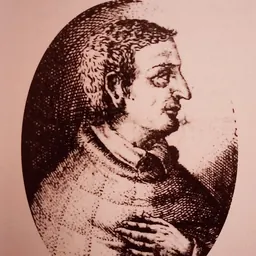
Lived 1470 – 1565 (aged 94–95). Vasco de Quiroga was a catholic priest, jurist, catholic bishop, judge and bishop.
Background and life in Europe Vasco de Quiroga was born into a noble family in Madrigal de las Altas Torres, Castile. His family was of Galician origin. His brother Álvaro became the father of Gaspar de Quiroga y Vela, later cardinal of Toledo. Traditionally his birth year has been given as 1470, because of a tradition that he was 95 at his year of death. Recent biographers prefer the later date around 1478, because of evidence from Quiroga's own hand that he was 60 in 1538. He worked as a letrado – a royal jurist in southern Spain and as a judge in Oran in Algeria from ca. 1520 - 1526. After returning from Africa, he stayed a while with the royal court, where documents have him in 1528. He certainly had powerful connections such as a friendship with Juan Bernal Díaz de Luco who was a member of the Council of the Indies, and with the cardinal of Toledo Juan Tavera. This was probably the reason that he was offered a position as oidor (judge) in the second Audiencia of New Spain when the Council of Indies had to dismiss the first in 1530.
He died in his 90s in mid-March 1565. Tradition has it that he was then on a pastoral visit in Uruapan, but sources support that it was rather in the City of Pátzcuaro. He bequeathed his hospitals to the care and protection of the rector of the college of San Nicolás. His body is interred in the basilica of Pátzcuaro.
Last will The testament of Vasco de Quiroga is dated to January 24, 1565—two months before his death. Here Quiroga laid out his will for the future functioning of the institutions he had established, among them the Colegio de San Nicolas. The will established that the descendants of the Indians of Pátzcuaro who had participated in the building of the Colegio were to receive free education there. He also made provisions for the future expenditure of profits from his Pueblo Hospitals: some will be invested in monthly Mass in commemoration of his parents, and others will be used for wages for the guardians of the Pueblos and the rectors and friars of the Colegio. His 626 books are bequeathed to the Colegio de San Nicolas. He also stated that all of the slaves in his possession were to be freed upon his death.
Legacy The skills he implanted among Purépecha of the Pátzcuaro region have been passed down to their descendants, who are today considered among the most skilled craftspersons in Mexico. Tata Vasco trained his pupils in a variety of disciplines. His method of specialization by community continues to this day: Paracho produces guitars, Tzintzuntzán pottery, Santa Clara copper products and Nurío woven woolens.
There is a university named for him in Morelia, Michoacán. Miguel Bernal Jiménez wrote an opera, Tata Vasco, commemorating his fourth centenary. It premiered in Pátzcuaro in February, 1941.
He is credited as the founder of the city of Irapuato, Mexico.
Writings "Información en derecho del licenciado Quiroga sobre algunas provisiones del Real Consejo de las Indias." Edited by Paulino Castañeda Delgado. Madrid: Ediciones José Porrúa Turanzas, 1974. "Ordenanzas de Santa Fe de Vasco de Quiroga" / introducción, paleografía y notas por J. Benedict Warren Morelia, México : Fimax, 1999 "Testamento del Obispo Vasco de Quiroga" / introducción, paleografía y notas por J. Benedict Warren Morelia, Mexico : Fimax, 1997
Don’t just read it —
keep it.
Full-length biographies made to live with: read them, listen on the way to work, watch them tonight.
- E-book
- Audio
- Video
Instant download · yours to keep · every purchase keeps this site free
Important facts
People in Vasco de Quiroga's life
Named in this biography and alive at the same time

Related people
Same field, nearest in time




Contemporaries
People whose lives overlapped Vasco de Quiroga's



Frequently asked questions
Who was Vasco de Quiroga?
Spanish bishop
When was Vasco de Quiroga born?
Vasco de Quiroga was born in 1470 in Madrigal de las Altas Torres.
When did Vasco de Quiroga die?
Vasco de Quiroga died on 14 March 1565 in Uruapan del Progreso.
What was Vasco de Quiroga's occupation?
Vasco de Quiroga was a catholic priest, jurist, catholic bishop, judge and bishop.
What nationality was Vasco de Quiroga?
Vasco de Quiroga's recorded nationality: Spanish Empire, Crown of Castile.
Sources & further reading
Cite this page
APA: Biography.guide. (2026). Vasco de Quiroga. https://biography.guide/vasco-de-quiroga/
MLA: "Vasco de Quiroga." Biography.guide, https://biography.guide/vasco-de-quiroga/.
Chicago: "Vasco de Quiroga." Biography.guide. https://biography.guide/vasco-de-quiroga/.
Data last updated: 2026-09-22 · Spot an error? Report a correction.
Page generated 2026-09-27 05:21 UTC